
 800-811-7514
5 Practical Ways to Wake Up Less at Night
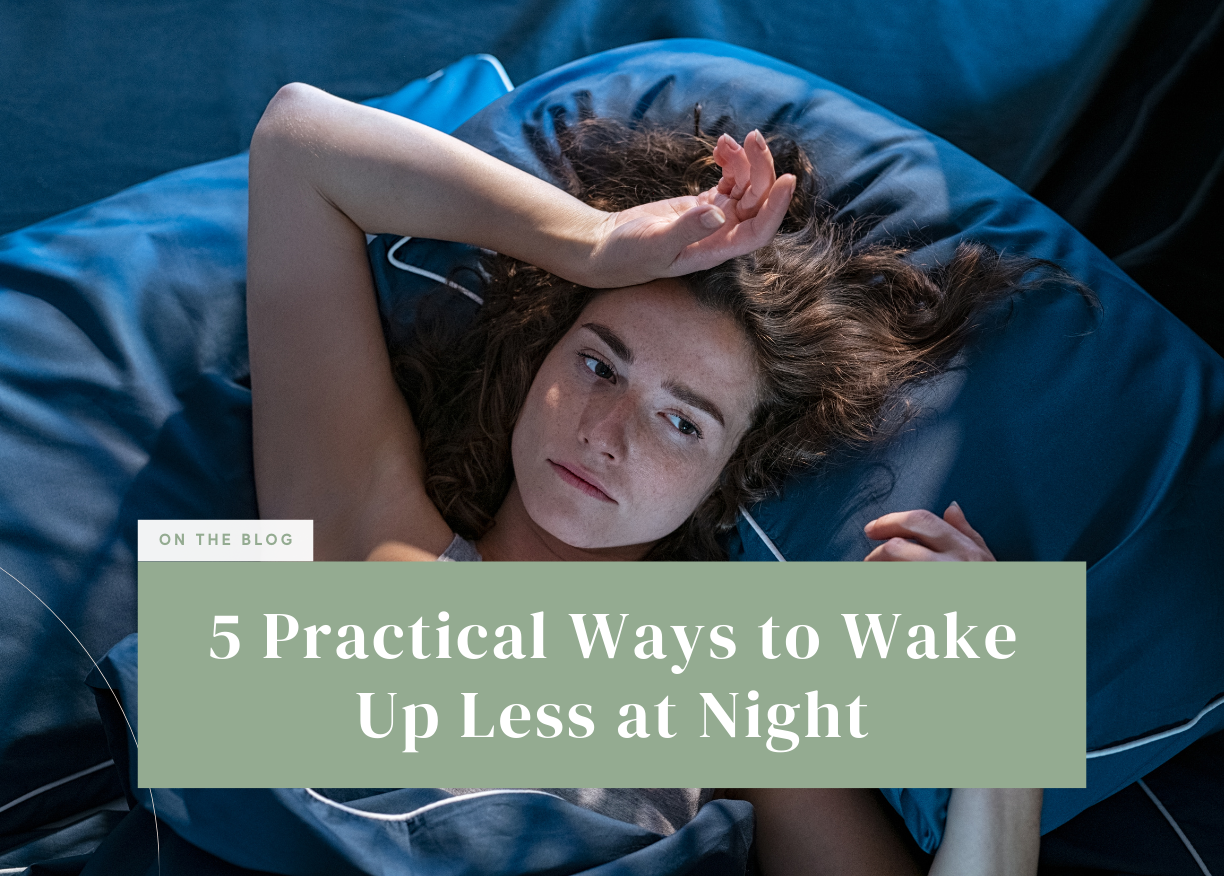

Waking up once in a while is normal.
But if you’re waking up:
-
Multiple times per night
-
Around the same hour every night
-
And struggling to fall back asleep
your sleep isn’t as restorative as it could be.
The goal isn’t “never waking up.”
The goal is fewer disruptions—and falling back asleep quickly when you do.
Here are five realistic ways to wake up less at night.
1. Stabilize Your Room Temperature

One of the most common reasons people wake up is temperature fluctuation.
When you overheat:
-
Heart rate rises
-
Sweat increases
-
REM sleep shortens
When you’re too cold:
-
Muscles tense
-
Circulation shifts
-
Sleep lightens
Aim for about 65°F (18°C) and use breathable bedding that doesn’t trap heat.
Small temperature improvements often reduce wake-ups dramatically.
2. Reduce Fluid Intake Late at Night

Waking to use the bathroom is common—but timing matters.
Try:
-
Hydrating earlier in the day
-
Reducing fluids 1–2 hours before bed
-
Limiting alcohol at night
Alcohol in particular increases nighttime awakenings—even if it helps you fall asleep faster.
3. Improve Sleep Position & Physical Comfort

Pressure points and discomfort cause subtle awakenings—even if you don’t fully remember them.
Common triggers:
-
Lower back strain
-
Shoulder pressure
-
Neck misalignment
-
Restricted breathing
If your body has to adjust frequently, your brain partially wakes each time.
Comfort reduces micro-arousals.
4. Calm Your Nervous System Before Bed

Many people wake up at night not because something external happened—but because stress surfaces.
Even when you feel “fine” during the day, your nervous system may stay slightly activated.
Before bed, try:
-
Dim lighting
-
Gentle stretching
-
Slower breathing
-
Reducing screen time
Lower stimulation before sleep = fewer nighttime stress awakenings.
5. Don’t Panic When You Wake Up

This one matters more than people realize.
If you wake up and think:
“Why am I awake again?”
“I’m going to be exhausted tomorrow.”
You trigger cortisol.
Instead:
-
Stay calm
-
Keep lights low
-
Avoid checking the clock
-
Focus on slow breathing
Most awakenings last only minutes if you don’t mentally activate.
Why You Might Be Waking Up More Than You Think
Sleep becomes lighter when:
-
Stress increases
-
Deep sleep decreases
-
Temperature fluctuates
-
Your mattress loses support
-
Breathing is restricted
You may not remember every awakening—but your body feels them.
Why Your Sleep Setup Makes a Difference
If wake-ups are frequent, physical stability is essential.
🌿 Honey Mattress
Reduces pressure buildup and motion transfer—helping you stay asleep longer without shifting constantly.
🌿 Bamboo Sheets
Regulate temperature and moisture, preventing overheating that disrupts sleep cycles.
🌿 Adjustable Base
Allows subtle elevation to improve breathing and reduce back strain—both common causes of nighttime awakenings.
When your body is supported, your brain stays asleep.
Final Thoughts
Waking at night is normal.
Waking repeatedly isn’t something you have to accept.
Often, fewer awakenings come from:
-
Better temperature control
-
Improved comfort
-
Reduced stress
-
And a more supportive sleep environment
Sleep doesn’t need to be perfect.
It just needs to be more continuous.
And continuity changes everything.