

 800-811-7514
Can You Really Thrive on Less Sleep?
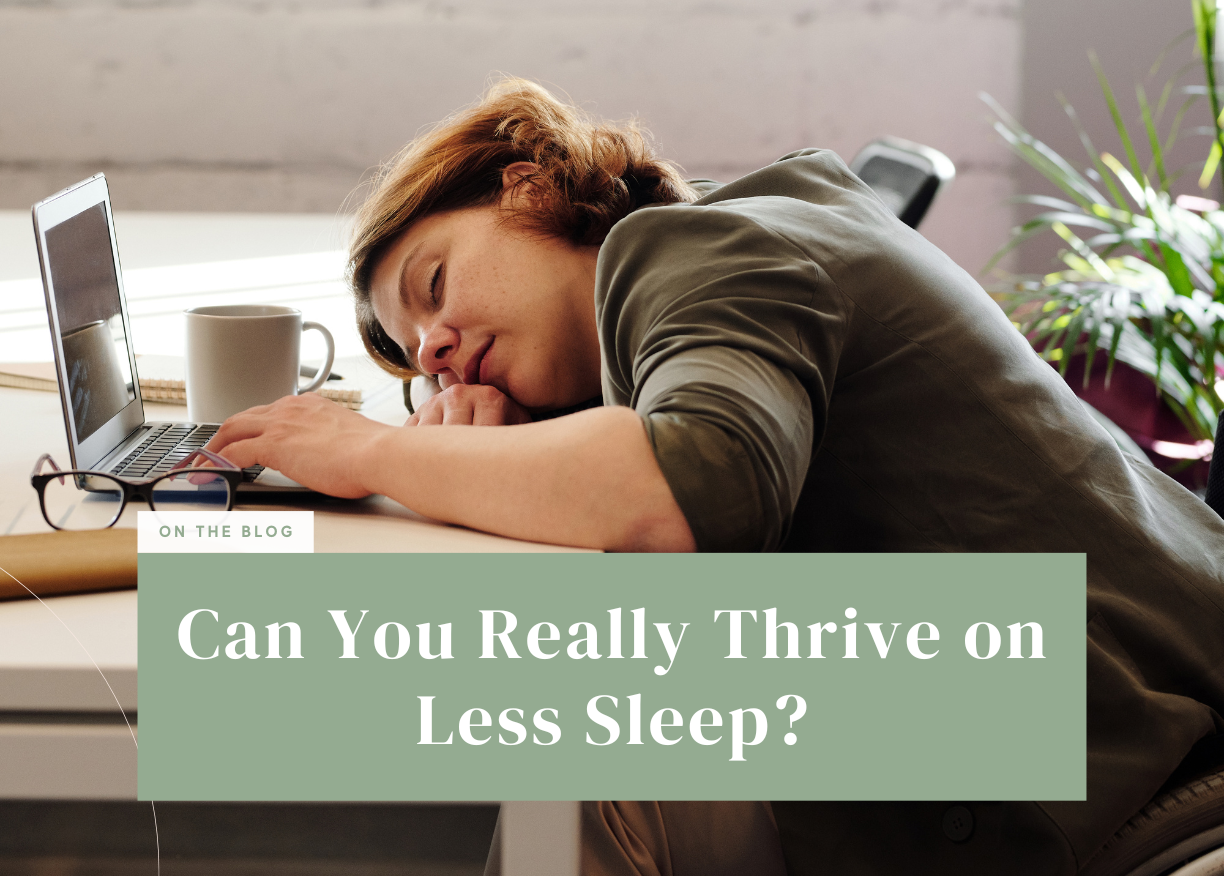
You’ve probably heard someone say it proudly:
“I only need five hours of sleep.”
Maybe you’ve said it yourself—during a busy season, a stressful year, or a phase where rest felt negotiable.
And for a while, it might even feel true.

But here’s the honest question:
Are you actually thriving… or just functioning?
Why Some People Think They Need Less Sleep
There are moments in life when adrenaline, stress, or excitement temporarily mask sleep deprivation.
You may:
-
Feel alert during the day
-
Fall asleep quickly at night
-
Push through fatigue without noticing it

This creates the illusion that less sleep is “working.”
But biology tells a different story.
The Myth of the “Short Sleeper”
True short sleepers—people who naturally thrive on 5–6 hours of sleep—are extremely rare (less than 1% of the population).
Most people who believe they need less sleep are actually:
-
Accumulating sleep debt
-
Adapting to fatigue
-
Lowering their baseline for what “normal” feels like

You don’t notice the decline because it happens gradually.
What Happens When You Consistently Sleep Less
Even mild sleep restriction affects the body in quiet but powerful ways.
1. Cognitive Performance Drops
Reaction time, memory, focus, and decision-making all decline—even if you feel “fine.”
You don’t feel tired—you feel less sharp.
2. Emotional Resilience Weakens
Lack of sleep increases emotional reactivity.
Stress feels heavier. Small frustrations feel bigger. Patience wears thin.

3. Hormones Shift
Chronic short sleep:
-
Raises cortisol (stress hormone)
-
Disrupts hunger hormones
-
Affects insulin sensitivity
This impacts energy, mood, and metabolism.
4. Physical Recovery Slows
Muscle repair, immune function, and inflammation control all happen during sleep—especially deep sleep.
Less sleep = less repair.

Why You Might Think You’re Thriving (But Aren’t)
Sleep deprivation doesn’t always feel dramatic.
Instead, it shows up as:
-
Needing more caffeine
-
Feeling “wired but tired”
-
Evening energy spikes
-
Difficulty fully relaxing
-
Waking up unrested but functional
You adjust—but you don’t optimize.

How Much Sleep Do You Actually Need?
For most adults:
-
7–9 hours is ideal
-
Some thrive closer to 7
-
Others closer to 8.5
What matters most isn’t just duration—it’s sleep depth and consistency.

Quality Sleep Makes Sleep Feel Shorter
Many people believe they need less sleep when the real issue is poor-quality sleep.
Fragmented nights, pressure points, overheating, or shallow sleep can make 8 hours feel like 5.
This is where environment matters.
Why Your Sleep Setup Changes the Equation
If your body can reach deeper sleep stages, it recovers more efficiently.

🌿 Honey Hybrid Organic Mattress
Balanced support reduces pressure points and nighttime movement, allowing deeper, uninterrupted sleep.
🌿 Bamboo Sheets
Temperature-regulating fabric helps prevent overheating—the most common cause of fragmented sleep.
🌿 Adjustable Base
Improves breathing, reduces pressure on the lower back, and helps your body stay comfortable through the night—especially important if sleep already feels “short.”
When sleep quality improves, your body stops craving extra hours to compensate.
So… Can You Thrive on Less Sleep?
For most people, the answer is no.
You can survive on less sleep—but thriving requires recovery, clarity, and resilience.
Sleep isn’t time wasted.
It’s the process that allows everything else in your life to work better.
Final Thoughts
If you’ve been proud of sleeping less, consider this instead:
What would life feel like if your sleep truly supported you?
More energy.
Better mood.
Clearer thinking.
Less stress.
Thriving doesn’t come from pushing harder—it comes from resting better.

