 800-811-7514
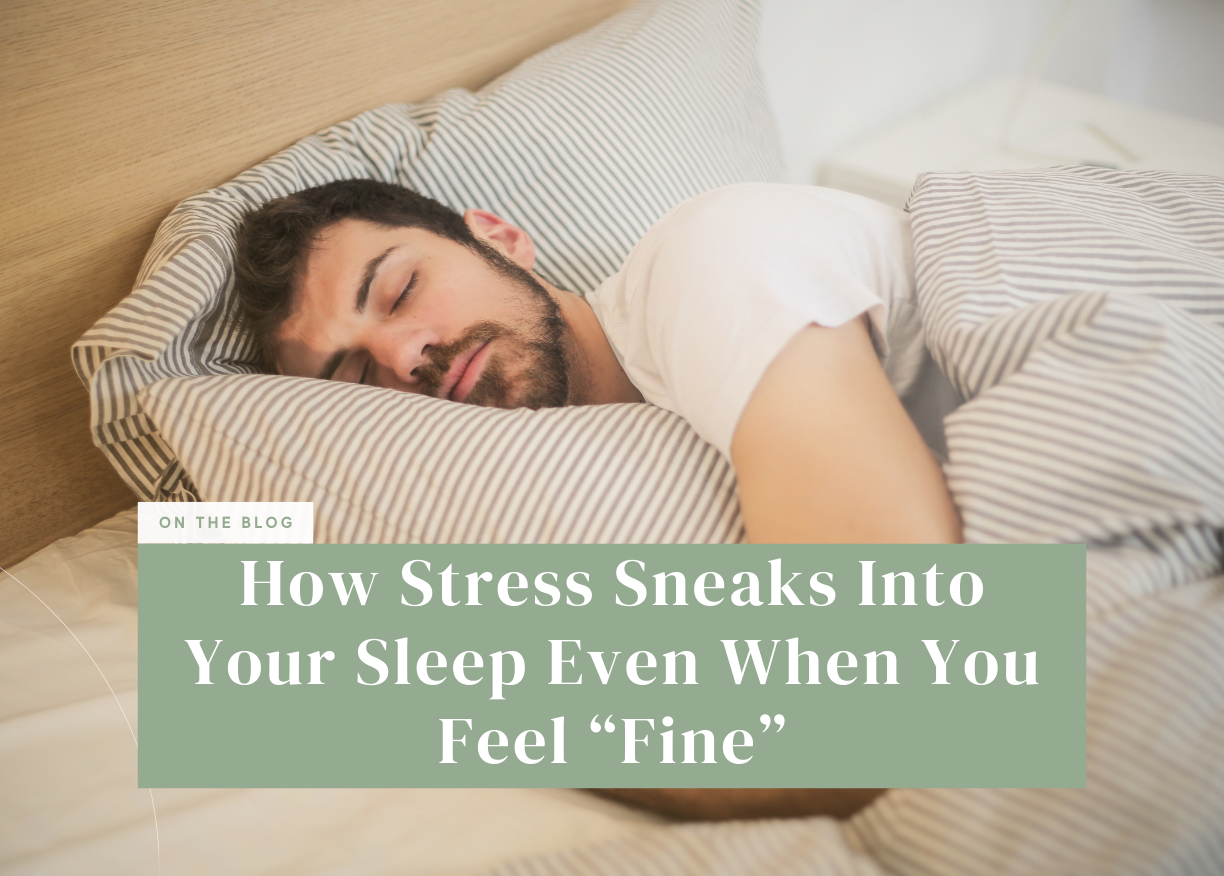
How Stress Sneaks Into Your Sleep Even When You Feel “Fine”

You’re not anxious.
You’re not overwhelmed.
You’re handling life just fine.
And yet…
Sleep feels lighter.
You wake up tired.
Your mind won’t fully shut off at night.
This is how stress often shows up—not loudly, but quietly.
Stress doesn’t always feel like panic.
Sometimes, it just feels like never fully resting.

Why Stress Doesn’t Always Feel Like Stress
Modern stress is subtle.
It looks like:
-
Always thinking one step ahead
-
Being “productive” but mentally tired
-
Carrying responsibility without obvious pressure
-
Feeling calm during the day but restless at night
Your mind may feel okay—but your nervous system remembers everything.
What Stress Does to Your Sleep Behind the Scenes

1. It Keeps the Nervous System Alert
Even low-grade stress keeps your body in a mild fight-or-flight state.
At night, this shows up as:
-
Difficulty falling asleep
-
Light, shallow sleep
-
Frequent awakenings
-
Early morning wake-ups
Your body never fully switches into recovery mode.

2. It Raises Nighttime Cortisol
Cortisol should drop at night.
Stress—even when unnoticed—keeps cortisol elevated, which:
-
Delays sleep onset
-
Reduces deep sleep
-
Increases nighttime alertness
You may sleep—but not deeply.

3. It Shortens REM Sleep
REM sleep is where emotional processing happens.
When stress is present:
-
REM becomes fragmented
-
Dreams become intense or disturbing
-
Emotional regulation suffers
This is why stress often leads to vivid dreams, teeth grinding, or waking unrested.

4. It Shows Up Physically
Stress isn’t just mental.
During sleep, it often appears as:
-
Jaw clenching
-
Muscle tension
-
Night sweats
-
Restlessness
-
Racing thoughts upon waking
Your body processes what your mind ignores.

Why You Can Feel “Fine” and Still Sleep Poorly
Daytime coping hides nighttime cost.
When you’re busy or focused, stress stays contained.
At night—when distractions disappear—it surfaces.
Sleep becomes the first place stress asks for attention.
Why “Relaxing” Before Bed Isn’t Always Enough
Watching TV or scrolling feels relaxing—but often keeps the nervous system stimulated.
True calm requires:
-
Physical comfort
-
Emotional safety
-
Reduced sensory input
-
A supported body
Without these, the brain stays on standby.

How to Reduce Stress Where Sleep Is Most Vulnerable
1. Support the Body First
When the body feels safe, the mind follows.
Discomfort keeps stress alive.
2. Create Predictable Evenings
Routine signals safety to the nervous system.
3. Lower Sensory Load
Dim lights. Fewer screens. Less stimulation.
4. Improve Sleep Continuity
Fewer awakenings = less stress carryover.
Why Your Sleep Environment Matters So Much Under Stress
Stress-sensitive sleep needs stability and comfort.
🌿 Honey Mattress
Reduces pressure points and micro-movements, helping the body settle instead of staying alert.
🌿 Bamboo Sheets
Temperature regulation prevents overheating—one of the fastest ways stress interrupts sleep.
🌿 Adjustable Base
Gentle elevation supports breathing and circulation, helping the nervous system relax more fully at night.
When your body stops working against your bed, stress loses one of its strongest footholds.
Final Thoughts
Stress doesn’t always knock loudly.
Sometimes it whispers—and sleep is where you hear it.
If your sleep feels lighter even though life feels manageable, your body may be asking for deeper recovery—not more effort.
Better sleep doesn’t start with trying harder.
It starts with making rest feel safe again.