

 800-811-7514
Why Couples Often Sleep Worse Than They Realize
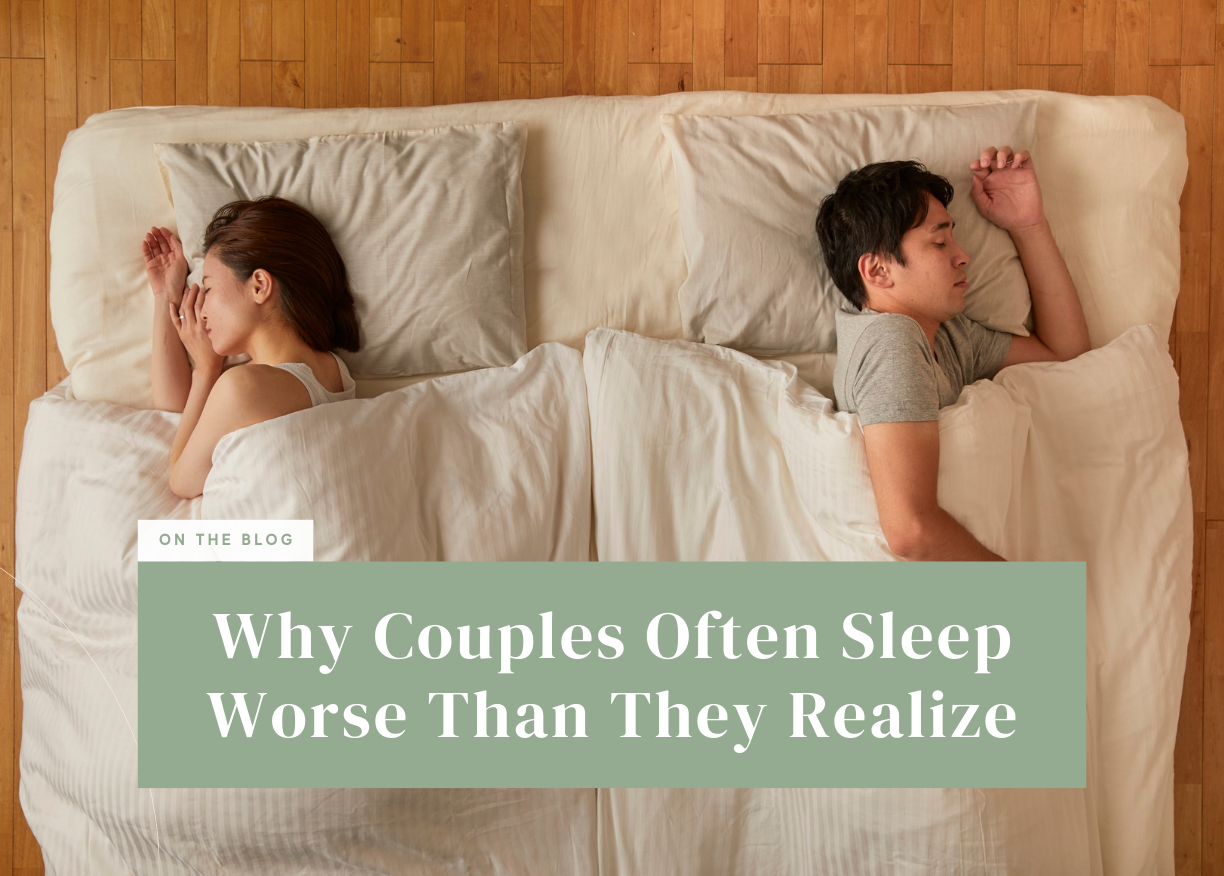

Sleeping next to someone you love feels comforting.
Familiar.
Secure.
But here’s the surprising truth:
Many couples sleep worse than they think—and they don’t even realize it.
Not because their relationship is struggling.
Not because they don’t care about each other.
But because two bodies in one bed create challenges most people never account for.

1. Motion Transfer Is More Disruptive Than You Think
Even if you don’t fully wake up, your brain detects movement.
When your partner:
-
Rolls over
-
Gets up
-
Adjusts blankets
-
Moves their legs
your nervous system briefly activates.
These are called micro-arousals—tiny awakenings that reduce deep sleep without you remembering them.
Over time, they add up.

2. Temperature Differences Create Sleep Conflict
One partner runs hot.
The other runs cold.
Sound familiar?
Body temperature drops during sleep—but if one person overheats:
-
Blankets get kicked off
-
Windows open
-
Thermostats adjust
And suddenly neither person is perfectly comfortable.
Temperature mismatch is one of the biggest hidden sleep disruptors in couples.

3. Different Sleep Schedules Create Rhythm Clash
One partner:
-
Falls asleep early
-
Wakes up early
The other:
-
Scrolls at night
-
Needs more time to wind down
Even small timing differences disturb sleep continuity.
Circadian rhythms are personal—and rarely identical.

4. Snoring & Breathing Differences
Even mild snoring can:
-
Fragment your partner’s sleep
-
Increase stress hormones overnight
-
Reduce REM sleep
Many couples adapt to the sound—
but the brain never fully ignores it.

5. Pressure Points Become Shared Compromise
A mattress that works for one body may not work for the other.
If:
-
One person needs more support
-
One needs more cushioning
-
One has back pain
-
One sleeps on their side
Compromise sometimes means neither person gets optimal support.
You don’t notice it immediately—but you feel it in the morning.
Why Couples Don’t Notice the Impact
Because it’s gradual.
You assume:
-
“We just sleep like this.”
-
“It’s normal to wake up a little.”
-
“That’s just marriage.”
But many couples are operating at 80% sleep quality—and calling it normal.

Healthy Couples Don’t Have to Sleep the Same Way
Here’s something important:
Sleeping differently doesn’t mean loving less.
In fact, some of the healthiest couples:
-
Use separate blankets
-
Customize elevation
-
Adjust firmness
-
Even use split settings
Because protecting sleep protects the relationship.
When both partners sleep well:
-
Patience improves
-
Mood stabilizes
-
Conflict decreases
-
Emotional regulation strengthens
Sleep quality directly affects relationship quality.

How to Improve Sleep Without Sacrificing Closeness
1. Reduce motion transfer
2. Regulate temperature
3. Support individual comfort
4. Improve breathing support
5. Customize position
Small environmental changes can dramatically improve shared sleep.
Why the Right Setup Makes All the Difference
🌿 Honey Mattress
Designed to reduce motion transfer while maintaining balanced support—so one partner’s movement doesn’t wake the other.
🌿 Bamboo Sheets
Temperature-regulating and breathable, helping hot and cool sleepers meet in the middle.
🌿 Adjustable Base
Allows each partner to customize head or foot elevation—supporting breathing, pressure relief, and comfort without disturbing the other.
When both bodies feel supported, sleep becomes restorative again.
Final Thoughts
Couples don’t sleep worse because they love each other less.
They sleep worse because sleep is biological—and biology isn’t identical.
The goal isn’t sleeping closer.
It’s sleeping better—together.
And sometimes the most loving thing you can do…
is protect each other’s rest.


