

 800-811-7514
Is Nighttime Teeth Grinding a Sign of Something More Serious?
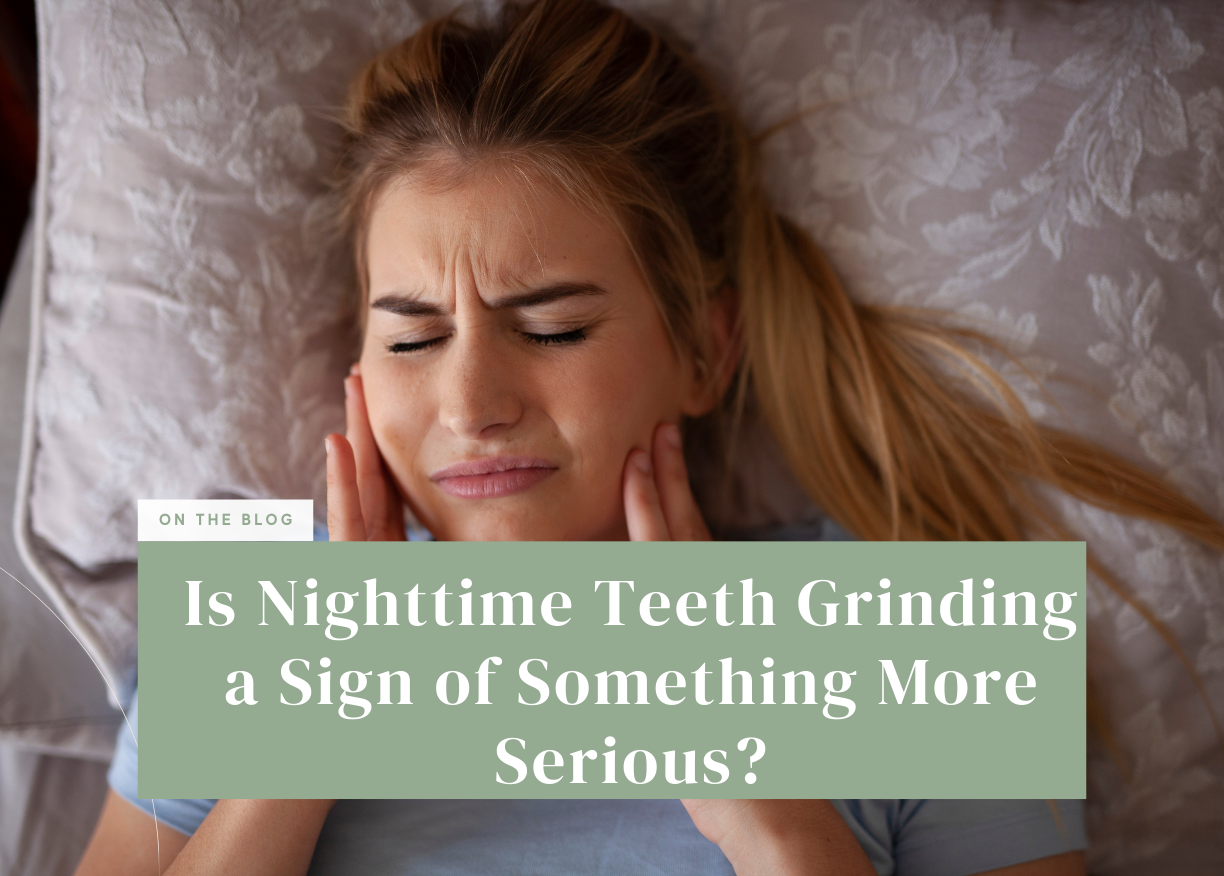
You might not even realize you’re doing it,
until your jaw feels sore, your teeth feel sensitive, or your dentist points out unusual wear.
Teeth grinding during sleep, also known as sleep bruxism, is surprisingly common.
But when it keeps happening, many people wonder:
Is this just stress… or a sign of something deeper?
The answer is nuanced—and understanding it can help you protect both your sleep and your health.

What Causes Teeth Grinding During Sleep?
Teeth grinding isn’t usually about your teeth.
It’s about what’s happening in your nervous system while you sleep.
Common triggers include:
1. Stress and Anxiety
The most common driver of sleep bruxism is chronic stress.
When your nervous system stays activated at night, jaw muscles may tense unconsciously—leading to clenching or grinding.
This often happens even if you don’t feel stressed during the day.
2. Sleep Fragmentation

Grinding frequently occurs during brief awakenings or transitions between sleep stages.
If your sleep is:
-
Light
-
Interrupted
-
Fragmented
the chances of grinding increase.
3. Breathing Issues During Sleep
Mild airway resistance, mouth breathing, or snoring can trigger jaw activity as the body attempts to reopen the airway.
In these cases, grinding is a protective reflex, not a habit.
4. Poor Sleep Posture
Neck and jaw alignment affect muscle tension.
An unsupportive mattress or pillow can strain the jaw indirectly, increasing nighttime clenching.
5. Stimulants and Lifestyle Factors
Late caffeine, alcohol, nicotine, and certain medications can increase nighttime muscle activity.

Is Teeth Grinding Dangerous?
Occasional grinding isn’t usually serious.
But chronic bruxism can lead to:
-
Worn or cracked teeth
-
Jaw pain or TMJ issues
-
Headaches
-
Ear discomfort
-
Neck and shoulder tension
-
Disrupted sleep
The danger isn’t immediate—it’s cumulative.

When Grinding May Signal Something More
Teeth grinding can sometimes point to:
-
Chronic stress overload
-
Undiagnosed sleep-disordered breathing
-
Persistent sleep deprivation
-
Nervous system imbalance
In these cases, grinding is a symptom, not the root issue.
Why Mouth Guards Aren’t the Full Solution
Night guards protect your teeth—but they don’t stop the grinding itself.
They address damage, not cause.
To truly reduce grinding, sleep quality and nervous system calm need attention.

What Actually Helps Reduce Nighttime Grinding
1. Improve Sleep Depth
Deeper sleep = fewer micro-awakenings = less grinding.
2. Reduce Evening Stimulation
Calm evenings lower nighttime muscle tension.
3. Support Jaw and Neck Alignment
Proper support reduces unconscious muscle strain.
4. Improve Breathing at Night
Even subtle breathing improvements can reduce jaw activity significantly.
5. Lower Baseline Stress
Gentle routines before bed—stretching, breathing, warmth—help the nervous system settle.
Why Your Sleep Setup Matters
Grinding often appears when the body can’t fully relax at night.
🌿 Honey Hybrid Mattress
Reduces pressure points and supports spinal alignment, helping the body stay in deeper sleep stages.
🌿 Bamboo Sheets
Temperature stability helps prevent restlessness and stress-related awakenings.
🌿 Adjustable Base
Slight head elevation can improve breathing and reduce airway resistance—one of the hidden contributors to bruxism.
When sleep becomes calmer and more continuous, grinding often decreases naturally.
Final Thoughts
Teeth grinding during sleep isn’t something to ignore—but it’s rarely something to panic about.
It’s often your body’s way of signaling:
I’m tense. I’m alert. I’m not fully resting.
When you address the quality of your sleep—not just your teeth—you give your body a chance to finally let go.

