

 800-811-7514
How Lack of Sleep Impacts Your Holiday Eating Habits
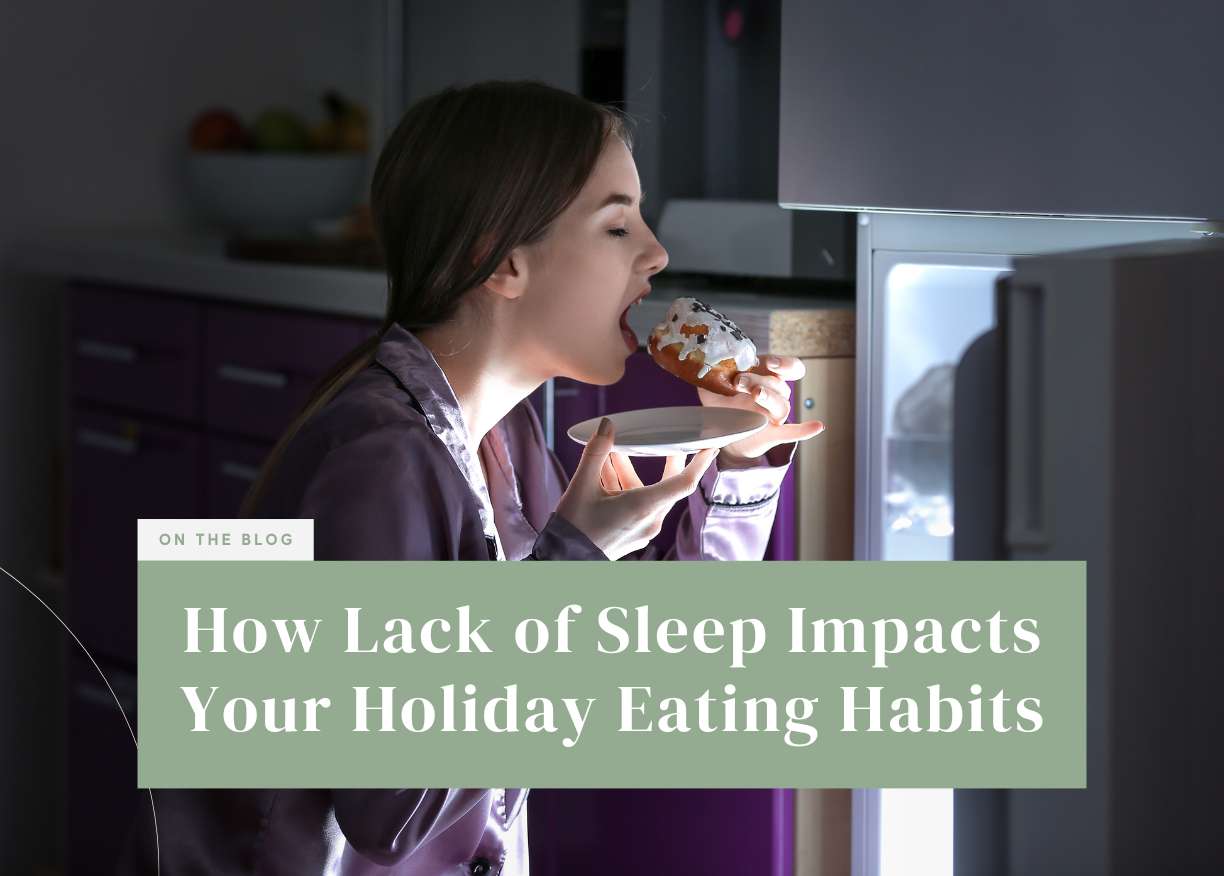
Holiday food is comforting—warm, flavorful, nostalgic.
But if you’ve ever noticed that you eat more during the holidays, crave sweets more intensely, or struggle to control portions, there’s a reason that goes beyond cookies, cinnamon rolls, and family dinners:

Lack of sleep changes the way your body craves, chooses, and digests food.
And during December—when routines fall apart and stress runs high—those effects become even stronger.
The Sleep–Hunger Connection (The Part No One Talks About)
Your appetite isn’t driven only by discipline or willpower.
It’s controlled mostly by hormones, and sleep is what regulates those hormones.

When you don’t sleep enough—especially during busy holiday weeks—three major things happen:
1. Your “I’m Hungry” Hormone Goes Up
Short sleep increases ghrelin, the hormone that signals hunger.
That means:
-
You feel hungrier
-
Cravings intensify
-
Smaller snacks don’t feel satisfying
More ghrelin = more grazing.
2. Your “I’m Full” Hormone Goes Down
At the same time, sleep loss lowers leptin, the hormone that tells your brain you’re full.
So even after big holiday meals, you may feel like you “need something else.”
Less leptin = harder to stop eating.
3. Your Brain Craves Quick Energy
When you’re tired, your brain wants:
-
Sugar
-
Carbs
-
High-calorie foods
Not because you lack discipline—
but because your body is looking for fast fuel to compensate for low energy.
Why This Is Strongest During the Holidays
December is the perfect storm for overeating:

It’s not the holidays making you overeat—
it’s the sleep disruption that comes with the holidays.
How Better Sleep Helps You Eat Better (Without Trying)

1. Aim for a stable bedtime—even if it shifts.
Your schedule may be messy, but consistency matters more than perfection.
2. Keep dinners earlier when possible.
Late meals worsen nighttime reflux and lead to morning cravings.
3. Get morning sunlight.
This resets your appetite hormones and stabilizes energy.
4. Don’t oversleep to “fix” a late night.
Sleeping in too long throws your hunger rhythm into chaos.
Get up, reset with light, and return to normal the next night.
5. Build a relaxing pre-bed wind-down.
This lowers cortisol—another hormone that increases appetite when elevated.
Why Your Sleep Setup Matters More in December
The holidays already disrupt your routine—your sleep environment is the one thing you can control. And a stable environment leads to stable appetite hormones.

🌿 Honey Hybrid Organic Mattress
Proper spinal support = less tossing = deeper rest.
When you reach slow-wave sleep consistently, your hunger hormones balance naturally.
🌿 Bamboo Sheets
Breathable, temperature-neutral fabrics prevent overheating and night sweats triggered by holiday meals or alcohol.
🌿 Adjustable Base
Perfect for December nights:
Raise your head slightly after late or heavy dinners for better digestion and smoother breathing.
Less reflux = better sleep = better appetite control the next day.
Your sleep setup doesn’t just affect your comfort—
it affects your cravings.
Final Thoughts
If you’re wondering why holiday eating feels harder to control, look at your sleep before you look at your meals.
When your nights are consistent, your hunger cues stay stable—making it easier to enjoy holiday foods without feeling out of control.
Good sleep doesn’t stop the cravings entirely…
it simply gives you the control back.

