 800-811-7514
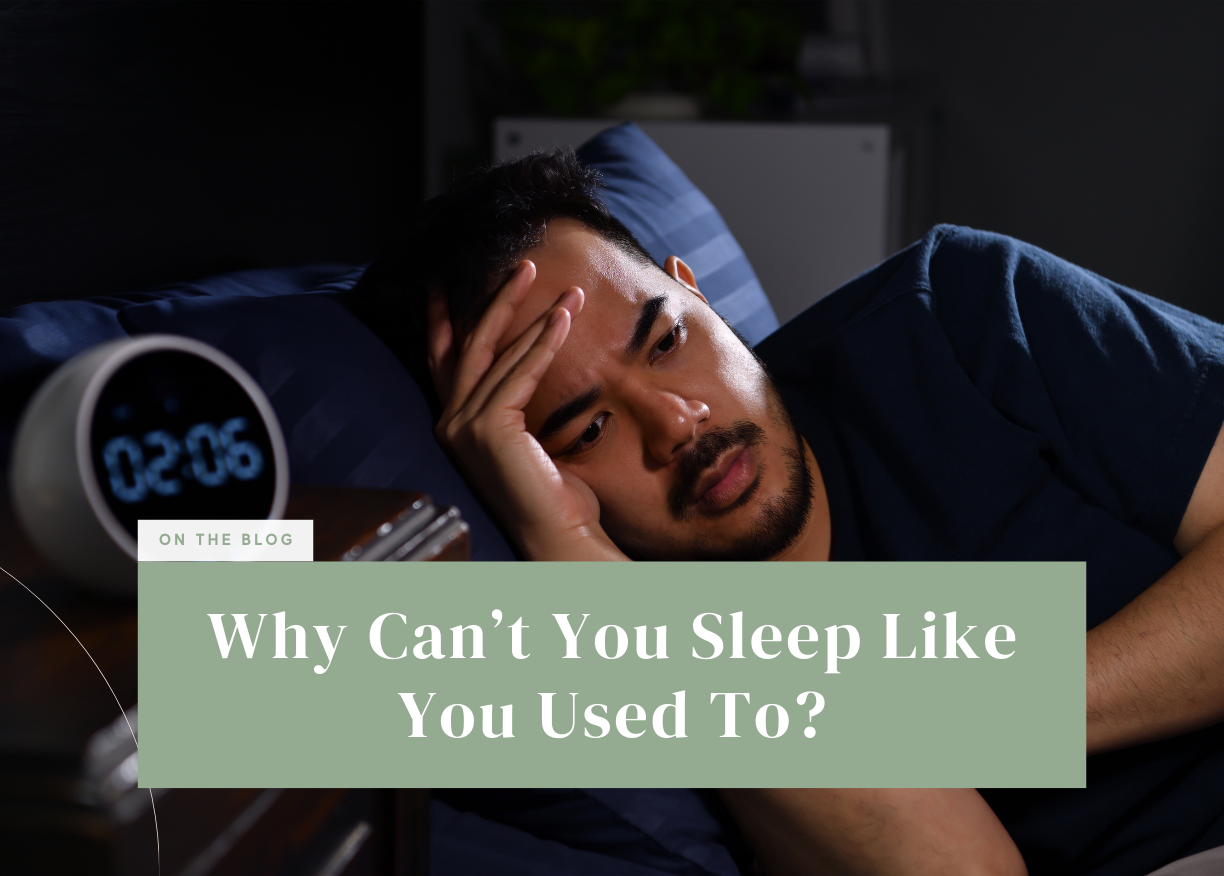
Why Can’t You Sleep Like You Used To?
There was a time when sleep felt easy.
You’d lie down…
drift off…
and wake up feeling fine.
Now?
You wake more often.
You think more at night.
You feel lighter, more alert, more sensitive to noise.
And you can’t help but wonder:
What changed?
Sleep doesn’t usually disappear overnight.
It shifts gradually—and often for reasons that make sense once you see them clearly.
1. Your Nervous System Is Different Now

Life adds layers.
Responsibilities.
Work stress.
Family obligations.
Unfinished thoughts.
Even if you don’t feel overwhelmed, your nervous system may be carrying more than it used to.
As stress accumulates over years, sleep becomes lighter.
Your body stays slightly more alert—even at night.
2. Your Hormones Shift Over Time

Hormones influence sleep more than most people realize.
As we age:
-
Melatonin production decreases
-
Cortisol patterns change
-
Sleep pressure builds differently
For women especially, hormonal cycles, pregnancy, perimenopause, and menopause dramatically affect sleep depth.
Sleep doesn’t vanish—it just becomes more sensitive.
3. Your Body Feels More at Night
When you were younger, you could sleep on almost anything.
Now:
-
Pressure points wake you
-
Back tension lingers
-
Temperature shifts disturb you
-
Stiffness shows up by morning
Your body isn’t worse—it’s just more aware.And awareness makes sleep easier to disrupt.
4. Light and Screens Play a Bigger Role

The modern world is brighter at night than ever before.
Phones.
LED lights.
Late-night scrolling.
Blue light delays melatonin release and shifts sleep timing subtly—but consistently.
Even 30–60 minutes of screen exposure can push sleep later and make it lighter.
5. Sleep Debt Adds Up Over Years
Sleep debt isn’t just about last night.
It accumulates over time.
Years of:
-
Short nights
-
Fragmented sleep
-
Irregular schedules
gradually lower sleep resilience.The body becomes less forgiving.
6. You Notice It More Now

When you’re younger, you recover quickly.
As life gets busier, poor sleep affects:
-
Mood
-
Focus
-
Energy
-
Patience
You don’t just sleep worse—you feel it more.
Why This Doesn’t Mean Something Is Wrong
Sleep changes are normal.
What’s not normal is accepting poor sleep as permanent.
Sleep is adaptable.
It responds to environment, stress, support, and routine.
How to Sleep Better Again

1. Respect your new rhythm
You may need earlier wind-down time or more consistency.
2. Lower stimulation at night
Dim lights. Fewer screens. Calmer evenings.
3. Support your body physically
As your body changes, your sleep surface needs to change too.
4. Improve sleep continuity
Fewer awakenings = deeper rest.
Why Your Sleep Setup Becomes More Important Over Time
When sleep becomes lighter, environment matters more.
🌿 Honey Mattress
Balanced support reduces pressure points and tossing—helping your body stay asleep longer.
🌿 Bamboo Sheets
Temperature regulation prevents overheating, which commonly disrupts aging sleep.
🌿 Adjustable Base
Allows subtle elevation to reduce back pressure and improve breathing—especially helpful when sleep feels fragile.
Small improvements in support often restore sleep more than you expect.
Final Thoughts
You can’t sleep like you used to because you’re not who you used to be.
Your body has changed.
Your stress load has changed.
Your rhythms have shifted.
But better sleep isn’t behind you.
It just requires adjusting your approach to match where you are now.
Sleep isn’t lost.
It’s evolving.