 800-811-7514
Can Anxiety Ruin Your Sleep? And What Can You Do About It?

You’re exhausted all day.
You tell yourself:
Tonight, I’m going to sleep early.
But then bedtime comes.
The house gets quiet.
The lights go off.
Your body lies down.
And suddenly, your mind wakes up.
You think about tomorrow.
You replay conversations.
You worry about money, work, family, health, or something you can’t even name clearly.
Your body wants sleep.
But your brain is still trying to protect you from problems that aren’t happening right now.
That is one of the most frustrating parts of anxiety.
It can make you tired all day…
and wide awake at night.
Why Anxiety Often Gets Worse at Bedtime

During the day, your mind has distractions.
Messages.
Tasks.
People.
Noise.
Errands.
Work.
But at night, everything slows down.
There is less noise outside you, which can make the noise inside you feel louder.
That is why anxiety often shows up when you finally get into bed.
Your brain suddenly has space to process everything it has been carrying.
Anxiety Keeps the Body on Alert

Sleep requires a sense of safety.
Your body needs to believe it is okay to relax.
Anxiety does the opposite.
It can create a state of alertness where the body acts like something needs attention.
You may notice:
-
Racing thoughts
-
Tight muscles
-
A faster heartbeat
-
Restlessness
-
Shallow breathing
-
Trouble relaxing
-
A feeling that you “can’t shut off”
Mayo Clinic lists nervousness, restlessness, increased heart rate, trouble concentrating, and trouble sleeping among common anxiety symptoms.
When your nervous system is activated, sleep becomes harder.
Not because you are doing something wrong.
Because your body is still in protection mode.
The Anxiety and Sleep Cycle

Anxiety can make sleep worse.
But poor sleep can also make anxiety feel stronger.
That creates a cycle:
You feel anxious, so you sleep poorly.
You sleep poorly, so the next day feels harder.
The harder the day feels, the more anxious you become at night.
Sleep Foundation explains that anxiety and sleep are closely linked: stress and worry can make it harder to fall asleep and stay asleep, while poor sleep can worsen anxiety symptoms.
This is why anxiety-related sleep problems can feel so hard to break.
You are not only fighting bedtime.
You are fighting a pattern.
Why Racing Thoughts Feel So Powerful at Night

At night, anxious thoughts can feel more convincing.
A small worry becomes a huge worry.
A simple task becomes urgent.
A normal life problem suddenly feels impossible.
That happens partly because tired brains are not always calm brains.
Sleep loss can affect mood and emotional regulation. A 2020 review found that sleep loss increased negative mood states and reduced positive mood states, while also affecting emotional regulation.
In simple terms:
When you are tired, your brain has a harder time calming itself down.
So the same thought that might feel manageable at 2 p.m. can feel overwhelming at 2 a.m.
Anxiety Can Also Wake You Up at Night

Anxiety does not only make it hard to fall asleep.
It can also make it hard to stay asleep.
Some people wake up in the middle of the night with:
-
A racing mind
-
Chest tightness
-
Worry
-
Restlessness
-
A feeling of panic
-
Trouble falling back asleep
Nighttime panic attacks can also happen. Mayo Clinic notes that nocturnal panic attacks can wake a person from sleep and may happen without a clear trigger.
If this happens often, it is worth discussing with a healthcare professional.
Sleep should not feel like something you fear.
What You Can Do Before Bed

You may not be able to remove every worry from your life.
But you can teach your body that bedtime is not the time to solve everything.
Here are simple steps that can help.
1. Create a “Worry Window” Earlier in the Evening

This sounds simple, but it can be powerful.
Instead of letting worries wait until bedtime, give them a place earlier in the day.
Take 10 minutes and write down:
-
What is on my mind?
-
What can I control?
-
What can wait?
-
What is one small next step?
You are not trying to solve your whole life in one notebook.
You are telling your brain:
I heard you. We wrote it down. We do not need to keep replaying this in bed.
2. Build a Real Wind-Down Routine

An anxious brain does not switch off instantly.
It needs a transition.
Try starting your wind-down 30 to 60 minutes before bed.
Keep it simple:
-
Dim the lights
-
Put away work
-
Lower phone use
-
Take a warm shower
-
Read something calming
-
Stretch gently
-
Listen to quiet music
-
Do slow breathing
Your routine does not need to be perfect.
It just needs to be consistent enough that your body starts recognizing the signal.
The day is ending.
3. Stop Checking the Clock

Clock checking makes anxiety worse.
You wake up, look at the time, and immediately calculate:
If I fall asleep now, I’ll get five hours.
Now four and a half.
Now I’m going to feel terrible tomorrow.
That pressure creates more alertness.
If the clock makes you anxious, turn it away.
Your job at night is not to manage the math.
Your job is to rest.
4. Use Your Breath to Calm the Body

Breathing does not erase anxiety.
But it can send a calming signal to the nervous system.
Try this:
Breathe in slowly.
Exhale longer than you inhale.
Repeat gently.
The longer exhale matters because it helps shift the body away from alert mode.
Do not force it.
Do not make it complicated.
Just slow the body down one breath at a time.
5. Relax the Body Before Trying to Relax the Mind

Sometimes, telling your mind to calm down does not work.
So start with the body.
Relax your jaw.
Drop your shoulders.
Unclench your hands.
Soften your stomach.
Let your legs feel heavy.
Anxiety often lives in muscle tension.
When the body softens, the mind may follow.
6. Make the Bedroom Feel Safe and Predictable

An anxious brain dislikes unpredictability.
That is why your sleep environment matters.
Try to make your bedroom:
-
Cool
-
Dark
-
Quiet
-
Comfortable
-
Uncluttered
-
Free from work reminders
The goal is not a perfect bedroom.
The goal is a room that tells your nervous system:
Nothing needs to be handled right now.
7. Get Out of Bed If Anxiety Takes Over

If you are wide awake and getting more frustrated, staying in bed may make the problem worse.
After a while, your brain can start associating bed with stress instead of sleep.
If you feel fully awake, get up briefly.
Keep lights low.
Do something calm and boring, like reading a few pages or sitting quietly.
Then return to bed when sleepiness comes back.
This is not giving up.
It is resetting.
When to Get Extra Help

Everyone feels anxious sometimes.
But if anxiety is regularly interfering with sleep, work, relationships, health, or daily life, it may be time to talk to a healthcare professional.
NIMH explains that generalized anxiety disorder involves difficult-to-control worry on most days for at least 6 months, along with symptoms that can include restlessness, fatigue, trouble concentrating, irritability, muscle tension, and problems with sleep.
You do not need to wait until things feel unbearable.
Support can help.
And if you ever feel unsafe, hopeless, or at risk of harming yourself, seek immediate help from emergency services or a crisis support line.
How Your Sleep Setup Can Help
A better bed will not remove anxiety from your life.
But it can help reduce the physical discomfort that keeps your body alert.
When your body feels supported, cool, and comfortable, it has fewer reasons to stay awake.
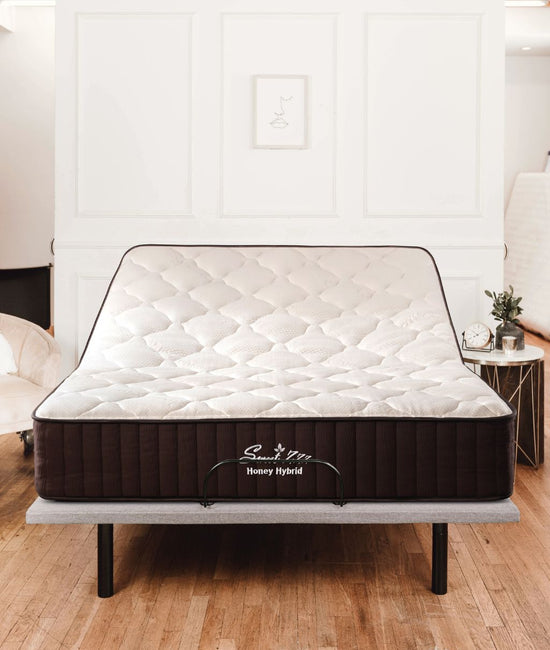
Designed to support spinal alignment and relieve pressure, helping your body settle more comfortably instead of tossing and turning.
Soft, breathable, and moisture-wicking, they help prevent overheating, which can make anxiety feel worse at night.
Allows you to raise your head or legs, find a more relaxed position, and use massage as part of a calming wind-down routine.
Supports the neck and helps reduce tension, especially for people who carry stress in their shoulders and upper back.
Your sleep setup cannot do the emotional work for you.
But it can make rest feel easier to reach.
Final Thoughts
Anxiety can absolutely affect sleep.
It can make your thoughts louder, your body more alert, and your nights feel longer than they should.
But that does not mean you are stuck.
Start small.
Create a wind-down routine.
Write down your worries earlier.
Stop watching the clock.
Calm the body first.
Make your bedroom feel safe.
And if anxiety keeps interfering with your life, get support.
Because sleep is not just about closing your eyes.
It is about convincing your body that for now…
you are safe enough to rest.