 800-811-7514
Can Poor Sleep Actually Cause Stress and Depression?

You go to bed late.
You wake up tired.
At first, it feels like a normal bad morning.
You’re a little more irritable.
A little less patient.
A little more overwhelmed by things that usually wouldn’t bother you.
But when poor sleep keeps happening night after night, it can start affecting more than your energy.
It can affect your mood.
Your stress levels.
Your emotional resilience.
And for some people, it may even become part of a deeper cycle with anxiety or depression.
So the question is:
Can poor sleep actually cause stress and depression?
The honest answer is:
Poor sleep may not be the only cause, but it can absolutely make your mental health harder to manage.
Sleep and Mental Health Are Closely Connected

For a long time, sleep problems were often seen as just a symptom of stress or depression.
And that can be true.
When your mind is heavy, sleep can become harder.
But researchers now understand the relationship goes both ways.
Poor sleep can affect mental health, and mental health struggles can affect sleep. Johns Hopkins Medicine notes that poor sleep may make emotional regulation harder, while depression itself is also associated with sleep difficulties.
That means sleep is not just something that gets disrupted when you feel bad.
It may also influence how well you’re able to handle stress in the first place.
Why Poor Sleep Makes Stress Feel Worse

When you sleep well, your brain gets a chance to reset.
You’re usually better able to:
-
Think clearly
-
Regulate emotions
-
Respond calmly
-
Handle frustration
-
Make decisions
But when sleep is short or broken, your emotional control becomes weaker.
Small problems feel bigger.
Minor inconveniences feel personal.
Your patience drops.
And your nervous system can start acting like everything is urgent.
That’s why one bad night can make the whole next day feel harder than it should.
Poor Sleep Reduces Emotional Resilience

Emotional resilience is your ability to recover after stress.
It’s what helps you deal with traffic, work pressure, family problems, money worries, and daily frustrations without feeling completely drained.
Poor sleep weakens that buffer.
Johns Hopkins Medicine reported that interrupted sleep reduced positive mood the next day in a study of healthy adults, and noted that ongoing insomnia may increase depression risk by weakening emotional resilience.
In simple terms:
When you don’t sleep well, life can feel heavier.
Not because you’re weak.
Because your brain didn’t get the recovery it needed.
Can Poor Sleep Contribute to Depression?

Poor sleep does not automatically cause depression.
Depression is complex.
It can involve biology, life stress, trauma, hormones, genetics, health conditions, medications, and many other factors.
But sleep can play an important role.
Insomnia and depression have a strong two-way relationship. Johns Hopkins Medicine explains that people with insomnia may have a higher risk of developing depression, while many people with depression also have trouble falling asleep or staying asleep.
A large CDC-published study also found that adults who averaged 6 hours of sleep or less were about 2.5 times more likely to report frequent mental distress than those who slept more than 6 hours, although the study also noted that more research is needed to fully understand the timing and direction of the relationship.
So no, poor sleep is not the whole story.
But it can be part of the story.
And improving sleep may help support better emotional health.
Why Stress Keeps You Awake

The frustrating part is that stress and poor sleep often feed each other.
Stress makes sleep harder because your brain stays alert.
You may lie in bed thinking about:
-
Work
-
Money
-
Family
-
Health
-
The future
-
Things you wish you said differently
Your body may feel tired, but your mind is still trying to solve problems.
That mental activity can delay sleep.
Then the next day, because you slept poorly, you feel even less equipped to handle stress.
And the cycle continues.
Signs Poor Sleep May Be Affecting Your Mood

Pay attention if you notice:
-
You feel irritated more easily
-
Small problems overwhelm you
-
You have trouble focusing
-
You feel emotionally flat
-
You feel more anxious at night
-
You wake up tired most mornings
-
You no longer feel refreshed after sleep
These signs don’t always mean something serious is happening.
But they are worth noticing.
Your body may be asking for better recovery.
What Helps Break the Cycle

1. Keep a Consistent Sleep Schedule
Your brain loves rhythm.
Going to bed and waking up around the same time helps stabilize your internal clock.
That can make sleep feel less like a nightly battle.
2. Create a Real Wind-Down Period
You can’t expect your mind to go from stress mode to sleep mode instantly.
Give yourself time to transition.
Try:
-
Dimming lights
-
Putting your phone away
-
Reading something calming
-
Gentle stretching
-
Slow breathing
-
A warm shower
The goal is not perfection.
The goal is sending your body a clear signal:
The day is ending now.
3. Stop Turning Bed Into a Thinking Room

Many people use bedtime as the first quiet moment of the day.
That means the brain finally gets a chance to process everything.
If this happens to you, try writing down your thoughts before bed.
A simple list can help:
-
What’s on my mind?
-
What can wait until tomorrow?
-
What is one thing I can do next?
Sometimes the brain relaxes once it knows the thought has been stored somewhere.
4. Get Morning Light
Morning light helps anchor your sleep-wake rhythm.
It tells your brain:
This is daytime.
That makes it easier for your body to understand when nighttime should begin.
Even a short walk outside can help.
5. Don’t Ignore Persistent Symptoms
If sleep problems continue for weeks, or if you feel hopeless, deeply sad, emotionally numb, or unable to function normally, it’s important to talk to a healthcare professional.
Sleep changes can be connected to stress, depression, anxiety, sleep apnea, medication effects, thyroid issues, pain, and other conditions.
You don’t have to guess alone.
Why Your Sleep Setup Matters
Your habits matter.
But your sleep environment matters too.
If your bed causes discomfort, heat, pressure, or frequent waking, your brain loses chances to fully recover.
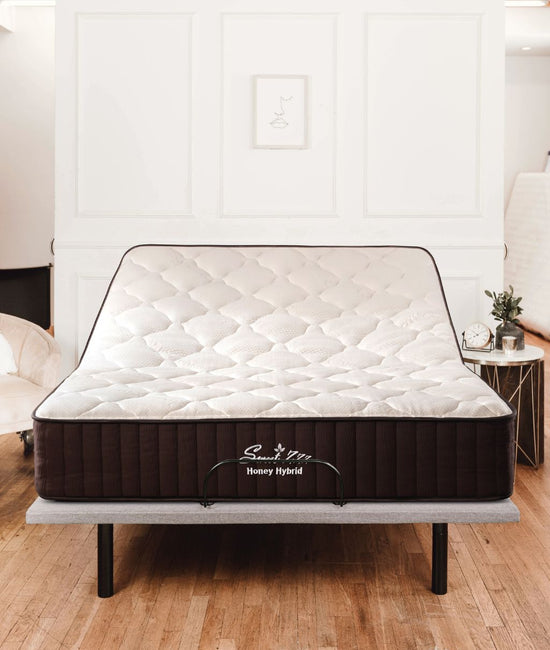
Designed to support proper spinal alignment while relieving pressure, helping your body relax more deeply through the night. Its breathable organic materials also help reduce overheating, which can disrupt sleep.
Soft, breathable, and moisture-wicking, they help create a cooler and calmer sleep surface. That matters because temperature discomfort can quietly wake you or keep you in lighter sleep.
Can help you find a more comfortable position before sleep, reduce pressure, elevate your head or legs, and create a relaxing wind-down experience with massage.
Better sleep doesn’t solve every stressful thing in life.
But it can give your mind and body a stronger foundation to face them.
Final Thoughts
Poor sleep does not mean you will become depressed.
And depression is never as simple as “just sleep better.”
But sleep and mental health are deeply connected.
When you sleep poorly, your brain has a harder time regulating emotion, handling stress, and recovering from the day.
When you sleep better, life often feels more manageable.
Not perfect.
Not suddenly easy.
But lighter.
And sometimes, that is the first step toward feeling like yourself again.