 800-811-7514
Does ADHD Make It Harder to Sleep? Here’s What’s Really Going On

If you have ADHD, or suspect you might, sleep can feel unpredictable.
Some nights, your mind won’t slow down.
Other nights, you crash hard but still wake up tired.
You try to “just go to bed earlier”…
but your brain doesn’t follow.
So the question becomes:
Is ADHD affecting your sleep—or is it something else?
The answer is: ADHD and sleep are deeply connected.
Why ADHD and Sleep Are So Closely Linked
ADHD doesn’t just affect focus during the day.
It affects how your brain regulates stimulation, timing, and rest.
That directly impacts sleep.
1. The ADHD Brain Has Trouble “Powering Down”

At night, most brains gradually slow.
But with ADHD:
-
Thoughts keep looping
-
Ideas keep popping up
-
The brain stays stimulated
This makes falling asleep feel like trying to stop a moving train.
It’s not a lack of discipline—it’s a difference in brain regulation.
2. Delayed Sleep Timing Is Common

Many people with ADHD experience a delayed circadian rhythm.
That means:
-
You don’t feel sleepy until later
-
You feel more alert at night
-
Mornings feel harder
This isn’t just a habit—it’s biological.
3. Dopamine Plays a Role

ADHD is linked to differences in dopamine regulation.
Dopamine affects:
-
Motivation
-
Focus
-
Sleep-wake timing
At night, low dopamine can lead to seeking stimulation (scrolling, thinking, doing “just one more thing”)—which delays sleep further.
4. Sleep Feels Inconsistent
People with ADHD often report:
-
Some nights are fine
-
Others feel chaotic
-
Sleep quality varies widely
That inconsistency makes it harder to build stable routines.
5. ADHD Increases Sensitivity to Disruption

Noise, light, discomfort, temperature—
all can feel more noticeable.
This leads to:
-
More awakenings
-
Lighter sleep
-
Difficulty falling back asleep
The brain stays alert to stimulation.
Why Poor Sleep Makes ADHD Worse
This goes both ways.
Lack of sleep increases:
-
Brain fog
-
Impulsivity
-
Emotional reactivity
-
Difficulty focusing
So ADHD affects sleep…
and poor sleep amplifies ADHD.
What Actually Helps (That Isn’t Just “Try Harder”)
1. Accept Your Natural Rhythm (Then Guide It)
If your brain prefers later sleep, shift gradually—not forcefully.
2. Reduce Stimulation Before Bed

The ADHD brain needs a clear signal that stimulation is ending.
Try:
-
Dim lighting
-
Less screen exposure
-
Slower activities
3. Create Predictable Cues
Routine matters more than strict timing.
Same sequence each night → trains the brain.

4. Make the Bedroom Low-Stimulation
Reduce:
-
Bright light
-
Clutter
-
Noise
The calmer the space, the easier the brain settles.
5. Support Physical Comfort
If your body isn’t comfortable, your brain won’t relax.
ADHD amplifies physical distractions.
Why Sleep Setup Matters More With ADHD
When the brain is easily stimulated, physical calm becomes essential.
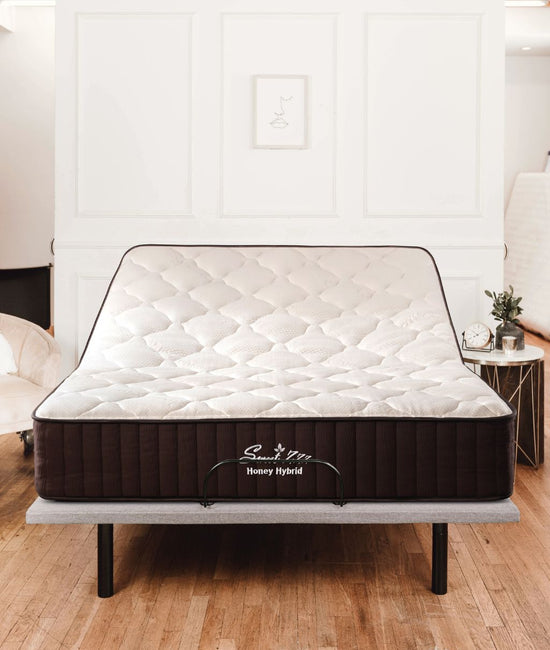
🌿 Honey Hybrid Organic Latex Mattress
Reduces pressure points and movement—helping the body stay still so the brain can settle.
🌿 Bamboo Sheets
Temperature regulation prevents overheating, which can feel especially disruptive.
🌿 Adjustable Base
Gentle elevation can create a more comfortable, grounded position—helping the body relax faster.
The less your body distracts you, the easier your mind follows.
Final Thoughts
ADHD doesn’t prevent good sleep.
But it does mean your brain needs a different approach.
Less force.
More structure.
More environmental support.
When you work with your brain instead of against it, sleep becomes more predictable—and far less frustrating.