 800-811-7514
How Much Does Your Pillow Really Matter?

Most people blame the mattress first.
They wake up with neck pain.
Shoulder tension.
A headache.
A stiff upper back.
And they immediately think:
Maybe I need a new mattress.
Sometimes, they’re right.
But sometimes, the problem is much smaller.
It’s sitting right under their head.
Your pillow may not seem like a big deal, but it plays a major role in how your neck, shoulders, and spine feel through the night.
So how much does your pillow really matter?
More than most people think.
Your Pillow Has One Main Job

A pillow is not just there to feel soft.
Its main job is alignment.
It should support your head and neck in a neutral position while you sleep.
That means your neck should not bend too far up, too far down, or too far to the side.
When your pillow does its job, your muscles can relax.
When it doesn’t, your muscles may work all night trying to hold your head in a better position.
That’s when you wake up feeling tight, sore, or uncomfortable.
A Bad Pillow Can Affect More Than Your Neck

The neck connects to everything.
When your pillow is wrong, the discomfort often spreads.
You may feel it in your:
-
Shoulders
-
Upper back
-
Jaw
-
Head
-
Arms
-
Lower back
That’s because poor neck alignment can affect your entire posture while you sleep.
You may think you just “slept wrong.”
But if it keeps happening, your pillow may be part of the problem.
If Your Pillow Is Too High

A pillow that is too high pushes your head upward.
This can bend your neck unnaturally for hours.
Over time, that may lead to:
-
Neck stiffness
-
Shoulder tension
-
Headaches
-
Upper back discomfort
-
A cramped feeling in the morning
This is especially common for back sleepers and stomach sleepers who use thick pillows.
Your head should feel supported.
Not pushed forward.
If Your Pillow Is Too Low

A pillow that is too low can let your head drop downward.
For side sleepers, this is especially important.
When you sleep on your side, there is space between your head and the mattress because of your shoulder.
If your pillow does not fill that space properly, your neck bends downward all night.
That can cause:
-
Neck pain
-
Shoulder pressure
-
Arm numbness
-
Restless sleep
-
Morning stiffness
A pillow that feels soft is not always supportive enough.
Your Sleep Position Changes What You Need

There is no one perfect pillow for everyone.
Your ideal pillow depends partly on how you sleep.
Side Sleepers Usually Need More Support

Side sleepers often need a fuller pillow because the pillow has to fill the space between the shoulder and the head.
The goal is to keep the neck level with the spine.
Too flat, and the neck drops.
Too thick, and the neck bends upward.
The right pillow helps the head stay centered and supported.
Back Sleepers Usually Need Medium Support

Back sleepers typically need a pillow that supports the natural curve of the neck without pushing the head too far forward.
A pillow that is too high can make the chin tilt toward the chest.
A pillow that is too flat can leave the neck unsupported.
The best pillow for back sleeping usually feels balanced.
Soft enough to relax into.
Supportive enough to maintain posture.
Stomach Sleepers Usually Need the Least Height

Stomach sleeping is already tough on the neck because the head is turned to one side for hours.
A thick pillow can make this position even harder by forcing the neck into a stronger angle.
If someone sleeps on their stomach, a thinner pillow is usually more comfortable.
Some stomach sleepers may even benefit from gradually training themselves toward side sleeping to reduce strain.
A Pillow Can Affect Breathing Too

Pillow height can also influence how open or restricted your airway feels.
If the head is pushed too far forward or tilted awkwardly, breathing may feel less comfortable.
This can matter for people who snore, feel congested, or wake up with a dry mouth.
A pillow is not a medical treatment for breathing problems, but proper head and neck support can make sleep feel more natural and comfortable.
Your Pillow Can Affect How Your Mattress Feels

This is one of the most overlooked points.
You can have a great mattress and still sleep poorly if your pillow is wrong.
A mattress supports your body.
A pillow supports your head and neck.
If those two are not working together, your spine may still fall out of alignment.
That’s why some people replace their mattress and still wake up with discomfort.
They fixed the foundation but ignored the top of the spine.
How Do You Know If Your Pillow Is the Problem?

Your pillow may not be supporting you well if:
-
You wake up with neck pain
-
You wake up with headaches
-
Your shoulders feel tight in the morning
-
You fold or stack your pillow to get comfortable
-
You constantly adjust it during the night
-
Your pillow feels lumpy or flat
-
You sleep better on a different pillow when traveling
-
Your pillow is old and no longer holds shape
A pillow should not need constant fixing.
If you have to wrestle with it every night, it may not be doing its job.
When Should You Replace Your Pillow?

Pillows do not last forever.
Over time, they can lose shape, support, and comfort.
They may also collect sweat, oils, dust, and allergens.
If your pillow feels flat, uneven, lumpy, or no longer supports your neck, it may be time for a replacement.
A good pillow should feel comfortable when you lie down and still supportive when you wake up.
What Makes a Good Pillow?

A good pillow should be:
-
Supportive
-
Comfortable
-
Breathable
-
Responsive
-
Durable
-
Appropriate for your sleep position
It should gently hold your head and neck in place without feeling stiff or overly firm.
The goal is not just softness.
The goal is relaxed alignment.
The Best Sweet Zzz Setup for Better Alignment
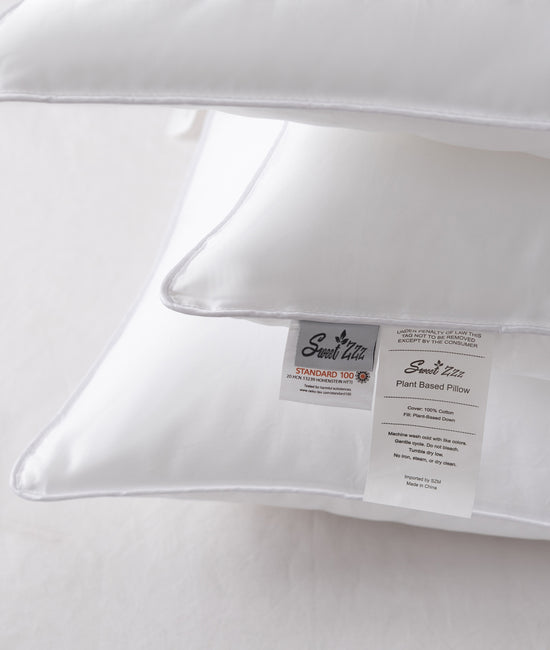
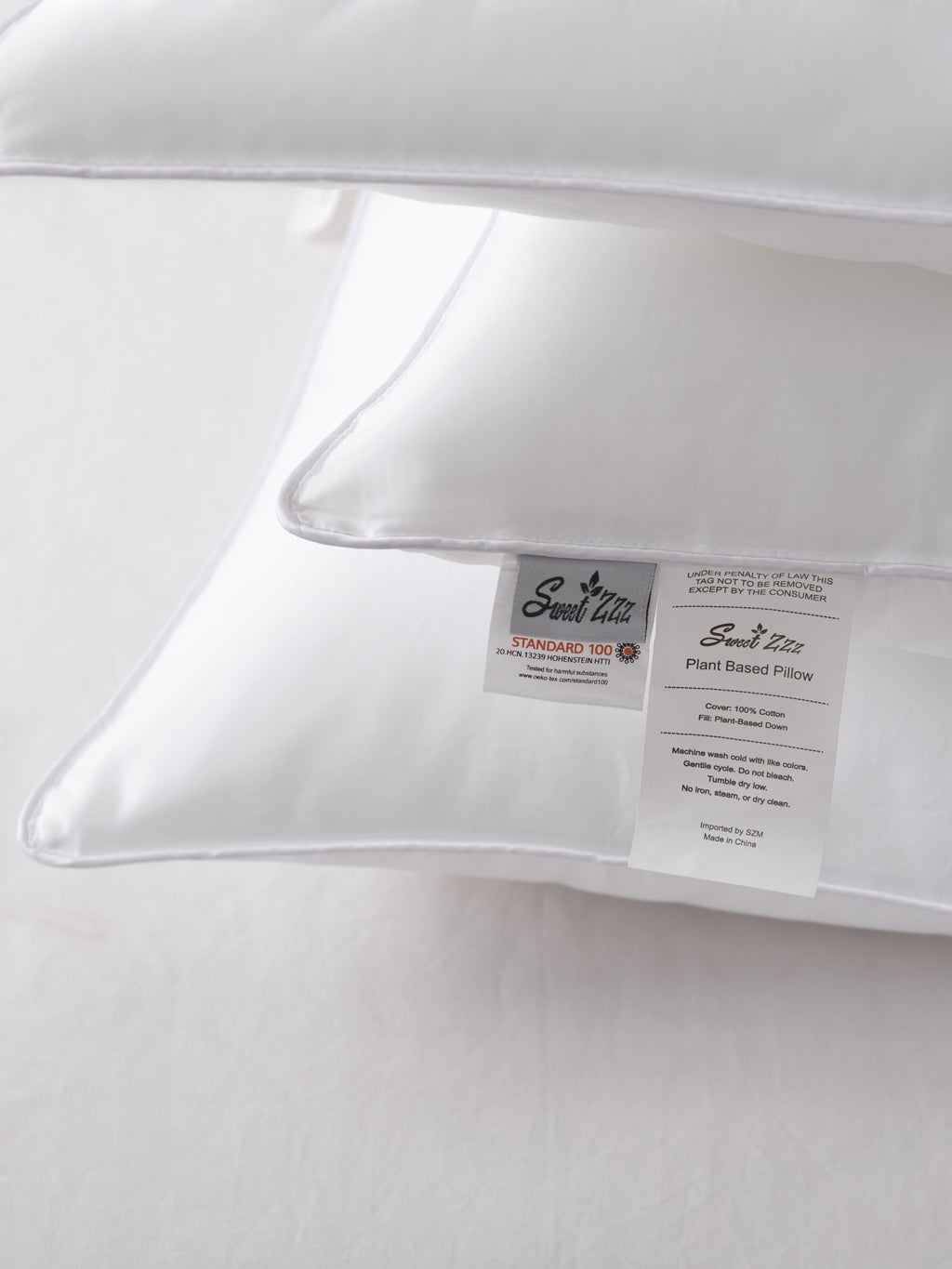
The Sweet Zzz Plant-Based Pillow is designed to support the head and neck while still feeling soft and comfortable. It helps your body settle into better alignment without the heavy, stiff feel some pillows have.
It is especially helpful for sleepers who want neck support, pressure relief, and a cleaner, more comfortable sleep surface.
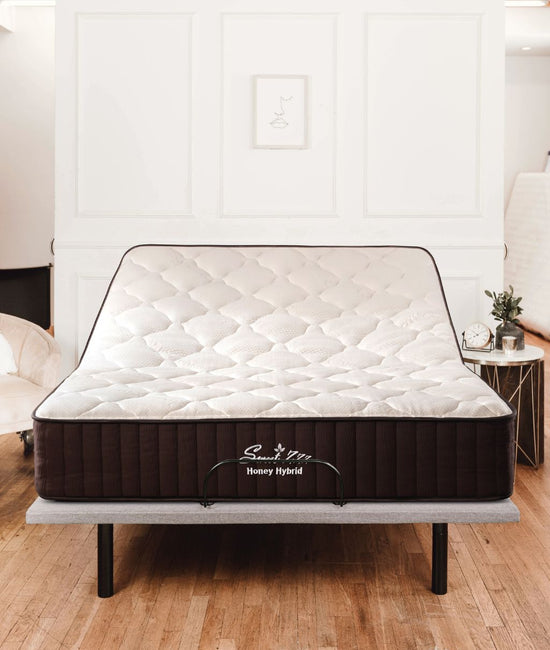
Your pillow supports the top of your spine, but your mattress supports the rest of your body. The Honey Hybrid Organic Mattress provides balanced support and pressure relief, helping your shoulders, hips, and back stay properly aligned.
Together, the right pillow and mattress create a more complete sleep system.
Soft, breathable, and moisture-wicking, Bamboo Sheets help reduce heat and friction around the face, neck, and shoulders, making your sleep surface feel smoother and more comfortable.
An adjustable base can help you find a better resting position for reading, relaxing, reducing pressure, or elevating your upper body. When paired with the right pillow, it helps support comfort without needing to stack pillows awkwardly.
Final Thoughts
Your pillow matters because your neck matters.
And your neck affects the rest of your body.
A bad pillow can create tension, stiffness, headaches, shoulder pain, and restless sleep.
A good pillow helps your body stay aligned, relaxed, and supported.
So before you assume your mattress is the only problem, look at what your head is resting on every night.
Because sometimes, better sleep does not start with changing the whole bed.
Sometimes, it starts with the pillow.