 800-811-7514
How to Get Deeper Sleep Without Spending More Time in Bed

You went to bed early.
You gave yourself enough hours.
You did what everyone says you’re supposed to do.
But somehow…
you still woke up tired.
That’s when sleep becomes confusing.
Because if you were in bed long enough, shouldn’t you feel better?
Not always.
Sometimes the problem is not how much time you spend in bed.
Sometimes the problem is how restorative that sleep actually is.
So the better question becomes:
Can you help your body sleep deeper without simply sleeping longer?
The answer is yes.
Not by forcing deep sleep.
Not by chasing a perfect sleep tracker score.
But by creating the conditions that help your body move through sleep more smoothly.
First: What Does “Deep Sleep” Actually Mean?

Sleep is not one single state.
Your body moves through stages throughout the night.
Some stages are lighter.
Some are deeper.
Some are connected with dreaming.
Some are more focused on physical restoration.
The NHLBI explains that deep sleep is a stage of non-REM sleep also called slow-wave sleep, named after the pattern seen in brain activity during that stage.
Deep sleep is often associated with physical recovery, immune support, tissue repair, and feeling more refreshed.
But here’s the important part:
You do not manually control deep sleep.
You cannot simply tell your body:
Give me more deep sleep tonight.
What you can do is reduce the things that keep pulling you out of it.
Deep Sleep Depends on Sleep Quality

Many people think:
More hours = better sleep.
But sleep does not work that way every time.
The NHLBI notes that not getting enough sleep or not getting enough quality sleep can affect clear thinking, focus, metabolism, and overall health.
That means quality matters.
If your sleep is constantly interrupted by heat, stress, pain, caffeine, noise, reflux, snoring, or discomfort, your body may not stay in deeper sleep long enough to feel fully restored.
You may technically be asleep.
But your sleep may not be steady.
Why You Wake Up Tired After Enough Hours

If you wake up tired after 7 or 8 hours, there may be a reason.
Your sleep may have been:
-
Too light
-
Too fragmented
-
Too hot
-
Too uncomfortable
-
Too irregular
-
Interrupted by breathing issues
-
Disrupted by stress or anxiety
Sometimes people blame themselves.
They think they’re lazy.
Or aging.
Or just “not morning people.”
But the real issue may be that their body never got the kind of sleep that helps them recover.
1. Keep Your Sleep Schedule Consistent

Deep, restorative sleep likes rhythm.
Your body has an internal clock, and it works better when your sleep and wake times are reasonably steady.
If you go to bed at 10 p.m. one night, 1 a.m. the next, and midnight the night after, your body has a harder time knowing when to prepare for sleep.
The CDC lists going to bed and waking up at the same time each day as one of the habits that can support better sleep.
Consistency does not have to mean perfection.
It means giving your body a predictable pattern most nights.
That alone can make sleep feel deeper and more natural.
2. Stop Letting Caffeine Reach Bedtime

Caffeine can be helpful in the morning.
But if it stays in your system too late, it can interfere with sleep quality.
You may still fall asleep.
But your sleep may feel lighter, shorter, or less restorative.
Mayo Clinic notes that the stimulating effects of caffeine can take hours to wear off and may interfere with sleep.
So if you wake up tired despite spending enough time in bed, look at your caffeine timing.
Not just your last coffee.
Also tea, soda, energy drinks, chocolate, and some pre-workouts.
A good rule for many people is to keep caffeine earlier in the day and see if sleep becomes deeper.
3. Cool the Bedroom Down

Your body temperature naturally shifts around sleep.
A room that is too warm can make it harder to stay asleep.
You may toss.
Wake up sweaty.
Kick off the covers.
Flip the pillow.
Drift in and out of lighter sleep.
Mayo Clinic recommends making the bedroom favorable for sleep by keeping light, noise, and temperature at comfortable levels that do not disturb rest.
This matters because overheating is one of the most common reasons people wake up without realizing why.
A cooler, breathable sleep environment can help your body stay settled longer.
4. Exercise, But Don’t Make Bedtime Too Intense

Regular movement can support better sleep.
Exercise helps the body use energy, reduce stress, and build stronger sleep pressure by nighttime.
The CDC includes exercise among habits that can help improve sleep.
But timing matters.
A very intense workout right before bed may leave some people too energized, especially if their heart rate stays high or their body temperature remains elevated.
That does not mean evening exercise is bad for everyone.
But if your sleep feels light, test your timing.
Move intense workouts earlier when possible.
Save gentle stretching or light movement for the evening.
5. Create a Real Wind-Down Period

Deep sleep begins before you fall asleep.
Not literally.
But the state you bring into bed matters.
If you go straight from stress, screens, work, arguments, bills, or intense content into bed, your nervous system may still be alert.
Your body is lying down.
But your brain is still active.
A wind-down routine helps create a bridge between the day and sleep.
Try:
-
Dimming lights
-
Putting your phone away
-
Taking a warm shower
-
Reading something calming
-
Stretching gently
-
Listening to soft music
-
Writing down tomorrow’s tasks
Mayo Clinic suggests doing the same calming activities before bed each night, such as caffeine-free tea, a warm shower, or soft music, to help stay asleep through the night.
The goal is not to create a perfect routine.
The goal is to stop asking your body to fall asleep while it still feels like the day is unfinished.
6. Avoid Heavy Meals Too Close to Bed

A large meal late at night can make sleep feel less comfortable.
Your body is trying to rest, but digestion is still active.
For some people, heavy meals close to bedtime can contribute to reflux, discomfort, overheating, or restless sleep.
This does not mean you must go to bed hungry.
But if deeper sleep is the goal, it may help to give your body time to digest before lying down.
A lighter evening meal, earlier dinner, or smaller late snack may make the night feel easier.
7. Reduce Nighttime Disruptions

Deep sleep does not like interruptions.
Even if you do not fully remember waking up, your body may still be pulled into lighter sleep.
Common disruptions include:
-
Noise
-
Light
-
Heat
-
Pressure points
-
A bad pillow
-
A sagging mattress
-
Partner movement
-
Reflux
-
Snoring
-
Bathroom trips
Your job is not to create a perfect bedroom.
Your job is to remove the obvious things that keep telling your body:
Wake up. Adjust. Something is uncomfortable.
The fewer disruptions your body has to manage, the more naturally sleep can deepen.
8. Don’t Chase Deep Sleep on a Tracker

Sleep trackers can be useful.
But they can also create pressure.
If you wake up and immediately judge the night based on a score, sleep can start feeling like a performance.
That pressure can backfire.
Most consumer trackers estimate sleep stages.
They do not perfectly measure what a full sleep study measures.
So use the data lightly.
Look for patterns, not perfection.
If you feel better, function better, and wake up more refreshed, that matters.
Healthy sleep is not a competition.
9. Pay Attention to Breathing

If your sleep feels unrefreshing even when your habits are good, breathing may be part of the issue.
Snoring, gasping, choking, or pauses in breathing can interrupt sleep quality.
That can prevent the body from staying in deeper, more restorative stages.
If you regularly wake up tired, have morning headaches, feel sleepy during the day, or your partner notices breathing pauses, talk to a healthcare professional.
A better mattress or pillow can help comfort.
But sleep apnea and breathing disorders need proper evaluation.
10. Make Comfort a Priority

Your body cannot fully relax if it is uncomfortable.
Pressure points, poor support, heat, and awkward neck alignment can all keep sleep lighter.
You may not wake up fully every time.
But your body keeps adjusting.
That is why comfort matters so much.
Not luxury comfort.
Functional comfort.
The kind that lets your muscles stop working, your joints stop complaining, and your nervous system stop scanning for problems.
The Sweet Zzz Setup for Deeper, More Restorative Sleep
You cannot force deep sleep.
But you can create a sleep environment that helps your body stay comfortable, cool, supported, and less interrupted.
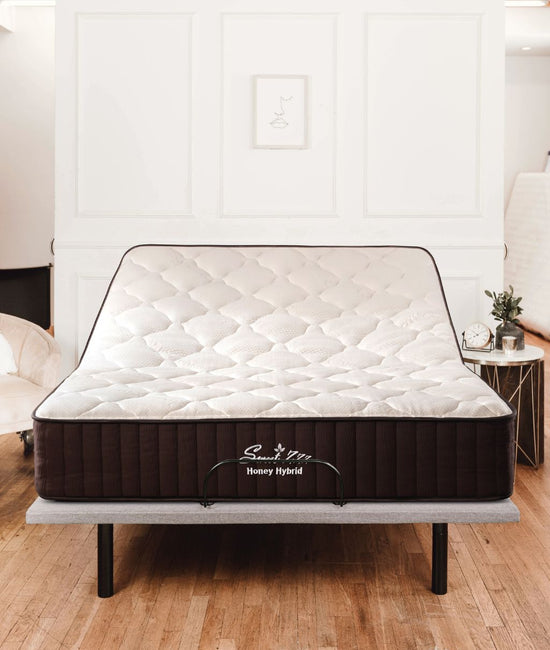
Designed to support spinal alignment and relieve pressure, helping the body settle more comfortably through the night. Its breathable organic materials help reduce overheating, while GOLS organic latex and pocketed coils provide responsive support that makes natural movement easier.
Soft, breathable, and moisture-wicking, they help regulate temperature and reduce the sticky, overheated feeling that can pull you into lighter sleep.
Supports the head and neck so your spine can stay better aligned. Proper pillow support can reduce tension that might otherwise keep you adjusting throughout the night.
Helps you find a more comfortable position, elevate your head or legs, reduce pressure, and relax before sleep with massage. It can also reduce the need for awkward pillow stacking.
Better sleep depth often begins with fewer interruptions.
And your sleep setup plays a big role in that.
Final Thoughts
Getting deeper sleep does not mean chasing hacks.
It does not mean forcing your body to sleep less.
And it does not mean obsessing over a tracker score.
It means creating the right conditions for your body to do what it already knows how to do.
Keep a steady schedule.
Protect your wind-down.
Watch caffeine.
Cool the room.
Move your body.
Reduce disruptions.
Make the bed comfortable.
Because deep sleep is not something you command.
It is something you make room for.
And when your body finally feels safe, cool, supported, and undisturbed…
sleep has a much better chance of doing its real work.