 800-811-7514
How to Sleep Better After a Long Day on Your Feet

Some days, your body feels loud by bedtime.
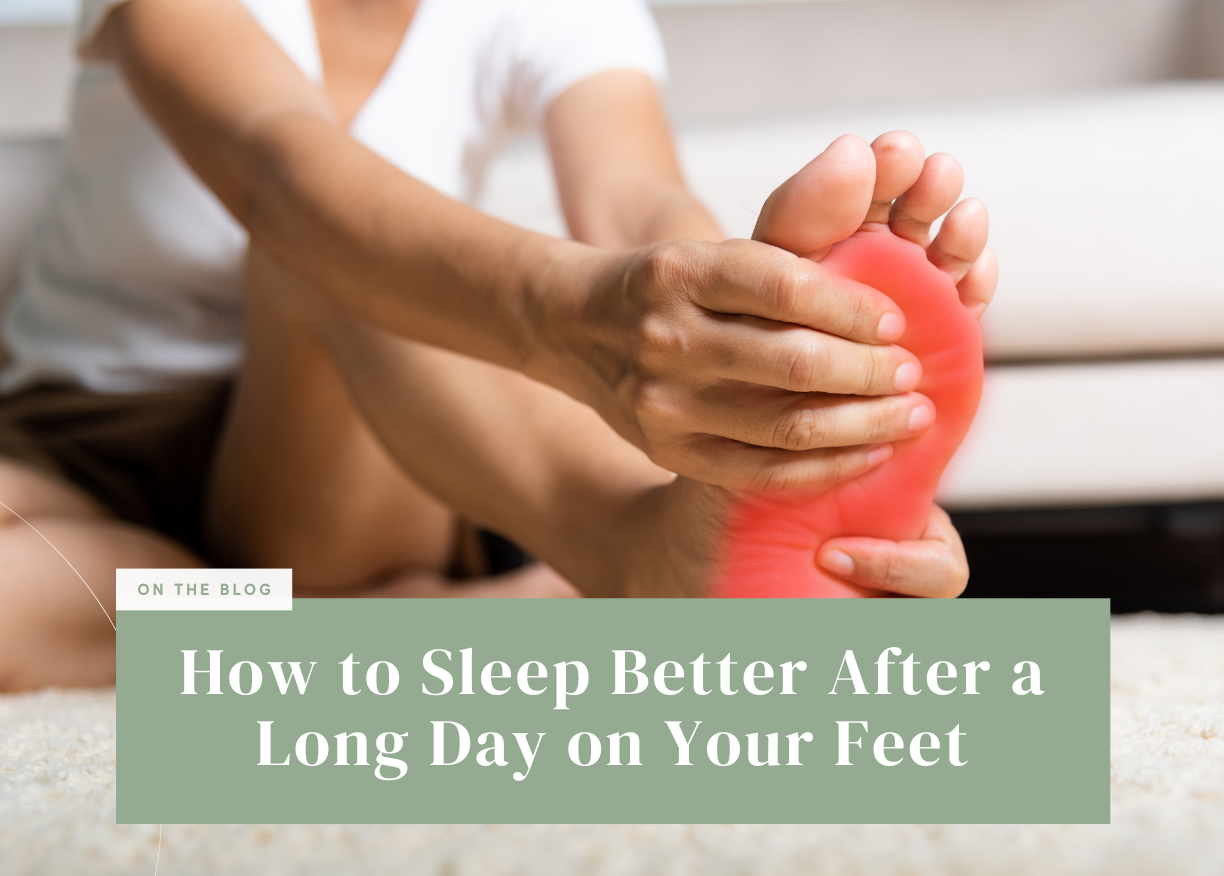
Your feet ache.
Your calves feel tight.
Your knees feel tired.
Your lower back feels heavy.
Your legs feel like they carried more than they should have.
You finally get home.
You sit down for a minute.
Then another minute.
Then somehow, your body feels even stiffer.
By the time you get into bed, you are exhausted.
But instead of falling into deep sleep, you keep adjusting.
Your feet throb.
Your hips feel tight.
Your lower back cannot settle.
Your legs feel restless.
You are tired, but not comfortable.
A long day on your feet can make sleep feel harder than it should.
Not because your body does not need rest.
Because your body needs the right kind of recovery before it can fully relax.
Why Standing All Day Affects Sleep

Standing, walking, lifting, bending, helping customers, chasing kids, working long shifts, or moving all day can leave the body physically tired.
But physical tiredness does not always equal easy sleep.
Sometimes the body is exhausted and tense at the same time.
Your muscles may be tight.
Your feet may be sore.
Your joints may feel irritated.
Your lower back may be overworked.
Your legs may feel heavy.
Cleveland Clinic notes that long, unbroken periods of sitting or standing can contribute to edema, which is swelling caused by fluid buildup, often in the legs or feet.
That heavy, swollen, achy feeling can make bedtime uncomfortable.
You want to rest.
But your body is still trying to recover from the day.
The Mistake: Going Straight From Stress to Bed

After a long day, it is tempting to collapse into bed.
No routine.
No stretching.
No decompression.
Just sleep.
But sometimes your body needs a transition.
If your muscles are tight, your legs are heavy, and your nervous system is still alert, bed may not feel restful right away.
You may lie down and notice everything.
The foot pain.
The tight calves.
The sore hips.
The pressure in your lower back.
The tension in your shoulders.
A short recovery routine before bed can help tell your body:
The workday is over. It is safe to rest now.
1. Elevate Your Legs Before Bed

One of the simplest things you can do after a long day on your feet is elevate your legs.
This can help your legs feel lighter and more relaxed, especially if they feel swollen or heavy.
Mayo Clinic notes that moving the muscles in swollen legs may help move fluid back toward the heart, and that a healthcare professional may recommend exercises that help reduce swelling.
You do not need anything complicated.
Lie on your back and place your legs on a pillow, ottoman, couch arm, or adjustable base.
Try 10 to 20 minutes.
Breathe slowly.
Let your feet and calves settle.
This is especially helpful if your legs feel heavy at night or if you spend many hours standing during the day.
2. Stretch Gently, Not Aggressively

A long day on your feet can tighten the calves, hamstrings, hips, lower back, and feet.
But bedtime is not the time for intense stretching.
You are not trying to train.
You are trying to release.
Sleep Foundation notes that slow, low-intensity stretches are generally preferred before bed, while vigorous exercise close to bedtime may interfere with sleep for some people.
Think gentle and slow.
Try:
-
Calf stretches
-
Hamstring stretches
-
Hip flexor stretches
-
Child’s pose
-
Knees-to-chest
-
Gentle spinal twist
-
Foot circles
-
Ankle rolls
Hold each stretch comfortably.
Do not force pain.
The goal is to help the body soften, not create more soreness.
3. Pay Attention to Your Feet

Feet carry everything.
But they are often ignored until they hurt.
After a long day, your feet may feel sore from standing, walking, hard floors, tight shoes, poor arch support, or simply too many hours without rest.
Before bed, give your feet a few minutes of attention.
You can:
-
Roll your feet over a soft ball
-
Stretch your toes
-
Massage the arches
-
Wiggle and spread the toes
-
Elevate the feet
-
Wear more supportive shoes during the day
-
Avoid standing barefoot on hard floors for long periods
Foot pain can keep the whole body tense.
If your feet cannot relax, the rest of your body may struggle to relax too.
4. Use Heat Carefully

Warmth can help some people feel more relaxed before bed.
A warm shower, warm bath, or warm foot soak can create a calming transition from the day into sleep.
It can help tired muscles feel looser and signal that the night is slowing down.
But be careful not to overheat.
If you are already hot at night, a very hot bath or shower right before bed may make sleep harder.
The goal is warm and relaxing.
Not sweaty and overheated.
5. Do Not Ignore Your Lower Back

A long day on your feet often shows up in the lower back.
Standing for hours can make the back muscles work harder to hold posture.
If your shoes are unsupportive, your hips are tight, or you bend and lift often, the lower back may feel even more strained.
Before bed, try gentle positions that help the lower back release:
-
Lie on your back with knees bent
-
Place a pillow under your knees
-
Try knees-to-chest gently
-
Do a slow reclined spinal twist
-
Elevate your legs for a few minutes
If lower back pain is severe, persistent, or spreading down the leg, talk to a healthcare professional.
But if it is simple end-of-day tension, a better wind-down routine and better sleep support may help your body settle.
6. Rehydrate Earlier in the Evening

A long day on your feet can make you sweat more than you realize.
Especially if you work in a warm environment, walk a lot, or drink mostly caffeine during the day.
Dehydration can make the body feel worse at night.
Headaches, muscle tightness, dry mouth, and general fatigue can all feel more noticeable when you finally lie down.
Try drinking water steadily earlier in the evening.
Not so much that you wake up all night to use the bathroom.
Just enough that your body is not going into sleep feeling depleted.
7. Eat in a Way That Helps You Sleep

After a physically demanding day, you may be very hungry at night.
That is normal.
But a heavy meal too close to bed can make sleep harder, especially if it causes reflux, bloating, or overheating.
Try to eat enough to feel satisfied, but give your body time to digest before lying flat.
If you need a small snack later, keep it simple.
Your body should not have to recover from the day and fight a heavy meal at the same time.
8. Make the Bedroom Cool and Comfortable

After a long day on your feet, comfort matters even more.
If the room is too warm, your body may feel restless.
If the mattress creates pressure, sore areas may feel worse.
If the pillow is wrong, neck and shoulder tension may build.
The CDC recommends keeping the bedroom quiet, relaxing, and at a cool temperature as part of healthy sleep habits.
When the body is already tired, small discomforts feel bigger.
A cool, dark, quiet, comfortable room can help reduce the signals that keep pulling you awake.
9. Choose a Sleep Position That Lets the Body Relax

Your sleep position can either help or hurt recovery.
If you sleep on your back, placing a pillow under your knees may help reduce lower back tension.
If you sleep on your side, placing a pillow between your knees can help keep the hips more aligned.
If your legs feel heavy, slight elevation may feel more comfortable.
If reflux or congestion is part of the problem, elevating the upper body may help some people feel more comfortable.
The best position is the one that lets your body stop bracing.
If you keep shifting because one area feels strained, your setup may need adjustment.
10. Your Mattress Should Support Recovery

After a long day on your feet, your mattress becomes more important.
Your body needs pressure relief and support.
If the mattress is too firm, sore hips, shoulders, and joints may feel more pressure.
If it is too soft, your hips may sink too deeply and strain the lower back.
If it is old or sagging, your muscles may keep working all night to stabilize your posture.
That is the opposite of recovery.
Your mattress should help your body feel held, aligned, and comfortable.
Not trapped.
Not compressed.
Not unsupported.
A good mattress does not erase the work of the day.
But it can help your body recover from it.
11. Elevation Can Make Rest Feel Easier

When your legs feel heavy, flat sleeping may not feel ideal right away.
Elevating your legs for a while before sleep can help you unwind.
Some people also find it comfortable to sleep with slight leg elevation, especially after long standing days.
This is where an adjustable base can be helpful.
Instead of stacking pillows that slide around, an adjustable base lets you raise your legs more smoothly and consistently.
It can also help you elevate your upper body, read comfortably, and use massage before bed.
The goal is simple:
Make recovery easier.
12. Massage Can Help Your Body Transition

Massage is not only about luxury.
It can also help the body feel like the day is ending.
After standing for hours, even gentle massage can make the legs, feet, and back feel less tense.
You can use:
-
Your hands
-
A massage ball
-
A foot roller
-
A warm shower
-
Gentle stretching
-
Adjustable base massage
The key is not intensity.
It is relaxation.
You want your body to move from work mode to rest mode.
13. Do Not Stay Still All Evening

This may sound strange after a long day on your feet.
But going from hours of standing to hours of sitting can make stiffness worse.
The body often feels better with gentle movement.
Not another workout.
Just light movement.
A slow walk.
A few stretches.
Ankle circles.
Gentle mobility.
Walking around the house.
Mayo Clinic notes that moving and using the muscles in swollen legs may help move fluid back toward the heart.
After a long standing day, the goal is not to do more.
It is to help the body transition instead of locking up.
14. Know When Pain or Swelling Needs Medical Attention

Most end-of-day soreness is simple fatigue.
But some symptoms should not be ignored.
Talk to a healthcare professional if you have swelling that is new, worsening, painful, one-sided, or connected with redness, warmth, shortness of breath, chest discomfort, or trouble walking.
Cleveland Clinic notes that swelling affecting only one limb, a personal or family history of heart, lung, liver, or kidney disease, and swelling around the face or mouth can be warning signs that need medical attention.
A better sleep setup can support comfort.
But it should not replace medical care when symptoms are serious.
A Simple Recovery Routine After a Long Day on Your Feet

Try this before bed:
1. Change Out of Work Mode
Take off work shoes and clothes.
Let the body know the day is done.
2. Elevate Your Legs for 10 to 20 Minutes
Use pillows, a couch, or an adjustable base.
3. Stretch Slowly
Focus on calves, hips, hamstrings, lower back, and feet.
4. Use Warmth If It Helps
Try a warm shower, bath, or foot soak.
5. Prepare the Room
Keep it cool, dark, quiet, and comfortable.
6. Support Your Sleep Position
Use a pillow under the knees or between the knees if it helps.
7. Let the Night Be Simple
Do not turn bedtime into another task.
Make it a recovery ritual.
The Sweet Zzz Setup for Physical Recovery
After a long day on your feet, your sleep setup should help your body feel supported from head to toe.
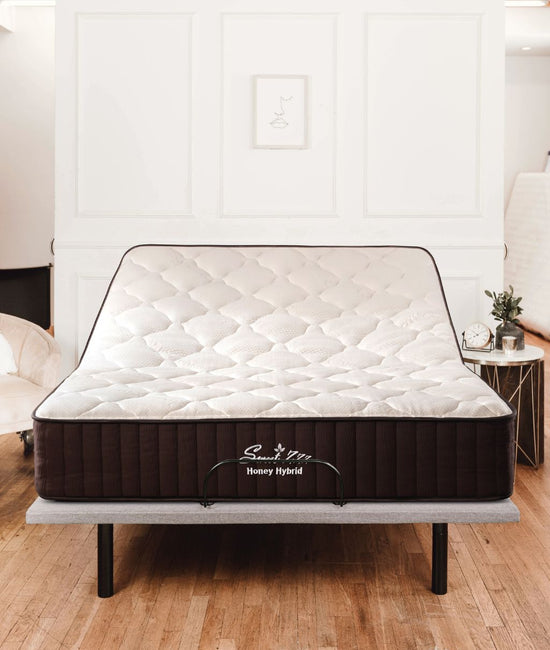
🌿 Honey Hybrid Mattress
Designed to support spinal alignment and relieve pressure at the shoulders, hips, and lower back. The GOLS organic latex provides responsive comfort, while the pocketed coils offer stable support so your body can rest without feeling stuck.
The breathable organic materials also help reduce overheating, which can make sore, tired bodies toss and turn more.
🌿 Adjustable Base
Especially helpful after long standing days. It lets you elevate your legs, raise your upper body, reduce pressure, read comfortably, and relax with massage before sleep.
Instead of stacking pillows under your legs, you can create a more stable, comfortable position with the touch of a button.
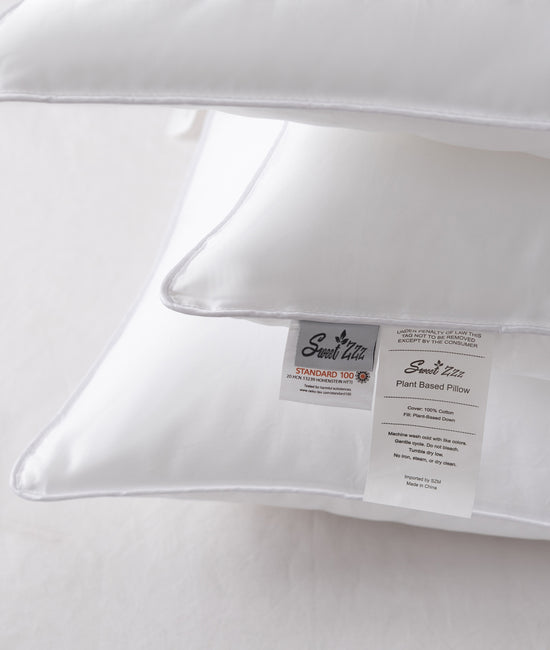
🌿 Plant-Based Pillow
Supports the head and neck so your upper body can relax into better alignment.
This matters because a tired body often carries tension in the neck, shoulders, and upper back too.
🌿 Bamboo Sheets
Soft, breathable, and moisture-wicking, Bamboo Sheets help keep the sleep surface cool and comfortable.
When your body is already tired, overheating should not be another problem to fight.
🌿 Organic Latex Topper
If your current mattress is supportive but feels too firm after long days, the topper can add a softer pressure-relieving layer without replacing the whole bed.
A better sleep setup cannot make a demanding day disappear.
But it can help your body recover from it more comfortably.
Final Thoughts
A long day on your feet can follow you into bed.
Sore feet.
Heavy legs.
Tight calves.
A stiff lower back.
Restless sleep.
The answer is not always to collapse and hope sleep fixes everything.
Sometimes your body needs a small recovery bridge.
Elevate your legs.
Stretch gently.
Hydrate earlier.
Use warmth if it helps.
Keep the room cool.
Support your sleep position.
Make sure your mattress is helping, not adding pressure.
Your bed should feel like relief at the end of the day.
Not another surface your body has to fight.
Because when your body spends all day carrying you, your sleep setup should finally carry you back.