 800-811-7514
Is Melatonin Actually a Good Sleep Aid?
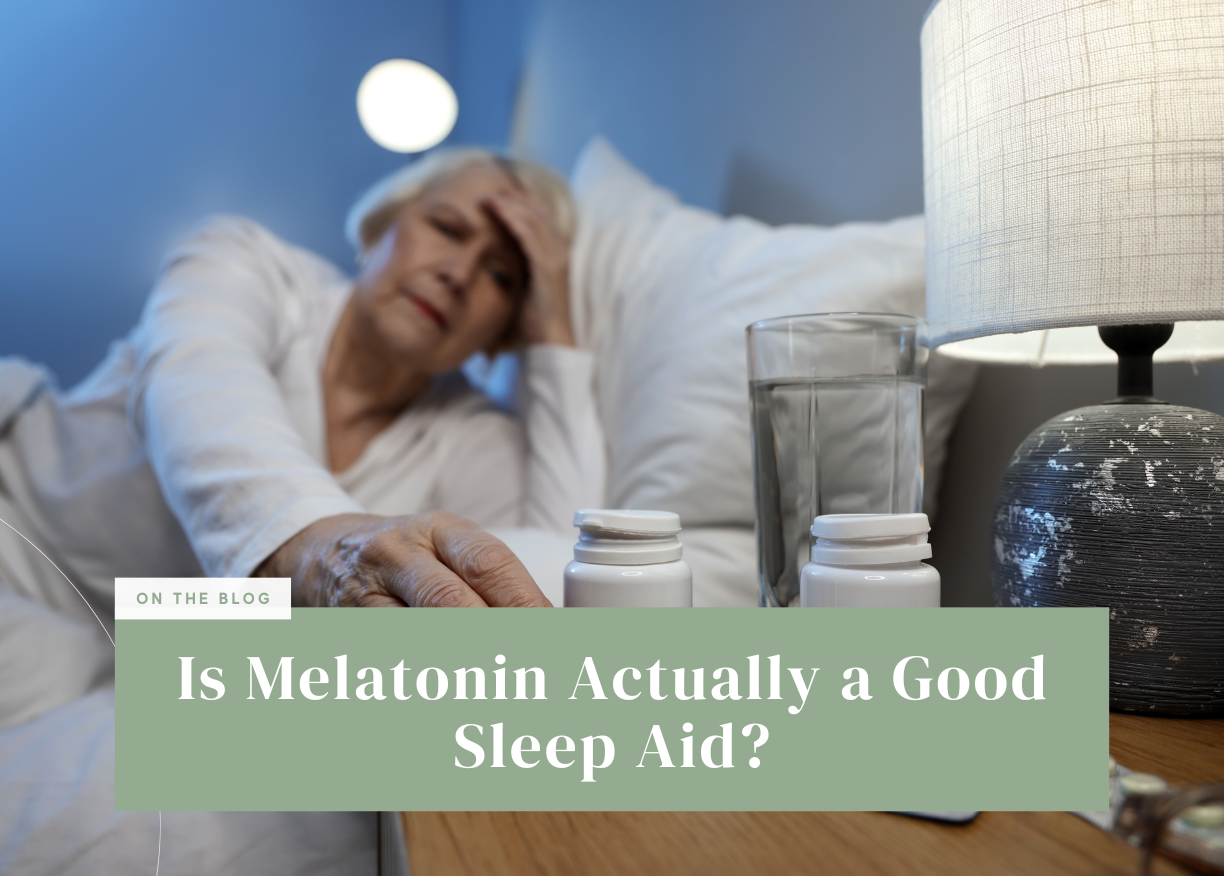

Melatonin is everywhere.
At the pharmacy.
At the grocery store.
On nightstands.
In gummies.
In drinks.
In “sleepy” wellness routines all over social media.
And because it is sold over the counter, many people assume it is simple.
Can’t sleep?
Take melatonin.
But is melatonin actually a good sleep aid?
The answer is:
Sometimes.
But not always for the reason people think.
Melatonin is not a magic switch that forces your body to sleep. It works more like a timing signal, helping your body understand when it is time to prepare for sleep.
That difference matters.
What Is Melatonin?

Melatonin is a hormone your body naturally makes.
Your brain releases more of it in the evening as darkness increases.
Its job is not to knock you unconscious.
Its job is to help regulate your sleep-wake rhythm.
In simple terms, melatonin helps tell your body:
Night is coming. Start preparing for sleep.
That is why melatonin is often discussed in connection with jet lag, shift work, delayed sleep timing, and circadian rhythm problems.
Mayo Clinic describes melatonin as a supplement commonly used for sleep disorders such as insomnia and jet lag, but also notes that its effects on sleep quality and total sleep time are not clearly established.
Melatonin Is More of a Clock Signal Than a Sleeping Pill

This is the biggest misunderstanding.
Many people use melatonin like a sedative.
They take it when they want to feel knocked out.
But melatonin does not work like that for most people.
It is better understood as a circadian rhythm helper.
That means it may be more useful when your sleep timing is off, such as:
-
Jet lag
-
Shift work
-
Delayed sleep schedule
-
Trouble feeling sleepy at the right time
-
Irregular bedtime patterns
Mayo Clinic’s sleep experts have explained that melatonin is often misused as a general sleep aid for insomnia, and that clinical evidence for using it against insomnia is relatively weak.
So if your main issue is stress, pain, anxiety, caffeine, an uncomfortable mattress, overheating, reflux, snoring, or poor sleep habits, melatonin may not fix the real problem.
Can Melatonin Help You Fall Asleep Faster?

It may help some people fall asleep a little faster.
But the effect is usually not dramatic.
Mayo Clinic says research suggests melatonin may slightly reduce the time it takes to fall asleep, while the effects on sleep quality and total sleep time are not clear.
That is important.
If someone expects melatonin to create deep, perfect sleep, they may be disappointed.
Melatonin may help with sleep timing.
But it does not automatically create healthy sleep.
When Melatonin May Be Helpful

Melatonin may be worth discussing with a doctor if your sleep problem is mainly about timing.
For example:
Jet Lag
If your body clock is still on another time zone, melatonin may help shift your rhythm.
Delayed Sleep Schedule
Some people naturally feel sleepy very late and struggle to fall asleep earlier.
Melatonin may help in certain cases when used at the right time.
Shift Work or Schedule Disruption
If your work schedule keeps changing, your internal clock may become confused.
Melatonin may help some people adjust, though timing and guidance matter.
Occasional Sleep Timing Problems
If your sleep schedule has drifted later, melatonin may help signal the body to begin shifting back.
But again, timing matters.
Taking it randomly is not the same as using it strategically.
When Melatonin May Not Help Much

Melatonin may not be very helpful if your sleep problem is caused by something else.
For example:
-
You drink caffeine too late
-
You are scrolling in bed
-
Your room is too hot
-
Your mattress causes pressure
-
Your pillow strains your neck
-
You are stressed or anxious
-
You snore or gasp during sleep
-
You wake from reflux
-
You have chronic insomnia
The American Academy of Sleep Medicine’s adult chronic insomnia guideline suggests clinicians not use melatonin as a treatment for sleep-onset or sleep-maintenance insomnia in adults.
That does not mean melatonin never helps anyone.
It means chronic insomnia often needs a more complete approach than a supplement.
More Is Not Always Better

A common mistake is taking too much.
People may start with one gummy, then two, then a higher dose, hoping stronger means better.
But higher doses do not always improve sleep.
They may simply increase the chance of side effects.
Mayo Clinic notes that melatonin can cause side effects such as headache, dizziness, nausea, and daytime drowsiness. It also warns not to drive or use machinery within five hours of taking it because it can cause drowsiness.
If melatonin leaves you groggy the next morning, the dose or timing may not be right for you.
Or melatonin may not be the right solution at all.
Supplement Quality Can Vary

Another issue is that melatonin is sold as a supplement.
That means product quality and actual dosage may not always match what people expect.
NIH reported that melatonin supplement use has increased among adults and noted safety concerns because the actual melatonin content in commercial supplements may be many times higher than what appears on the label.
That does not mean every product is bad.
But it does mean consumers should be careful.
Especially with frequent use.
Melatonin Can Interact With Medications

Because melatonin is natural, people often assume it cannot interact with anything.
But it can.
Mayo Clinic notes possible interactions with several medications, including anticoagulants, anticonvulsants, blood pressure medications, diabetes medications, contraceptives, and certain medications that may affect melatonin levels or increase drowsiness.
This is why it is smart to talk to a healthcare professional before using melatonin regularly, especially if you take medication, have a medical condition, are pregnant, or are considering it for a child.
Natural does not always mean risk-free.
The Bigger Question: Why Can’t You Sleep?

Before reaching for melatonin, ask a better question:
Why am I having trouble sleeping?
Because the answer matters.
If your issue is timing, melatonin may help.
If your issue is stress, you may need a wind-down routine.
If your issue is heat, you may need cooler bedding.
If your issue is pain, you may need better pressure relief.
If your issue is snoring or gasping, you may need medical evaluation.
If your issue is reflux, elevation may help.
If your issue is anxiety, your nervous system may need calming habits before bed.
Sleep problems are not all the same.
So the solution should not be the same either.
What to Try Before Melatonin

For many people, the foundation should come first.
1. Keep a Consistent Schedule
Your body clock works better when your sleep and wake times are steady.
2. Get Morning Light
Morning light helps anchor your rhythm and makes it easier for your body to recognize nighttime later.
3. Dim Lights at Night
Bright light at night can delay your body’s natural sleep signal.
4. Stop Using Bed as a Scroll Zone
Phones keep the brain engaged and can make bedtime feel less like sleep time.
5. Cut Caffeine Earlier
Caffeine can stay active in the body for hours.
If you struggle to sleep, look at your afternoon caffeine first.
6. Make the Bedroom Cooler and More Comfortable
Heat, pressure, and discomfort can keep waking you up even if you fall asleep easily.
Why Your Sleep Setup Still Matters
Melatonin may help signal sleep timing.
But your body still needs the right conditions to stay asleep.
A supplement cannot fully overcome a sleep environment that keeps waking you up.
Designed to support spinal alignment and relieve pressure so your body can relax more fully through the night. Its breathable organic materials also help reduce overheating.
Soft, breathable, and moisture-wicking, they help keep your sleep surface cool and comfortable.
Supports the head and neck so your body can settle into a more natural position.
Helps you find a more comfortable position, elevate your head or legs, and relax before bed with massage.
Melatonin may help with the timing signal.
But your sleep environment helps determine whether your body can actually stay comfortable once sleep begins.
Final Thoughts
Melatonin can be useful.
But it is not the universal sleep solution many people think it is.
It may help when your body clock is off, especially with jet lag, schedule disruption, or delayed sleep timing.
But if poor sleep is caused by stress, discomfort, overheating, reflux, snoring, anxiety, or inconsistent habits, melatonin may not solve the real issue.
So before treating melatonin like a magic pill, step back and ask:
What is my sleep problem actually coming from?
Because better sleep usually does not come from one supplement.
It comes from timing, habits, comfort, rhythm, and understanding what your body really needs.