 800-811-7514
What Sleep-Deprived Parents Can Do

If you’re a parent running on broken sleep, this article is for you.
Not the “sleep when the baby sleeps” version.
Not the unrealistic routines.
Not the advice that assumes you have control over your nights.
This is about real sleep deprivation—the kind that comes from night feedings, sick kids, early school mornings, anxiety, and the mental load that never fully shuts off.
Parenthood doesn’t just reduce sleep.
It changes it.

Why Parental Sleep Deprivation Is So Different
Sleep loss as a parent isn’t optional.
It’s unpredictable.
And it often comes in fragments rather than full nights.
That kind of disruption affects the body differently than staying up late by choice.
1. Fragmented Sleep Is Harder Than Short Sleep
Waking multiple times a night prevents the brain from completing full sleep cycles.
Even if total hours add up, the lack of continuity leaves parents feeling:
-
Foggy
-
Emotionally raw
-
Physically drained
-
Short-tempered

2. Mental Alertness Never Fully Turns Off
Parents sleep “on alert.”
Even during rest, the brain listens for:
-
Crying
-
Coughing
-
Movement
-
Doors opening
This lightens sleep and reduces deep recovery.

3. Stress Hormones Stay Elevated
Sleep deprivation raises cortisol.
Parenting raises cortisol.
Together, they compound fatigue and make it harder to relax—even when sleep opportunities appear.
4. Physical Strain Adds Up
Carrying kids, awkward feeding positions, rocking, bending, and lifting all strain the body.
When sleep surfaces don’t support recovery, pain builds quickly.

Why Parents Feel Guilty About Needing Sleep
Many parents minimize their exhaustion.
They tell themselves:
-
“This is normal.”
-
“Others have it worse.”
-
“I’ll rest later.”

But sleep deprivation affects:
-
Mood
-
Patience
-
Immune health
-
Focus
-
Emotional regulation
Caring for yourself isn’t indulgent—it’s protective.

What Actually Helps Sleep-Deprived Parents
1. Prioritize Sleep Quality Over Quantity
You may not control how long you sleep—but you can improve how restorative that sleep is.
2. Make Falling Back Asleep Easier
After nighttime wake-ups, your body should settle quickly.
That means:
-
Comfortable positioning
-
Minimal strain
-
A calm, familiar sleep environment

3. Reduce Physical Tension
Neck, back, and hip pain worsen fatigue.
Proper support allows the body to recover even in shorter sleep windows.
4. Support Breathing and Circulation
Parents often sleep in awkward positions or flat on their back after late nights.
Gentle elevation improves breathing and reduces physical stress.
5. Let Go of “Perfect” Sleep
This phase is about support, not perfection.
Good enough sleep, supported properly, is powerful.

Why Your Sleep Setup Matters More as a Parent
When sleep is fragmented, comfort and support become essential.

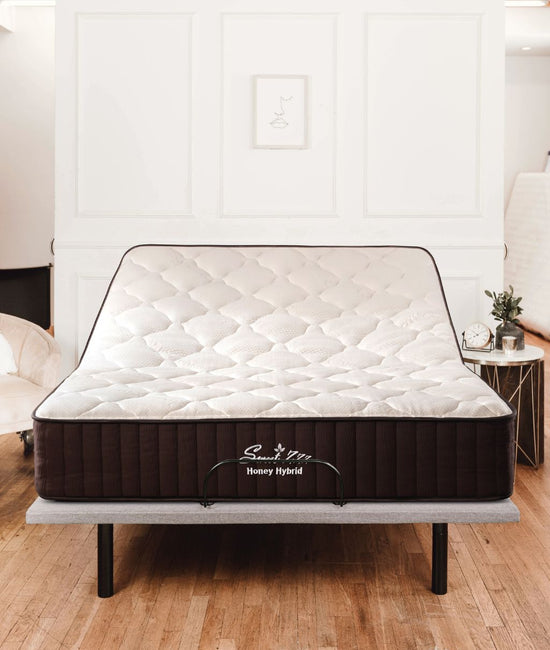
🌿 Honey Hybrid Organic Mattress
Helps reduce pressure points and allows the body to settle quickly—so when you do sleep, it counts.
🌿 Bamboo Sheets
Breathable and temperature-stable, helping prevent overheating during short or interrupted sleep periods.
🌿 Adjustable Base
A quiet lifesaver for parents.
Use slight elevation for nighttime feeding recovery, sore backs, or easier breathing—without waking fully or shifting positions aggressively.
These aren’t upgrades for luxury—they’re tools for survival and recovery.
Final Thoughts
If you’re exhausted, you’re not failing—you’re parenting.
Sleep deprivation is part of the season, but suffering doesn’t have to be.
With the right support, even short, broken sleep can be more restorative.
You’re doing a hard job.
Your rest deserves care too.