 800-811-7514
What Time Should You Really Go to Bed?

Everyone wants a number.
10:00 p.m.?
10:30?
11:00?
What’s the “perfect” bedtime?
The truth is — there isn’t one universal answer.
But there is a right bedtime for you.
And it has less to do with trends…
and more to do with biology.
Your Body Runs on a Clock (Whether You Like It or Not)

Your circadian rhythm controls:
-
Sleep timing
-
Hormone release
-
Body temperature
-
Alertness
-
Metabolism
It’s influenced primarily by light — especially morning light.
Most adults experience a natural sleep window between 9:30 p.m. and 11:30 p.m.
But your ideal bedtime depends on one key factor:
When you have to wake up.
Start With Your Wake-Up Time
Sleep works best when wake-up time is consistent.
Instead of asking:
“What time should I go to bed?”
Ask:
“What time do I need to wake up regularly?”
Then work backward.
Most adults need 7–9 hours of sleep.
If you wake at 6:30 a.m., your ideal sleep window likely begins between 9:30 and 11:00 p.m.
Why Earlier Isn’t Always Better

Some people force a 9:00 p.m. bedtime because they think it’s healthier.
But if your body isn’t ready to sleep yet:
-
You’ll lie awake
-
You’ll feel frustrated
-
You’ll associate bed with alertness
Sleep pressure matters as much as timing.
Going to bed too early can actually reduce sleep efficiency.
Why Going Too Late Feels Worse

Late bedtimes often:
-
Reduce deep sleep
-
Increase stress hormones
-
Shorten REM cycles
-
Make mornings harder
Your deepest sleep usually occurs in the first half of the night.
Delaying bedtime shifts and compresses those stages.
Your Chronotype Matters
People fall into natural categories:
-
Morning types (early birds)
-
Evening types (night owls)
-
Somewhere in between
You can shift your schedule slightly — but you can’t completely override biology.
The healthiest bedtime is one that aligns with:
-
Your wake time
-
Your natural sleepiness window
-
Consistency
The Real Key: Consistency Beats Perfection

Sleeping at 10:30 p.m. consistently is better than:
-
9:30 one night
-
Midnight the next
-
11:45 after that
Your body thrives on predictability.
Irregular bedtimes disrupt:
-
Melatonin timing
-
Hormone balance
-
Energy the next day
Even 30–60 minutes of consistency can improve sleep quality.
How to Know You’re Going to Bed at the Right Time
You’re likely in your optimal window if:
-
You fall asleep within 10–20 minutes
-
You wake up before your alarm occasionally
-
You don’t feel wired at night
-
Your afternoons feel stable
If you’re wide awake at bedtime, shift later slightly.
If you crash hard before bedtime, shift earlier.
Let your body guide you.
Why Your Sleep Setup Still Matters
Even the perfect bedtime won’t help if your sleep is fragmented.
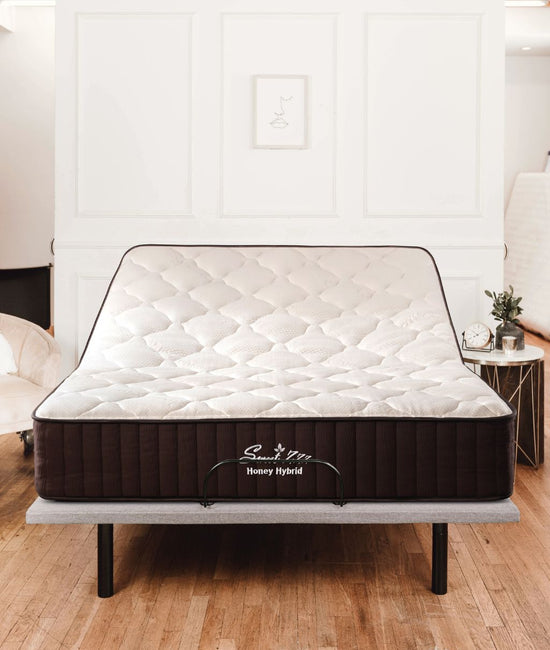
🌿 Honey Hybrid Mattress
Supports spinal alignment and reduces motion, helping you stay asleep once you fall asleep.
🌿 Bamboo Sheets
Regulate temperature — preventing overheating that disrupts deep sleep cycles.
🌿 Adjustable Base
Allows gentle elevation for comfort and breathing support, especially helpful if lying flat feels restless.
The right bedtime works best when your body is physically supported.
Final Thoughts
There’s no magical universal bedtime.
But there is a bedtime that works for your rhythm, your schedule, and your biology.
Instead of chasing the “perfect” number, focus on:
-
Consistency
-
Sleep pressure
-
Light exposure
-
Comfort
Sleep isn’t about hitting a trendy hour.
It’s about aligning with your body — and letting it do what it was designed to do.