 800-811-7514
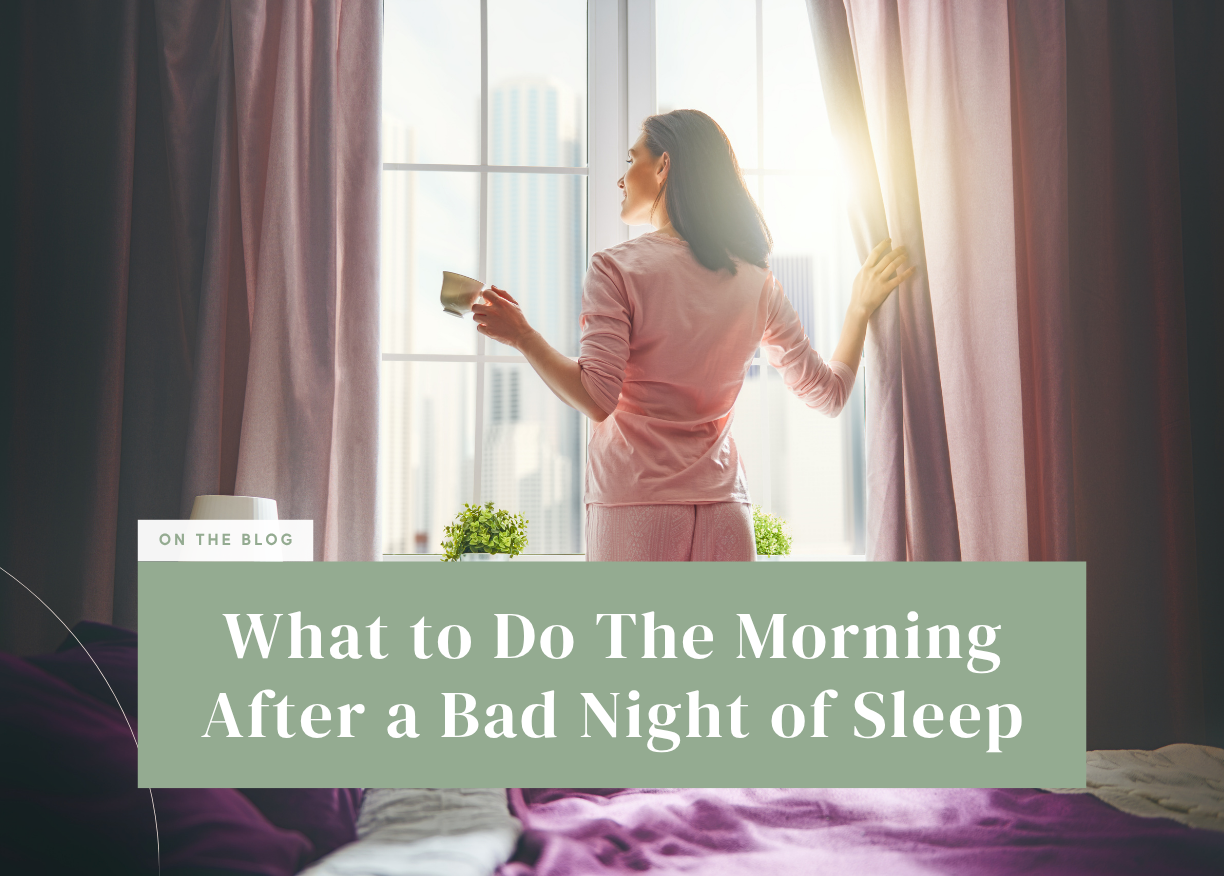
What to Do The Morning After a Bad Night of Sleep

You didn’t sleep well.
Maybe you couldn’t fall asleep.
Maybe you kept waking up.
Maybe your mind just wouldn’t stop.
Now it’s morning—and you’re tired, foggy, and already worried about getting through the day.
The instinct is to fix it fast.
More coffee.
A long nap.
Sleeping early.
But how you handle the day after matters more than you think.
Because the wrong recovery can make the next night even worse.
First: One Bad Night Isn’t a Disaster

It feels terrible—but your body is more resilient than it feels.
After one poor night, you may notice:
-
Lower focus
-
Irritability
-
Slower reaction time
-
Low energy
But your body can handle it.
The goal isn’t perfection today.
It’s protecting tonight.
1. Get Up at Your Usual Time (Even If You’re Exhausted)

This is the most important step.
Sleeping in might feel like recovery—but it shifts your rhythm.
A consistent wake-up time:
-
Anchors your circadian rhythm
-
Builds sleep pressure for the next night
-
Helps you fall asleep earlier naturally
Even if you’re tired, get up.
2. Get Morning Light As Soon As You Can
Light tells your brain:
“The day has started.”
Within the first hour:
-
Go outside for 10–20 minutes
-
Or sit near natural light
This helps reset your internal clock—even after poor sleep.
3. Use Caffeine Carefully

Caffeine can help—but timing matters.
Best approach:
-
Have it in the morning
-
Avoid it after early afternoon
Too much caffeine, or too late, will delay your next night’s sleep.
4. Move Your Body (Even a Little)
You don’t need an intense workout.
A short walk or light movement:
-
Boosts circulation
-
Improves alertness
-
Helps regulate your rhythm
Movement reduces that heavy, sluggish feeling.
5. Nap Smart—Or Skip It

If you’re extremely tired, a short nap can help.
Keep it:
-
15–25 minutes
-
Before 3 p.m.
Long naps reduce sleep pressure and make it harder to fall asleep later.
6. Don’t Go to Bed Too Early
This is a common mistake.
Going to bed much earlier than usual can:
-
Reduce sleep efficiency
-
Cause more wake-ups
-
Reinforce poor sleep patterns
Wait until you feel genuinely sleepy—not just tired.
7. Lower Expectations for the Day

You don’t need peak performance today.
Give yourself:
-
Simpler tasks
-
More patience
-
Less pressure
Ironically, reducing stress helps your next night more than pushing through aggressively.
Why the Next Night Matters Most
One bad night isn’t the issue.
What happens after it determines whether sleep resets—or spirals.
Protecting your rhythm is more important than trying to “fix” today.
Why Your Sleep Environment Still Plays a Role
If your sleep was disrupted by:
-
Discomfort
-
Overheating
-
Pressure points
-
Movement
Those factors will repeat unless addressed.
Supporting Better Recovery the Next Night
🌿 Honey Hybrid Organic Latex Mattress
Helps reduce tossing and pressure points—so your body can recover more efficiently.
🌿 Bamboo Sheets
Temperature regulation prevents overheating, which often worsens already fragile sleep.
🌿 Adjustable Base
Supports breathing and comfort, helping your body settle faster when you finally get to bed.
After a rough night, comfort matters even more.
Final Thoughts
A bad night of sleep feels bigger than it is.
The key isn’t fixing it immediately—it’s avoiding the mistakes that extend it.
Stay consistent.
Stay calm.
Let your body reset naturally.
Because the best recovery doesn’t happen during the day.
It happens the next night.