 800-811-7514
Why Do You Wake Up With a Stiff Body?


You wake up…
and before your feet even touch the floor, you feel it.
Your back is tight.
Your shoulders feel heavy.
Your neck does not want to turn.
Your hips feel locked.
Your whole body feels older than it did the night before.
Then, after walking around for a little while, it gets better.
Not perfect.
But better.
So you start wondering:
Why do I wake up so stiff?
Morning stiffness can come from many things.
Sometimes it is your sleep position.
Sometimes it is your mattress.
Sometimes it is stress.
Sometimes it is age, activity, inflammation, or an underlying condition.
But if stiffness is worse when you first wake up and improves once you start moving, your sleep setup may be part of the problem.
First: Your Body Was Still for Hours

Some morning stiffness is normal.
When you sleep, your body stays in certain positions for long stretches of time.
Muscles cool down.
Joints move less.
Circulation slows compared to daytime activity.
Your body is not stretching, walking, bending, or shifting as much.
So a little stiffness when you first wake up does not always mean something is wrong.
But stiffness should not feel like your bed worked against you all night.
If you wake up sore, tight, or uncomfortable most mornings, it is worth looking closer.
1. Your Mattress May Not Be Supporting You Properly

Your mattress has one major job:
Keep your body supported while relieving pressure.
If it does not do that well, your muscles may spend the night compensating.
A mattress that is too soft may let your hips sink too far.
A mattress that is too firm may create pressure at the shoulders, hips, or lower back.
A mattress that is old or sagging may stop keeping your spine in a neutral position.
Sleep Foundation explains that choosing a mattress that suits your sleep position can improve comfort and help reduce aches and pains, while the right pillow can support the neck and upper spine.
That is why stiffness is not always just “sleeping wrong.”
Sometimes it is sleeping on a surface that is no longer supporting you correctly.
2. Your Spine May Be Out of Alignment

When your spine is aligned, your body can relax.
When it is not, your muscles may stay active all night trying to stabilize you.
This can happen if:
-
Your hips sink too deeply
-
Your shoulders do not get enough pressure relief
-
Your pillow pushes your neck too high
-
Your pillow lets your neck drop too low
-
Your mattress has uneven support
-
Your sleep position twists your spine
You may not notice it while you are asleep.
But your body notices by morning.
That stiff, tight feeling may be your muscles saying:
We were working all night.
3. Pressure Points Can Wake the Body Without Fully Waking You

Pressure points happen when too much weight is concentrated in one area.
Common areas include:
-
Shoulders
-
Hips
-
Lower back
-
Knees
-
Neck
If pressure builds, your body may shift positions to relieve it.
You may not fully wake up every time.
But your sleep becomes lighter and more restless.
Sleep Foundation notes that health conditions can cause pressure point discomfort, but pressure points can also happen when a mattress does not provide enough cushioning.
This matters because stiffness is often not caused by one dramatic problem.
It comes from small discomforts repeating all night.
4. Your Pillow May Be Creating Neck and Shoulder Tension

A bad pillow can make your whole upper body feel stiff.
If your pillow is too high, your neck bends upward.
If it is too low, your neck drops downward.
If it is too flat, your muscles may work to hold your head in place.
If it is too thick, your shoulders may feel compressed.
The neck connects to the shoulders, upper back, jaw, and head.
So when pillow alignment is wrong, discomfort can spread.
You may wake up thinking your mattress is the problem, when the first problem is actually under your head.
5. Your Sleep Position May Be Adding Strain

Every sleep position affects the body differently.
Side sleeping can create shoulder and hip pressure if the mattress is too firm.
Back sleeping can feel stiff if the mattress does not support the lower back properly.
Stomach sleeping can strain the neck and lower back because the head is turned for hours and the spine may flatten awkwardly.
The position itself is not always the problem.
The problem is whether your mattress and pillow support that position correctly.
Your bed should support how you naturally sleep, not force your body to fight the position all night.
6. Stress Can Make Your Body Wake Up Tight

Stress does not stay only in the mind.
It shows up in the body.
Many people carry stress in the:
-
Neck
-
Jaw
-
Shoulders
-
Upper back
-
Lower back
If you go to bed tense, your muscles may not fully release during sleep.
Mayo Clinic notes that stress can cause muscle tension, which may contribute to back pain.
That means morning stiffness may not only be about the mattress.
It may also be about the state your nervous system was in when you fell asleep.
A tense body often wakes up tense.
7. Too Little Movement During the Day Can Make Mornings Worse

If you sit for long periods during the day, your body may already be tight before you get into bed.
Then you sleep for hours without much movement.
By morning, stiffness can feel stronger.
This is common for people who:
-
Sit at a desk all day
-
Drive for long hours
-
Exercise very little
-
Skip stretching
-
Carry stress in the back and shoulders
Movement during the day helps joints and muscles stay more flexible.
Sleep can restore you, but it cannot fully undo a day of stiffness if your body never gets a chance to move.
8. Exercise Can Also Cause Morning Stiffness

On the other side, heavy workouts can make you wake up sore too.
Strength training, running, sports, or physical labor can all cause muscle soreness.
That is not always bad.
It may simply mean your body is recovering.
But if your mattress does not relieve pressure well, workout soreness can feel worse at night because the body has no comfortable place to recover.
This is why athletes and active people often care so much about sleep quality.
Recovery needs comfort.
9. Age and Inflammation Can Play a Role

As we age, joints, muscles, and connective tissues can feel less forgiving.
Morning stiffness may become more common.
Some people also deal with arthritis, inflammation, autoimmune conditions, old injuries, or chronic pain that feels worse after lying still.
Cleveland Clinic explains that muscle stiffness can have many causes, including exercise, injuries, infections, autoimmune conditions, and other health issues.
So while your mattress can matter a lot, it is not the only possible cause.
If stiffness is persistent, severe, or unusual for you, it is worth paying attention.
When Morning Stiffness Shouldn’t Be Ignored

Morning stiffness is common.
But you should consider talking to a healthcare professional if stiffness:
-
Lasts a long time after waking
-
Is severe or worsening
-
Comes with swelling or redness
-
Affects daily movement
-
Causes numbness, tingling, or weakness
-
Follows an injury
-
Comes with fever, fatigue, chest pain, or other symptoms
-
Does not improve with better sleep habits or movement
Cleveland Clinic recommends seeing a healthcare provider if muscle stiffness comes with symptoms such as headache, fever, fatigue, sore throat, or chest pain.
And if back pain comes with new bowel or bladder problems, weakness, or severe symptoms, medical care should not be delayed. Mayo Clinic lists new bowel or bladder problems among warning signs connected with back pain.
Your bed can affect stiffness.
But serious symptoms deserve medical guidance.
What You Can Do to Wake Up Less Stiff

1. Check Your Mattress Support
Ask yourself:
Does your mattress sag?
Does your lower back feel unsupported?
Do your shoulders or hips feel pressure?
Do you wake up better in hotels or on another bed?
If the answer is yes, your mattress may be part of the problem.
2. Match Firmness to Your Sleep Position
Side sleepers usually need more pressure relief.
Back sleepers usually need balanced support.
Stomach sleepers usually need firmer support to prevent the hips from sinking too much.
The right firmness is not about what sounds healthiest.
It is about what keeps your body aligned.
3. Fix Your Pillow Height
Your pillow should keep your neck neutral.
Not bent up.
Not dropping down.
Not twisted.
If you wake with neck or shoulder stiffness, your pillow should be one of the first things you evaluate.
4. Stretch Gently Before Bed
You do not need a full workout.
A few minutes of gentle stretching can help release tension in the hips, shoulders, neck, and lower back.
The goal is not intensity.
The goal is telling your body:
You can relax now.
5. Move Soon After Waking
If stiffness improves after movement, give your body gentle motion in the morning.
Try:
-
Walking around the room
-
Shoulder rolls
-
Gentle neck movement
-
Light stretching
-
A warm shower
Do not force painful movement.
Just help the body transition from stillness to motion.
6. Reduce Stress Before Sleep
If your body is tense at bedtime, build a calmer wind-down routine.
Try breathing, stretching, reading, warm showers, or massage.
A relaxed nervous system can help muscles soften before sleep.
7. Look at Your Whole Sleep Setup
Sometimes stiffness comes from one thing.
Often, it comes from several:
A slightly wrong mattress.
A slightly wrong pillow.
A room that is too hot.
A stressful night.
A sleep position that adds pressure.
Small problems add up over seven or eight hours.
So the solution may also be a combination of small improvements.
The Sweet Zzz Setup for Waking Up Less Stiff
If stiffness is connected to pressure, alignment, heat, or poor support, your sleep setup matters.
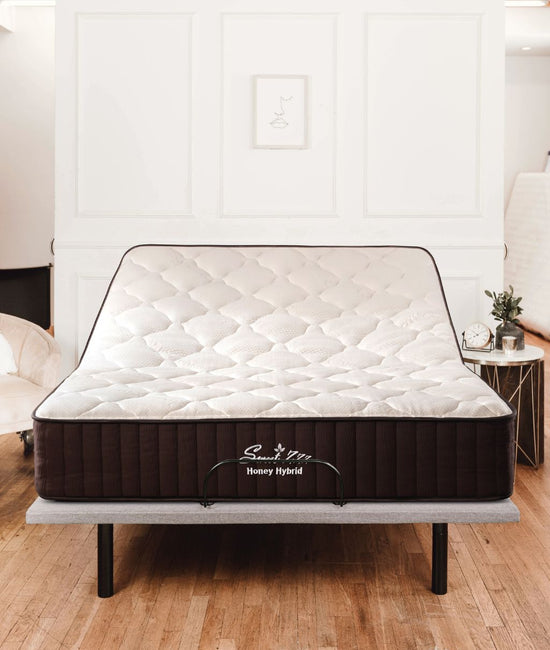
Designed to balance pressure relief and support, helping your spine stay aligned while reducing pressure at the shoulders, hips, and lower back. The GOLS organic latex comfort layer responds to your body without the stuck feeling of slow-moving foam, while the pocketed coils provide stable support and airflow.
For most side sleepers, Medium-Soft provides the best pressure relief.
For back sleepers, couples, and those who prefer a more supportive feel, Medium-Firm is often the best fit.
For stomach sleepers or people who need more support, Firm may be the better choice.
A supportive pillow helps keep the head and neck aligned so the shoulders and upper back can relax. This is especially important for people who wake up with neck stiffness or tension headaches.
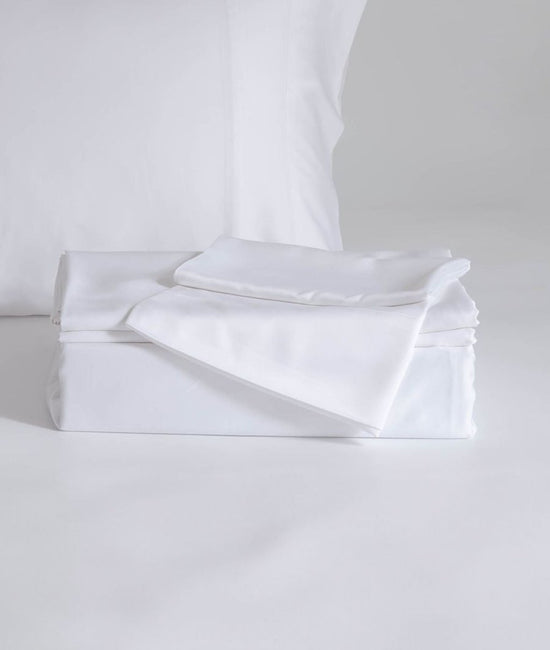
Soft, breathable, and moisture-wicking, Bamboo Sheets help reduce overheating and friction, making it easier for the body to stay settled through the night.
The adjustable base helps you find a more comfortable position, elevate your legs, reduce pressure, and relax before sleep with massage. It can also help you avoid awkward pillow stacking when reading, watching TV, or trying to elevate your upper body.
Together, the right mattress, pillow, sheets, and base can help your body stop fighting the bed and start recovering in it.
Final Thoughts
Waking up stiff is not something you should automatically ignore.
Sometimes it is normal.
Sometimes it is stress.
Sometimes it is age, activity, inflammation, or a medical condition.
But often, your sleep setup plays a bigger role than you think.
A mattress that does not support you.
A pillow that bends your neck.
Sheets that trap heat.
A position that creates pressure.
Your body spends hours in that environment every night.
So if you wake up stiff every morning, ask a simple question:
Is my bed helping my body relax, or making it work harder?
Because sleep should not leave you feeling locked up.
It should help you wake up looser, lighter, and ready to move.