 800-811-7514
Why Does Your Back Hurt More in the Morning?


Morning should feel like a reset.
You slept.
You rested.
You gave your body hours to recover.
But instead, you wake up and feel it immediately.
A tight lower back.
A stiff spine.
A dull ache across your hips.
Pain that makes the first few steps feel older than you are.
Then something strange happens.
You move around.
You shower.
You walk a little.
You start your day.
And the pain gets better.
So you wonder:
Why does my back hurt more in the morning?
Sometimes it is the body warming up after hours of stillness.
Sometimes it is sleep position.
Sometimes it is stress, inflammation, exercise, or an underlying health issue.
And sometimes, the problem is the bed you are sleeping on every night.
Morning Back Pain Is Common, But It Is Not Always Random

Back pain is one of the most common reasons people seek medical help or miss work, according to Mayo Clinic. Most back pain improves with time and self-care, but persistent or severe pain should be evaluated.
Morning back pain can happen for different reasons.
Your body may have been still for hours.
Your muscles may feel tight.
Your joints may need movement.
Your mattress may not be supporting you well.
Your sleep position may be straining your lower back.
The key is to notice the pattern.
If your back hurts most when you wake up and improves after you move around, your sleep setup may be part of the problem.
Not always.
But it deserves attention.
1. Your Body Has Been Still for Hours

When you sleep, you are not moving the way you do during the day.
Even if you change positions, your body still spends long stretches in one posture.
That can make the back feel stiff in the morning.
For some people, a few minutes of movement helps.
The spine warms up.
Muscles loosen.
Blood flow increases.
The body starts feeling more normal.
This kind of stiffness may not mean something serious.
But if it happens every morning, lasts a long time, or keeps getting worse, it should not be ignored.
2. Your Mattress May Be Too Soft

A mattress that is too soft can feel comfortable at first.
But by morning, your lower back may pay the price.
If your hips sink too deeply, your spine may curve out of alignment.
If your lower back is not supported, your muscles may stay active all night.
If the mattress sags, your body may fall into a dip instead of resting evenly.
Sleep Foundation explains that inadequate mattress support can allow the midsection to sag, creating an unnatural arch in the lower back that may contribute to pain.
That is why soft does not always mean comfortable.
Softness feels good for a few minutes.
Support matters for the whole night.
3. Your Mattress May Be Too Firm

The opposite can also happen.
A mattress that is too firm can push against the body instead of allowing it to settle.
For side sleepers, this can create pressure at the hips and shoulders.
For back sleepers, it may leave the lower back feeling unsupported or tense.
For some sleepers, a very firm surface can make the body feel like it is lying on top of the mattress instead of being supported by it.
Harvard Health notes that people with low back pain who slept on very hard mattresses reported poorer sleep quality than people using medium-firm or firm mattresses.
So the answer to back pain is not always “go firmer.”
The better goal is balanced support.
Enough firmness to keep the body aligned.
Enough pressure relief to let the body relax.
4. Your Mattress May Be Old or Sagging

Even a mattress that used to feel good can stop supporting you well.
Over time, materials can soften, compress, or lose structure.
You may notice:
-
A dip where you sleep
-
Rolling toward the center
-
Softer spots under your hips
-
Less edge support
-
More tossing and turning
-
Better sleep on a hotel bed or guest bed
Once a mattress no longer holds your body evenly, your back may work all night to compensate.
That is not recovery.
That is effort.
And you may feel that effort the moment you wake up.
5. Your Sleep Position May Be Straining Your Lower Back

Your sleep position can affect how your spine feels in the morning.
Stomach sleeping is often the hardest on the lower back because the hips may sink forward and the spine may arch unnaturally. Sleep Foundation notes that stomach sleeping can increase pressure on the spine and contribute to pain upon waking.
Side sleeping can be comfortable, but if the hips are not supported or the knees pull the pelvis out of alignment, the lower back may feel tight.
Back sleeping can work well for many people, but only if the mattress supports the lower back and keeps the body evenly positioned.
The position itself is not always the problem.
The problem is whether your mattress and pillow support that position properly.
6. Your Pillow May Be Part of the Back Pain

People often separate pillow problems from back problems.
But the spine is connected.
If your pillow is too high, your neck may bend upward.
If it is too low, your head may drop.
If your shoulders are not supported well, your upper body may twist.
That misalignment can travel down the spine.
A poor pillow may not be the only reason your lower back hurts, but it can contribute to overall tension.
Your pillow and mattress should work together.
The mattress supports the body.
The pillow supports the head and neck.
If either one is wrong, your back may feel it.
7. Pressure Points Can Make You Move All Night

Morning back pain is not always caused by the lower back directly.
Sometimes the issue starts with pressure elsewhere.
If your shoulders, hips, knees, or ribs feel compressed, your body may keep shifting.
You may not wake up fully each time.
But the sleep becomes more restless.
The back may tighten from all that movement, poor positioning, or repeated pressure.
Sleep Foundation explains that comfort, pressure relief, and spinal alignment all matter when choosing a mattress, and that a pressure-relieving mattress that supports alignment may reduce sleep-related pain risk.
That is why a good mattress needs both.
Pressure relief for comfort.
Support for alignment.
8. Stress Can Make Your Back Feel Worse

Stress does not stay in the mind.
It often shows up in the body.
Tense shoulders.
Clenched jaw.
Tight hips.
A guarded lower back.
If you go to bed stressed, your muscles may not fully relax.
You may sleep, but your body may stay tense.
By morning, that tension can feel like stiffness or pain.
This is especially common when the day is busy, your mind is racing, or you carry stress physically.
A better mattress can help support the body.
But stress relief before bed matters too.
9. Exercise or Lack of Movement Can Both Play a Role

Morning back pain can also come from what happened the day before.
A hard workout.
Heavy lifting.
Standing all day.
Sitting too long.
Poor posture.
Not enough movement.
The body brings those patterns into sleep.
If your muscles are already sore or tight, an unsupportive mattress can make the problem more noticeable.
This is why back pain often needs a full picture.
Daytime habits matter.
Nighttime support matters too.
10. Medical Causes Should Not Be Ignored

Not all morning back pain is a mattress problem.
Back pain can come from muscle strain, arthritis, disc problems, nerve irritation, inflammation, injury, or other health conditions. Mayo Clinic notes that some types of arthritis and cancer can contribute to back pain, and that pain with certain warning signs should be checked.
Talk to a healthcare professional if back pain is severe, persistent, worsening, spreads down the leg, causes numbness or weakness, follows an injury, or affects bladder or bowel control.
Mayo Clinic also recommends getting medical care sooner if back pain comes with unexplained weight loss, a history of cancer, recent urinary tract infection, or sudden bladder changes.
A better mattress can support comfort.
But serious symptoms need proper care.
How to Tell If Your Mattress Is Contributing to Morning Back Pain

Your mattress may be part of the problem if:
-
Your back hurts most when you wake up
-
The pain improves after moving around
-
You sleep better in another bed
-
Your mattress has dips or sagging
-
Your hips sink too deeply
-
You wake up stiff in the same area
-
You toss and turn to get comfortable
-
You feel pressure in your hips or shoulders
-
Your mattress feels too hot
-
Your bed feels less supportive than it used to
One clue matters most:
Does your body feel better or worse after sleeping?
Your bed should help you recover.
It should not be something your back has to recover from.
What Kind of Mattress Helps With Morning Back Pain?

There is no single perfect mattress for every person.
Body weight, sleep position, pain location, and comfort preference all matter.
But for many people with back pain, the best mattress offers a balance of support and pressure relief.
Sleep Foundation notes that medium-firm mattresses often provide the best balance of comfort and support for many sleepers with back pain, though personal preference, body weight, body shape, and sleep position still matter.
That balance is important.
Too soft can let the body sag.
Too firm can create pressure.
The goal is a mattress that keeps your body aligned while still letting pressure points relax.
Why Latex Hybrid Support Can Help

A latex hybrid mattress can be especially helpful for sleepers who wake up with back pain because it combines responsive comfort with deeper support.
Latex helps relieve pressure without making the body feel stuck.
Pocketed coils provide stable support underneath.
Together, they can help the body stay more aligned while still feeling cushioned.
That matters because the lower back usually needs stability.
But the shoulders and hips still need relief.
A mattress that does both can make sleep feel easier on the body.
Match Firmness to Your Sleep Position

Choosing the right firmness matters.
For Sweet Zzz, the Honey Hybrid firmness options make this easier.
Side Sleepers
Side sleepers usually need more pressure relief at the shoulders and hips.
Medium-Soft is usually the best choice.
It allows those pressure points to settle more comfortably while still supporting the body.
Back Sleepers
Back sleepers usually need balanced support.
Medium-Firm is usually the best choice and is also the most popular firmness.
It gives support without feeling overly hard.
Stomach Sleepers
Stomach sleepers usually need stronger support because the hips can sink too far and strain the lower back.
Firm is often the better choice.
For those who want the strongest support, the Honey Hybrid Plus offers an extra firm feel around 9 out of 10.
Combination Sleepers
Combination sleepers need a mattress that responds quickly.
Medium-Firm often works well because it gives a balanced feel and makes movement easier.
Simple Changes That May Help Morning Back Pain

1. Put a Pillow Under Your Knees
If you sleep on your back, a pillow under the knees may reduce lower back tension.
It helps soften the arch in the lower back and can make the body feel more supported.
2. Put a Pillow Between Your Knees
If you sleep on your side, a pillow between the knees may help keep the hips more aligned.
This can reduce twisting through the lower back.
3. Avoid Sleeping on Your Stomach If It Hurts
Stomach sleeping can strain the lower back for many people.
If you wake up sore, try gradually shifting toward side or back sleeping.
4. Stretch Gently in the Morning
Do not jump out of bed aggressively.
Try gentle movement first.
Knees to chest.
Slow hip movement.
Light walking.
A warm shower.
Let the body wake up before asking too much from it.
5. Stretch Lightly Before Bed
Gentle evening stretching can help reduce tension in the hips, hamstrings, and lower back.
Do not force deep stretches.
The goal is relaxation, not performance.
6. Check Your Pillow Height
Your pillow should keep your head and neck aligned.
If the pillow is wrong, the rest of your spine may feel it.
7. Look at the Mattress Honestly
If your mattress is sagging, too soft, too firm, or older than it should be, small tricks may only go so far.
Sometimes the real fix is better support.
When a Topper Can Help

A mattress topper can help in the right situation.
If your mattress is still supportive but feels too firm, a topper can add pressure relief.
That may help side sleepers or people who wake up with sore hips and shoulders.
But if your mattress is sagging or too soft, a topper usually will not fix the deeper problem.
It may make the surface feel nicer.
But it cannot rebuild lost support.
Use a topper when the mattress foundation is still good.
Replace the mattress when the support is gone.
Why Your Full Sleep Setup Matters

Morning back pain is rarely about one thing.
Your mattress matters.
Your pillow matters.
Your sleep position matters.
Your bedding matters.
Your room temperature matters.
If you wake up hot, you may toss and turn more.
If your pillow is wrong, your spine may feel misaligned.
If your mattress lacks support, your muscles may stay active all night.
The full setup should help your body relax.
That is the point.
The Sweet Zzz Setup for Morning Back Pain
🌿 Honey Hybrid Mattress
Designed to support spinal alignment and relieve pressure at the shoulders, hips, and lower back. The GOLS organic latex gives responsive comfort, while the individually pocketed coils provide stable support underneath.
It is available in multiple firmness options, so you can choose based on your sleep position and comfort needs.
It is also made without polyurethane foams, fiberglass, chemical flame retardants, glues, formaldehyde, or heavy metals.
🌿 Organic Latex Topper
Helpful if your current mattress is still supportive but feels too firm. It adds a pressure-relieving latex layer without replacing the whole mattress.
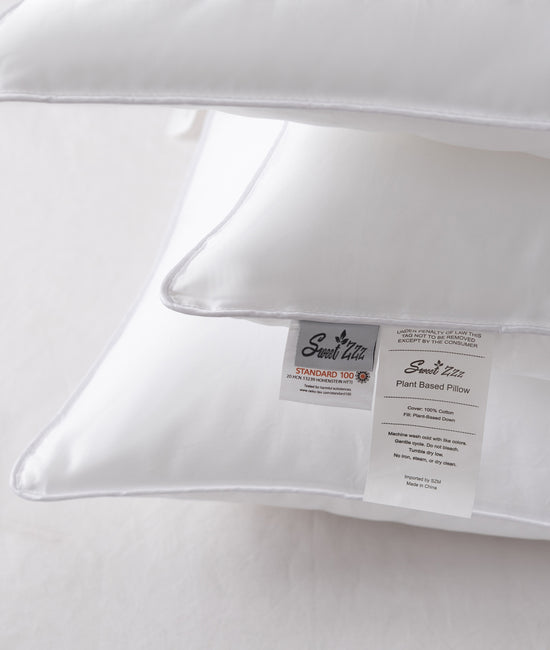
🌿 Plant-Based Pillow
Supports the head and neck so the upper spine can stay better aligned. This matters because poor neck alignment can affect the whole body.
🌿 Bamboo Sheets
Soft, breathable, and moisture-wicking, Bamboo Sheets help reduce overheating and keep the sleep surface more comfortable.
🌿 Adjustable Base
Helps you elevate your upper body or legs, reduce pressure, read comfortably, and relax before sleep with massage. For some people, small position changes can make the lower back feel more comfortable.
A better sleep setup does not promise to cure back pain.
But it can remove many of the physical problems that make mornings worse.
Final Thoughts
If your back hurts more in the morning, do not ignore the pattern.
Your body may be telling you that something about the night is not working.
Maybe the mattress is too soft.
Maybe it is too firm.
Maybe it is sagging.
Maybe your sleep position is straining your lower back.
Maybe your pillow is throwing off alignment.
Maybe stress, inflammation, or a medical issue is part of the picture.
A better mattress cannot fix every cause of back pain.
But the right mattress can help your body stay supported, reduce pressure, and rest in a more natural position through the night.
And that matters.
Because sleep should not be the reason your back hurts.
It should be one of the ways your body finally gets relief.