
 800-811-7514
Why Scary Movies and Nightmares Can Affect Your Sleep
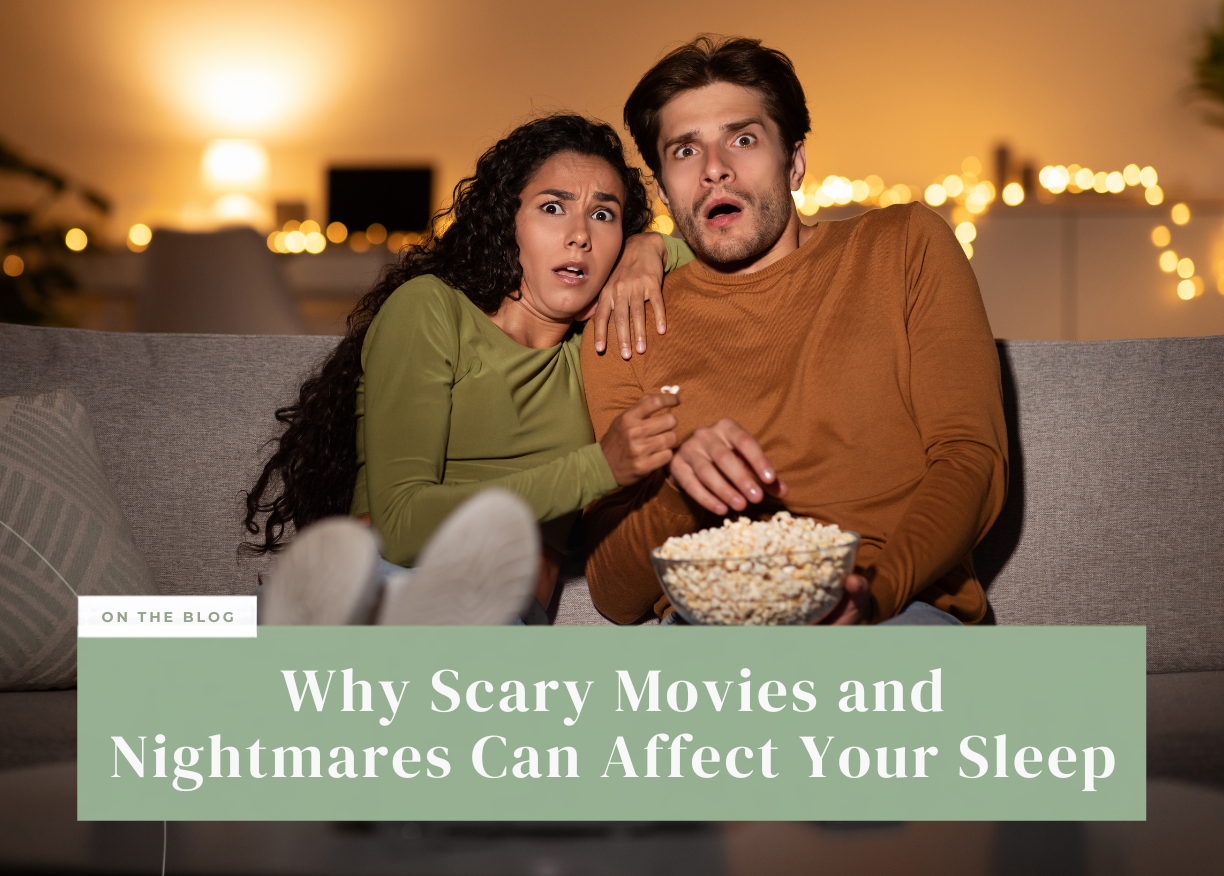

October makes scary things feel fun.
Haunted houses.
True crime.
Ghost stories.
Dark evenings.
Scary movies.
Halloween episodes.
A little suspense before bed.
For many people, it is harmless.
You watch something scary.
You laugh.
You jump a few times.
You turn it off and go to sleep.
But sometimes, the night does not end there.
You lie in bed and your mind keeps replaying scenes.
Every sound feels louder.
The dark room feels different.
Your body feels alert instead of relaxed.
You fall asleep, but the images follow you into dreams.
Then you wake up from a nightmare.
Heart racing.
Sweaty.
Confused.
Relieved it was not real.
So can scary movies actually affect your sleep?
Yes, for some people, they can.
Not because every scary movie is bad.
But because frightening or emotionally intense media can activate the mind and body at the exact time you are trying to calm down.
Nightmares Are More Than “Bad Dreams”

People use the word nightmare casually.
But in sleep medicine, nightmares are usually understood as disturbing dreams that wake you up from sleep. Sleep Foundation explains that both bad dreams and nightmares can involve upsetting content, but nightmares are distinguished by causing the sleeper to wake up.
That difference matters.
A bad dream may be unpleasant.
A nightmare interrupts the night.
You wake up afraid, stressed, or unsettled.
You may have trouble falling back asleep.
You may feel tired or emotionally off the next day.
Mayo Clinic describes nightmare disorder as nightmares that happen often, cause distress, disrupt sleep, affect daytime functioning, or create fear of going to sleep.
Most occasional nightmares are not a sign of something serious.
But if they become frequent or disruptive, they deserve attention.
Why Scary Movies Can Follow You Into Sleep

A scary movie is designed to create a reaction.
Suspense.
Fear.
Shock.
Tension.
Anticipation.
Your body may know you are safe on the couch.
But your nervous system can still respond.
Your heart rate may rise.
Your muscles may tense.
Your breathing may change.
Your brain may stay alert.
Your imagination may stay active.
Mayo Clinic lists scary books, movies, and media as possible triggers for nightmares.
That does not mean everyone who watches horror before bed will have nightmares.
Some people can watch the scariest movie of the year and sleep fine.
Others may watch one unsettling scene and feel it all night.
Sensitivity matters.
Timing matters.
Stress level matters.
The type of content matters.
And the bedroom environment matters too.
Fear Is Stimulating, Even When It Is “Fun”

Scary movies can be enjoyable because they create safe fear.
You get the thrill without real danger.
But your body still experiences stimulation.
That stimulation can make it harder to shift into sleep mode.
If you watch something scary right before bed, your mind may keep scanning for danger.
The hallway sound feels suspicious.
The shadow in the corner looks strange.
A normal house noise suddenly feels meaningful.
That is not childish.
That is how fear works.
Fear tells the body:
Pay attention.
Sleep needs the opposite message:
You are safe enough to let go.
Scary Content Can Be Worse When You Are Already Stressed

A scary movie may affect you more when your nervous system is already overloaded.
After a calm day, you may handle it fine.
After a stressful day, the same movie may hit differently.
Stress and anxiety are common nightmare triggers. Sleep Foundation explains that sad, traumatic, or worrisome situations that create stress and fear may provoke nightmares.
So if October is already busy, your sleep may be more sensitive.
Work stress.
School schedules.
Family pressure.
Holiday planning.
Less daylight.
More caffeine.
Less time to unwind.
Then you add scary content right before bed.
Now the brain has more emotional material to process.
That can make dreams more intense or sleep more restless.
Late-Night Screens Can Add to the Problem

Scary content is one issue.
The screen itself is another.
If you watch horror on a phone, tablet, laptop, or TV right before bed, you may be combining emotional stimulation with screen stimulation.
The CDC recommends turning off electronic devices at least 30 minutes before bedtime as part of healthy sleep habits.
That does not mean you can never watch a movie at night.
But if you notice that scary movies affect your sleep, timing matters.
A horror movie at 7 p.m. may feel different than a horror movie that ends 10 minutes before bed.
Your body needs time to come down.
True Crime Can Affect Sleep Too

It is not only horror movies.
True crime, disturbing news, paranormal podcasts, violent shows, and emotionally intense documentaries can all affect sleep for some people.
Sometimes true crime is even more unsettling because it feels real.
Your brain may keep thinking:
What if that happened here?
What would I do?
Could someone break in?
How safe am I?
That kind of thinking keeps the mind alert.
Cleveland Clinic notes that anything that causes stress or anxiety can bring on bad dreams, including horror movies, murder novels, or true-crime podcasts.
So the question is not only:
Was it scary?
The better question is:
Did it make my body feel safe enough to sleep afterward?
Children Can Be More Sensitive to Scary Content

Kids often have a harder time separating scary content from real danger.
Even if they say they are fine, scary scenes can show up later.
At bedtime.
In the dark.
After waking from a dream.
When they are alone in their room.
Mayo Clinic Health System notes that children’s nightmares can be linked with stress, lack of sleep, watching scary movies, or reading scary books.
The American Academy of Pediatrics also explains that nightmares are scary dreams that often happen during the second half of the night, and children may wake up crying or afraid and have trouble falling back asleep.
So for kids, Halloween content needs extra care.
What seems silly to an adult may feel real to a child at 2 a.m.
Nightmares Are Different From Night Terrors

This is important for parents.
A nightmare usually wakes the child, and they may remember the scary dream.
A night terror is different.
The child may scream, appear terrified, sit up, or move around, but they are not fully awake and often do not remember it clearly afterward.
Mayo Clinic explains that sleep terrors are different from nightmares and may need treatment if they create safety risks or prevent enough sleep.
If a child has frequent, intense, or unsafe episodes at night, it is worth speaking with a pediatrician.
Not every scary nighttime event is the same thing.
Why Nightmares Can Make the Next Day Feel Worse

A nightmare does not only interrupt the night.
It can affect the next day too.
You may wake up tired.
Feel emotionally unsettled.
Remember the dream vividly.
Feel anxious about sleeping again.
Avoid going to bed.
Sleep Foundation notes that frequent nightmares can contribute to next-day tiredness and stress, and that healthy sleep habits may help reduce nightmares.
This is why repeated nightmares can create a cycle.
Bad dream.
Fear of sleep.
Lighter sleep.
More stress.
More bad dreams.
Breaking that cycle often starts with making bedtime feel safer and calmer.
Scary Movies Can Delay Sleep Even Without Nightmares

You do not need to have a nightmare for scary content to affect sleep.
Sometimes the problem is falling asleep.
Your mind keeps replaying scenes.
You hear noises.
You feel alert.
You keep checking the room.
You turn on more lights.
You scroll to distract yourself.
Now bedtime is later.
Even if you eventually fall asleep, the night starts with tension.
And tension is not a great foundation for deep rest.
That is why scary content before bed can affect sleep even if you never remember a dream.
Some People Enjoy Scary Content and Sleep Fine

This is also true.
Not everyone needs to avoid scary movies.
Some people love horror and feel totally fine afterward.
For them, scary movies are entertainment, not stress.
They may even find them fun, nostalgic, or relaxing in a strange way.
The point is not that horror is bad.
The point is that your body’s reaction matters more than the genre.
If you sleep well after scary movies, there may be no issue.
If your sleep gets worse, your body is giving you feedback.
Listen to that feedback.
How to Enjoy Scary Movies Without Ruining Sleep

1. Watch Earlier
Timing is the easiest fix.
If scary movies affect your sleep, watch them earlier in the evening.
Give your brain time to come down before bed.
A scary movie that ends at 8:30 is very different from one that ends at midnight.
2. Avoid the Scariest Content Right Before Bed
Save intense horror, true crime, or disturbing content for nights when you do not need to sleep immediately after.
If you know something sticks with you, do not make it your bedtime entertainment.
3. Create a Calm Buffer Afterward
Do something calming after the movie.
Take a warm shower.
Read something light.
Stretch gently.
Listen to calm music.
Talk about something normal.
Pray, meditate, or breathe slowly.
The goal is to help your nervous system return to safety.
Mayo Clinic recommends simple stress-relief activities such as meditation, deep breathing, or relaxation when addressing nightmares.
4. Turn the Lights Down Gradually
Do not go from a scary movie to complete darkness if that makes you feel uneasy.
Dim the lights.
Let the room feel calm.
Use a soft lamp.
Then transition to darkness when you feel settled.
Sleep needs darkness, but your nervous system may need a gentler landing.
5. Keep the Bedroom Calm
Your bedroom should not feel like the movie continued.
Avoid watching scary content in bed if it affects you.
Keep the bed associated with rest, not fear.
If possible, watch scary movies in another room.
Then let the bedroom stay boring, safe, and sleep-focused.
6. Use Steady Background Sound If You Wake Easily
After scary content, sudden sounds may feel more intense.
A house creak.
A car outside.
A neighbor.
Wind.
A heating system.
White noise or a fan can help make the sound environment more predictable.
The goal is not to block out reality.
It is to reduce sudden noises that make your mind jump.
7. Do Not Scroll Through More Scary Content in Bed
This is where people make sleep worse.
They watch a scary movie, then get into bed and keep reading theories, reviews, scary stories, or true crime threads.
Now the brain gets another round of stimulation.
If the movie is over, let it be over.
Do not carry the fear into bed on your phone.
8. Give Kids a Gentle Reset
For kids, do not end the night with scary content.
Use a calming routine afterward.
Brush teeth.
Warm light.
A safe story.
Comforting conversation.
A favorite stuffed animal.
A predictable bedtime routine.
If they wake from a nightmare, reassure them calmly.
Do not make the fear feel bigger than it is.
But do not dismiss it either.
What to Do After a Nightmare

If you wake from a nightmare, the goal is to help the body realize the threat is over.
Try this:
Notice where you are.
Feel the bed under you.
Take slow breaths.
Remind yourself it was a dream.
Keep the lights low.
Avoid checking the time.
Avoid grabbing your phone.
If needed, sit up for a minute and breathe.
Then return to sleep when you feel calmer.
Mayo Clinic notes that clock-watching during nighttime wake-ups can create stress and make it harder to fall back asleep.
Do not turn one nightmare into a full night of alertness.
Let the wake-up stay small.
When Nightmares Should Be Taken Seriously

Occasional nightmares are common.
But recurring nightmares that disrupt sleep, cause fear of bedtime, or affect daytime life may need support.
Mayo Clinic describes nightmare disorder as nightmares that occur often, cause distress, disrupt sleep, cause daytime problems, or create fear of going to sleep.
Talk to a healthcare professional if nightmares are frequent, intense, connected to trauma, affecting mood, causing fear of sleep, or making it hard to function.
Nightmares can sometimes be connected to stress, trauma, medications, mental health conditions, sleep disorders, or other health issues.
You do not have to solve frequent nightmares alone.
What If Nightmares Are Trauma-Related?

If nightmares are related to trauma, they need a different level of care.
Sleep Foundation notes that trauma-related nightmares may replay or symbolically reflect traumatic experiences, and PTSD can involve recurrent traumatic dreams.
Mayo Clinic also recommends asking about mental health support if nightmares are linked to trauma or PTSD symptoms.
In that case, bedtime habits can help support sleep, but professional support may be important.
A scary movie nightmare and a trauma-related nightmare are not the same problem.
Both deserve compassion.
But trauma-related sleep issues deserve proper care.
How to Make the Bedroom Feel Safer After Scary Content

A calming bedroom makes a difference.
Especially if you are sensitive to fear or nightmares.
Try:
Cool temperature.
Soft bedding.
Clean sheets.
Low light before bed.
No scary media in bed.
Steady background sound.
A comfortable pillow.
A mattress that does not create pressure or overheating.
A bedtime routine that feels predictable.
Fear makes the body scan for danger.
Comfort helps the body stop scanning.
That is why the physical sleep environment matters after emotionally intense content.
The Sweet Zzz Setup for Calmer October Nights
A mattress cannot prevent nightmares.
A pillow cannot erase stress.
Sheets cannot undo a scary movie.
But a comfortable bedroom can help your body feel safer, calmer, and more ready for sleep.
🌿 Honey Hybrid Mattress
Designed to support spinal alignment, relieve pressure, and help the body stay comfortable through the night.
The GOLS organic latex provides responsive comfort, while individually pocketed coils offer stable support and help reduce motion transfer.
Its breathable organic materials help reduce overheating, which matters when stress or scary dreams already make sleep feel more restless.
The Honey Hybrid is made without polyurethane foams, fiberglass, chemical flame retardants, glues, formaldehyde, or heavy metals.
🌿 Bamboo Sheets
Soft, breathable, and moisture-wicking, Bamboo Sheets help keep the sleep surface cool and comfortable.
When your body feels alert after scary content, the last thing you need is heat making you toss and turn.
🌿 Plant-Based Pillow
Supports the head and neck so your body can relax into better alignment.
A calm mind helps sleep, but a tense neck can still keep the body restless.
🌿 White Noise Machine
Especially helpful during spooky season.
If every small sound feels louder after a scary movie, steady background sound can help make the room feel more predictable.
🌿 Adjustable Base
Helps you read, relax, elevate your head or legs, and use massage before sleep.
It can be part of a calmer wind-down routine after intense media.
A better sleep setup is not about avoiding every scary thing.
It is about helping your body return to calm afterward.
Final Thoughts
Scary movies and nightmares can affect sleep because sleep needs safety.
Not just physical safety.
A feeling of safety.
When scary content leaves your brain alert, your body may have a harder time relaxing.
You may fall asleep later.
Wake more easily.
Dream more intensely.
Or wake from a nightmare feeling shaken.
That does not mean you have to skip Halloween movies or avoid scary stories forever.
It means you should know your own nervous system.
Watch earlier.
Create a calm buffer.
Keep screens out of bed.
Make the bedroom feel safe and comfortable.
Use steady sound if sudden noises bother you.
And if nightmares become frequent, intense, or connected to trauma, talk to a healthcare professional.
Because spooky season should be fun.
But your bedroom should still feel like the place where the fear ends.