 800-811-7514
Can a Better Mattress Help You Wake Up With Less Pain?
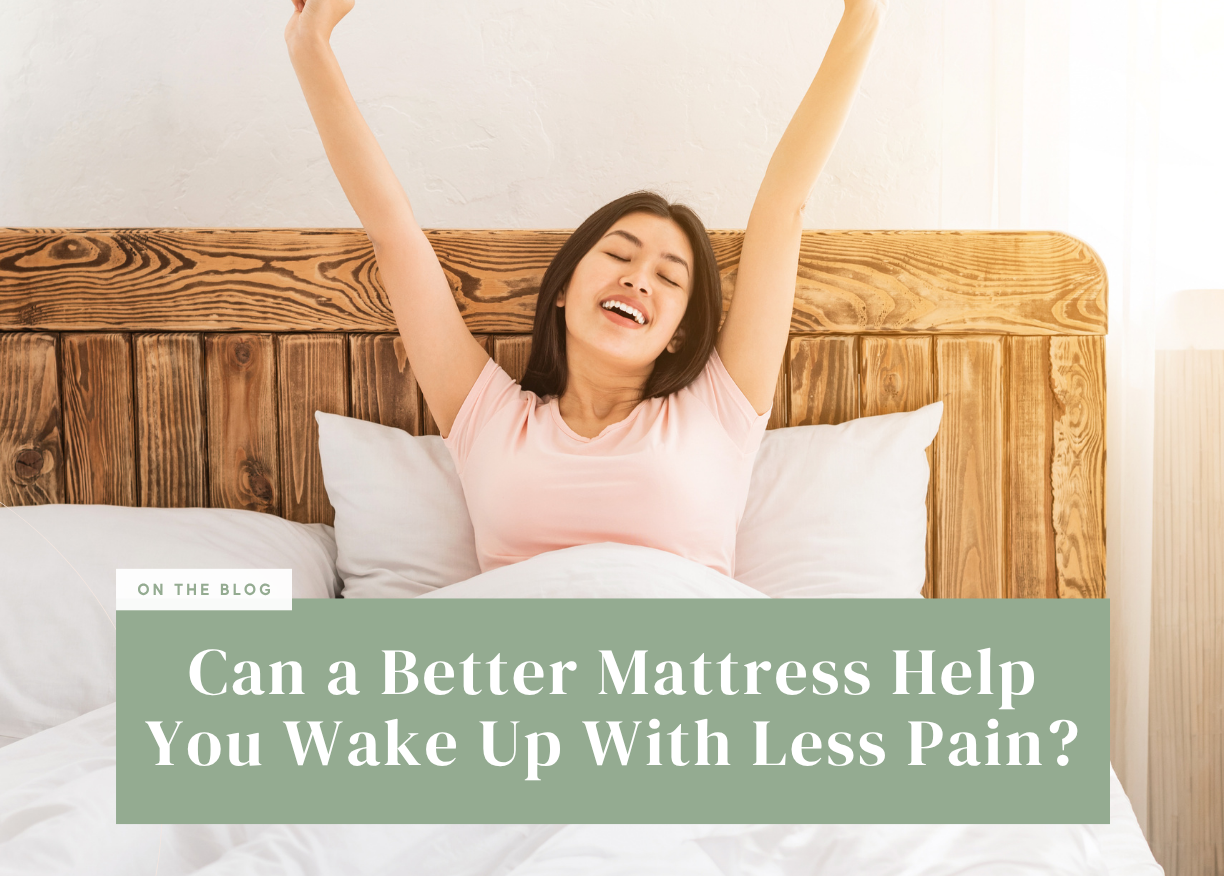

You should not wake up feeling worse than when you went to bed.
But many people do.
They open their eyes and immediately feel it.
A tight lower back.
A sore shoulder.
Stiff hips.
A tense neck.
A body that feels heavy before the day has even started.
At first, it is easy to blame age.
Or stress.
Or yesterday’s workout.
Or sleeping “wrong.”
Or just being tired.
And sometimes, those things really are part of the problem.
But if you keep waking up with pain, stiffness, or pressure in the same areas, night after night, it may be time to ask a simple question:
Is your mattress helping your body recover, or is it making the problem worse?
A better mattress cannot fix every kind of pain.
But the right mattress can support better alignment, reduce pressure points, and help your body stay more comfortable through the night.
And for many people, that can make mornings feel very different.
Morning Pain Is Not Always “Just Normal”

Some stiffness in the morning can happen.
Your body has been still for hours.
Muscles and joints may need a few minutes to warm up.
Your sleep position may have placed pressure on one area.
But pain that happens often, feels intense, or improves after you get out of bed may be a sign that your sleep setup is not supporting you well.
Cleveland Clinic notes that morning back pain can be related to sleep position, immobility, the mattress, or underlying health conditions.
That is important because it means your mattress may not be the only factor.
But it can be one of the most overlooked.
Why the Mattress Matters So Much

Your mattress supports your body for hours every night.
If it does that well, your muscles can relax.
Your spine can stay in a more natural position.
Your shoulders and hips can get pressure relief.
Your lower back can feel supported.
Your body can settle instead of constantly adjusting.
But if the mattress is wrong, your body may work all night.
A mattress that is too soft may let the hips sink too deeply.
A mattress that is too firm may create pressure at the shoulders, hips, or lower back.
A mattress that is old or sagging may pull the spine out of alignment.
A mattress that traps heat may make you toss and turn.
Sleep Foundation explains that comfort, pressure relief, and spinal alignment all play a role in choosing the right mattress, and that a pressure-relieving mattress that supports alignment may reduce the risk of sleep-related pain.
That is why pain is not only about what you do during the day.
It can also be about what your body is lying on all night.
A Better Mattress Helps in Two Main Ways

When it comes to waking up with less pain, two things matter most:
pressure relief and support.
You need both.
If a mattress only feels soft but does not support you, your body may sink out of alignment.
If a mattress only feels firm but does not relieve pressure, your joints may feel compressed.
The goal is not soft.
The goal is not hard.
The goal is balanced comfort.
A mattress should cushion the areas that need relief while supporting the areas that need stability.
That balance is what helps the body relax.
Pressure Points Can Wake Your Body All Night

Pressure points are areas where your body presses more heavily into the mattress.
For side sleepers, this usually means:
-
Shoulders
-
Hips
-
Knees
-
Arms
For back sleepers, it may show up around the lower back, hips, or shoulder blades.
For stomach sleepers, it may show up as lower back strain if the hips sink too far.
Pressure does not always wake you dramatically.
Sometimes it creates small interruptions.
You shift.
Turn over.
Pull your arm out from under you.
Move your pillow.
Stretch your back.
Wake for a few seconds and forget it happened.
But by morning, your body remembers.
You feel sore because your sleep was not as still, deep, or restorative as it should have been.
Support Keeps Your Spine From Fighting the Mattress

Support is different from firmness.
A mattress can feel firm and still fail to support you properly.
Support means the mattress helps keep your spine in a healthier position.
If your hips drop too far, your lower back may strain.
If your shoulders cannot settle, your upper body may twist.
If your pillow is too high or too low, your neck may bend out of alignment.
The right mattress should help your body rest in a natural position without forcing muscles to hold everything together.
Sleep Foundation notes that support refers to whether a mattress promotes proper spinal alignment, while firmness refers to how soft or hard the mattress feels.
That difference matters.
You are not just shopping for a feel.
You are shopping for how your body is positioned for hours.
Too Firm Can Be a Problem

For years, people were told that a hard mattress was best for back pain.
But “harder” is not always better.
A mattress that is too firm can push back against the body instead of contouring to it.
That may create pressure in the shoulders, hips, lower back, and ribs.
For side sleepers especially, too much firmness can make the body feel like it is resting on a board.
That can lead to:
-
Shoulder pain
-
Hip soreness
-
Arm numbness
-
More tossing and turning
-
Morning stiffness
-
Poor sleep quality
Harvard Health discussed research showing that people with low back pain who slept on very hard mattresses reported poorer sleep quality than those sleeping on medium-firm or firm mattresses.
So the answer is not always to go firmer.
The answer is to go more supportive and more pressure-relieving.
Too Soft Can Also Be a Problem

A mattress that is too soft can feel comfortable at first.
But by morning, it may create problems.
If your hips sink too deeply, your spine may curve out of position.
If your lower back is not supported, muscles may stay tense through the night.
If you feel stuck in the mattress, changing positions becomes harder.
This can lead to:
-
Lower back pain
-
Hip discomfort
-
Morning stiffness
-
Restless sleep
-
A sagging feeling
-
Difficulty moving naturally
Sleep Foundation explains that inadequate support can allow the midsection to sag, which may create an unnatural arch in the lower back and contribute to pain.
Softness feels good for a few minutes.
Support matters for the whole night.
Why Medium-Firm Often Works Well

There is no single perfect firmness for everyone.
Your body weight, sleep position, pain location, and personal comfort all matter.
But for many people with back pain, a medium-firm mattress offers a helpful balance of comfort and support.
Sleep Foundation notes that medium-firm mattresses tend to offer the best balance of comfort and support for many sleepers with back pain, though body type, sleep position, and preference still matter.
Research reviews have also found that medium-firm mattresses can support sleep comfort, sleep quality, and spinal alignment for many adults.
This does not mean everyone should choose medium-firm.
Side sleepers may need more pressure relief.
Stomach sleepers may need more firmness.
Heavier sleepers may need stronger support.
But medium-firm often works because it sits in the middle:
Soft enough to reduce pressure.
Firm enough to support alignment.
Pain Location Can Tell You a Lot

Where you hurt in the morning can help you understand what may be happening.
It does not diagnose the problem.
But it gives clues.
Lower Back Pain

If your lower back hurts in the morning, your mattress may be allowing your hips to sink too far or failing to support the natural curve of your spine.
This is common when a mattress is too soft, too old, or sagging.
Back sleepers usually need balanced support.
Stomach sleepers usually need firmer support.
Side sleepers need enough pressure relief without letting the hips collapse too deeply.
Shoulder Pain

Shoulder pain is common for side sleepers.
If the mattress is too firm, the shoulder may not sink in enough.
That pressure can build through the night.
A pillow that is too low can also make the shoulder carry more strain because the neck and upper body are not properly supported.
Side sleepers often need a mattress with better pressure relief and a pillow that keeps the neck aligned.
Hip Pain

Hip pain can happen when the mattress is too firm and pressure builds at the hip.
It can also happen when the mattress is too soft and the pelvis sinks out of alignment.
This is why hip pain can be tricky.
It may require better cushioning.
Or better support.
Sometimes both.
Neck Pain

Neck pain is often connected to the pillow, but the mattress can still play a role.
If the mattress changes how your shoulders sink, your pillow height may suddenly become wrong.
If your pillow pushes your head too high or lets it drop too low, the neck may stay tense all night.
Your mattress and pillow work together.
You cannot fully judge one without the other.
Stiffness Everywhere

If your whole body feels stiff when you wake up, it may be from poor support, pressure points, temperature discomfort, stress, or not moving enough during the day.
It may also be related to age, inflammation, medical conditions, or exercise recovery.
If stiffness is persistent, severe, or worsening, talk to a healthcare professional.
But if the stiffness feels worse after sleeping and improves once you move around, your bed deserves a closer look.
Your Sleep Position Matters

A better mattress is not the same mattress for everyone.
Your sleep position affects what your body needs.
Side Sleepers Need Pressure Relief

Side sleepers put more weight on the shoulders and hips.
A mattress that is too firm can create painful pressure.
A mattress that is too soft can let the hips sink too far.
Most side sleepers need a surface that cushions the shoulders and hips while still keeping the spine aligned.
For Sweet Zzz, Medium-Soft is usually the best choice for side sleepers who need extra pressure relief.
Back Sleepers Need Balance

Back sleepers need the mattress to support the lower back and keep the body evenly positioned.
Too soft can allow sinking.
Too firm may fail to cushion the body comfortably.
For Sweet Zzz, Medium-Firm is usually the best choice for back sleepers, couples, and combination sleepers.
It is also the most popular firmness because it gives a balanced feel.
Stomach Sleepers Need Stronger Support

Stomach sleepers usually need a firmer mattress because the hips can sink too far when the surface is too soft.
That sinking can strain the lower back.
For Sweet Zzz, Firm is often best for stomach sleepers.
For those who want the strongest support possible, the Honey Hybrid Plus offers an extra firm feel around 9 out of 10.
Combination Sleepers Need Responsiveness

Combination sleepers change positions through the night.
They need a mattress that responds quickly and does not trap the body.
If a mattress makes movement difficult, you may wake up more often.
A responsive latex hybrid mattress can help because it gives pressure relief while still allowing easier movement.
When Is the Mattress Probably the Problem?

Your mattress may be contributing to pain if:
-
Pain is worse in the morning
-
You feel better after moving around
-
You wake up stiff in the same areas
-
You toss and turn to escape pressure
-
Your hips sink too deeply
-
Your shoulders or hips feel compressed
-
The mattress has visible sagging or dips
-
You sleep better on a different bed
-
The mattress feels hot or uncomfortable
-
Your pillow and routine are good, but pain continues
One sign matters most:
You wake up feeling like your bed made your body work all night.
That is not how sleep should feel.
When Pain May Not Be the Mattress

A mattress can help comfort and alignment, but it cannot fix every cause of pain.
Morning pain may also be connected to:
-
Injury
-
Arthritis
-
Disc issues
-
Inflammation
-
Muscle strain
-
Stress tension
-
Poor posture during the day
-
Lack of movement
-
Pregnancy
-
Medical conditions
-
Sleep disorders
Cleveland Clinic notes that morning back pain may come from sleep position, mattress issues, immobility, or underlying conditions.
If pain is severe, persistent, spreading down the leg, associated with numbness or weakness, or interfering with daily life, talk to a healthcare professional.
A better mattress can support better sleep.
But serious or ongoing pain deserves proper evaluation.
What a Better Mattress Should Do

A better mattress should help your body feel supported, not trapped.
It should:
-
Reduce pressure at the shoulders and hips
-
Support the lower back
-
Keep the spine closer to neutral
-
Let you change positions easily
-
Stay breathable
-
Avoid sagging
-
Match your sleep position
-
Feel comfortable for the whole night, not just the first few minutes
The best mattress is not the one that feels impressive in a showroom.
It is the one that still feels right at 3 a.m.
And again when you wake up.
Why Latex Hybrid Construction Can Help

A latex hybrid mattress can be especially useful for people who wake up with pain because it combines comfort and support.
Latex offers responsive pressure relief.
It cushions without making you feel stuck.
Pocketed coils provide deeper support and help the mattress respond to your body’s shape and movement.
Together, they can help reduce pressure while still keeping the body supported.
That is the balance many sleepers need.
Not sinking.
Not being pushed up too hard.
Just supported.
The Sweet Zzz Setup for Waking Up With Less Pain
🌿 Honey Hybrid Mattress
Designed to support spinal alignment while relieving pressure at the shoulders, hips, and lower back. The GOLS organic latex provides responsive comfort, while the pocketed coils offer stable support.
It comes in multiple firmness options so you can choose based on sleep position and comfort needs.
Medium-Soft for side sleepers and pressure relief.
Medium-Firm for back sleepers, couples, and combination sleepers.
Firm for stomach sleepers and stronger support.
Honey Hybrid Plus for an extra firm 9 out of 10 feel.
The Honey Hybrid is also made without polyurethane foams, fiberglass, chemical flame retardants, glues, formaldehyde, or heavy metals.
🌿 Plant-Based Pillow
Supports the head and neck so your upper spine can stay better aligned. This matters because neck and shoulder pain are often connected to poor pillow support.
🌿 Organic Latex Topper
If your current mattress is still supportive but feels too firm, the topper can add a softer pressure-relieving layer without replacing the whole mattress.
🌿 Bamboo Sheets
Soft, breathable, and moisture-wicking, Bamboo Sheets help reduce overheating, which can lead to more tossing and turning.
🌿 Adjustable Base
Helps you find a more comfortable position, elevate your legs or upper body, reduce pressure, and relax before sleep with massage.
A better sleep setup should make your body feel less guarded.
Less tense.
Less like it has to keep adjusting.
Final Thoughts
A better mattress cannot promise a pain-free life.
Pain is complicated.
It can come from health conditions, posture, stress, activity, injury, inflammation, or age.
But your mattress matters.
You spend hours on it every night.
If it is too firm, too soft, too hot, too old, or no longer supportive, your body may be waking up sore because it never truly rested.
A better mattress can help by reducing pressure, supporting alignment, and letting your muscles relax more fully.
That can mean fewer restless nights.
Less morning stiffness.
And a better chance of waking up feeling like sleep actually did what it was supposed to do.
Because your bed should not be something your body has to recover from.
It should be the place your body goes to recover.