 800-811-7514
Can Your Bedroom Actually Hurt (or Help) Your Sleep?


Most people focus on bedtime.
They try:
-
Going to sleep earlier
-
Cutting caffeine
-
Relaxing before bed
But they rarely ask a bigger question:
Is my bedroom helping me sleep—or quietly working against me?
Your bedroom isn’t just where you sleep.
It’s the environment that trains your brain to rest—or stay alert.
And small environmental mistakes can cost you deep sleep without you realizing it.

Your Brain Associates Spaces With States
Your brain builds strong associations.
If your bedroom is:
-
A workspace
-
A scrolling zone
-
A TV room
-
A place for stress conversations
Your brain stops seeing it as a recovery space.
The strongest sleep cue is environment consistency.

1. Light Is More Powerful Than You Think
Even small light exposure can disrupt melatonin.
Common mistakes:
-
LED standby lights
-
Streetlights through thin curtains
-
Phone screens in bed
-
Bright overhead lighting at night
Your brain uses darkness as a sleep signal.
Even dim artificial light weakens that signal.

2. Temperature Quietly Fragments Sleep
Your body needs to cool down to enter deep sleep.
If your bedroom:
-
Traps heat
-
Has inconsistent temperature
-
Feels stuffy
-
Uses non-breathable bedding
you’ll experience more micro-awakenings—even if you don’t remember them.
Sleep quality drops before sleep quantity does.

3. Noise Isn’t Always Obvious
You may think you “sleep through noise,” but your brain still registers it.
Low-level sounds like:
-
HVAC turning on
-
Traffic
-
A partner moving
-
Pets shifting
can prevent your body from fully entering deep restorative sleep.

4. Clutter Increases Mental Load
Clutter doesn’t just affect aesthetics.
Visual chaos signals unfinished tasks to your brain.
That subtle mental activation increases nighttime alertness.
Your nervous system rests better in calm environments.

5. Your Mattress Age Matters More Than You Realize
An aging mattress often causes:
-
Pressure points
-
Tossing and turning
-
Micro-movements
-
Lower back strain
-
Early morning stiffness
You may adapt to discomfort gradually—until it becomes your “normal.”
But adaptation doesn’t mean optimal.

6. Air Quality and Dryness
Especially in winter months:
-
Dry air irritates airways
-
Dust accumulates
-
Poor ventilation affects breathing
Breathing discomfort leads to lighter sleep.
How to Make Your Bedroom Work For You
Keep it dark.
Blackout curtains or minimal light sources.
Keep it cool.
Around 65°F (18°C) is ideal.
Keep it breathable.
Materials matter more than thickness.
Keep it calm.
Limit screens and work inside the bedroom.
Keep it supportive.
Comfort determines how deeply your body relaxes.
Why Your Sleep Foundation Matters Most
You can optimize everything—but if your body isn’t supported, sleep stays shallow.
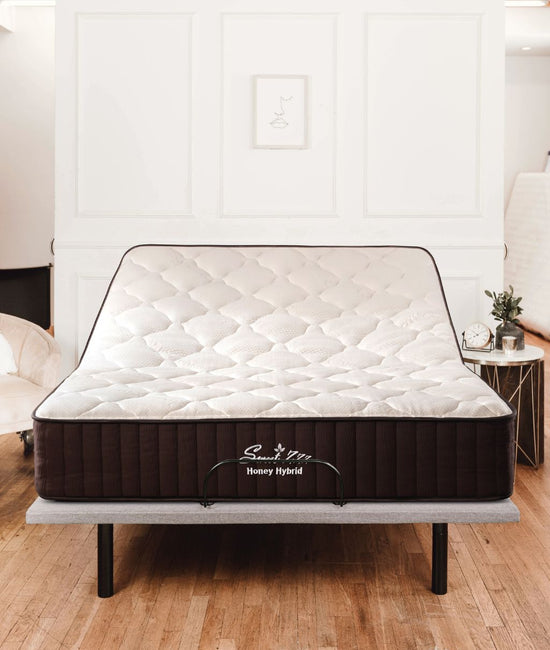
🌿 Honey Mattress
Balanced support reduces pressure points and motion transfer, allowing deeper, uninterrupted sleep.
🌿 Bamboo Sheets
Help regulate temperature and moisture—preventing the overheating that quietly fragments sleep.
🌿 Adjustable Base
Allows elevation and customization that support breathing, circulation, and pressure relief.
When your bedroom supports your biology, sleep stops feeling like effort.
Final Thoughts
Your bedroom is either a recovery environment—or a stimulation environment.
You don’t need perfection.
You need alignment.
Sometimes the biggest sleep upgrade isn’t a new habit—
it’s removing the small things quietly working against you.