 800-811-7514
How to Build a Bedroom That Actually Helps You Sleep


Your bedroom should make sleep feel easier.
Not perfect.
Not fancy.
Not staged for a photo.
Just easier.
Easier to relax.
Easier to cool down.
Easier to breathe.
Easier to feel comfortable.
Easier to stop thinking.
Easier to stay asleep once you finally get there.
But many bedrooms do the opposite.
They are too bright.
Too warm.
Too cluttered.
Too noisy.
Too stressful.
Too connected to work, scrolling, laundry, and unfinished tasks.
So even when you are tired, your bedroom does not feel like a place your body can fully let go.
The good news is that you do not need a perfect bedroom to sleep better.
You need a bedroom that sends the right signals.
Calm.
Cool.
Dark.
Quiet.
Comfortable.
Supportive.
A room that tells your body:
The day is over. You can rest now.
Your Bedroom Is Part of Your Sleep Routine

Most people think sleep begins when they close their eyes.
But sleep begins before that.
It begins with the signals your body receives in the evening.
The lighting.
The temperature.
The sounds.
The feel of the bed.
The clutter in the room.
The phone on the nightstand.
The comfort or discomfort in your body.
Your bedroom can either help your nervous system slow down or keep it alert.
That is why the environment matters.
A better bedroom does not force sleep.
It removes the things that keep interrupting it.
Start With the Feeling of the Room

Before changing anything, walk into your bedroom and notice how it feels.
Not how it looks.
How it feels.
Does it feel calm?
Does it feel heavy?
Does it feel cluttered?
Does it feel too bright?
Does it feel fresh?
Does it feel like rest?
Or does it feel like another room full of unfinished tasks?
This matters because your brain builds associations.
If the bedroom becomes a place for work, stress, scrolling, folding laundry, watching intense shows, and solving problems, your body may not fully associate it with sleep.
The goal is to make the bedroom feel like a clear transition away from the day.
1. Make the Room Cooler

Temperature is one of the most important parts of a sleep-friendly bedroom.
If the room is too warm, your body may have a harder time settling.
You may wake up sweating.
Kick off the covers.
Flip the pillow.
Move around to find a cooler spot.
Even if you do not fully wake up, heat can make sleep feel lighter and more restless.
A good bedroom should feel comfortably cool.
Not freezing.
Just cool enough that your body can relax under the covers without overheating.
Try adjusting:
-
Thermostat
-
Fan use
-
Bedding weight
-
Pajamas
-
Mattress breathability
-
Sheet material
-
Window timing
-
Airflow
A cooler bedroom is one of the simplest upgrades you can make.
But it only works if your bedding and mattress are not trapping heat.
2. Keep the Room Dark

Light tells the body to be alert.
Darkness tells the body sleep is coming.
That is why bedroom darkness matters.
Even small amounts of light can make the room feel less restful.
Streetlights.
Alarm clocks.
TV standby lights.
Phone screens.
Hallway light.
Morning sun coming through thin curtains.
You do not need to become obsessive.
But if your sleep feels light or you wake too early, darkness is worth improving.
Try:
-
Blackout curtains
-
An eye mask
-
Turning clocks away
-
Covering tiny lights
-
Keeping the phone screen off
-
Avoiding bright bathroom lights at night
The bedroom should feel different from the day.
Darkness helps create that difference.
3. Reduce Sudden Noise

Some people need silence.
Others sleep better with soft background sound.
The real problem is usually not steady sound.
It is sudden sound.
A car door.
A dog barking.
A partner moving.
A hallway noise.
A phone buzzing.
A heating system clicking on.
Sudden sounds can pull your body closer to waking, even if you do not fully remember it.
If noise is a problem, try creating a more predictable sound environment.
A fan can help.
An air purifier can help.
A white noise machine can help.
Soft steady sound can make the bedroom feel more stable.
The goal is not always silence.
The goal is fewer surprises.
4. Remove the Phone From the Bedside

This one is simple, but hard.
A phone beside the bed is not just a phone.
It is messages.
Work.
News.
Videos.
Stress.
Shopping.
Social media.
Notifications.
Tomorrow’s problems.
Even if you are not using it, knowing it is there can keep part of the brain alert.
If you can, charge your phone away from the bed.
Across the room is better.
Outside the bedroom is best.
Use a real alarm clock if needed.
At minimum, put the phone on Do Not Disturb and place it face down out of reach.
Your bed should not feel like a charging station for stress.
5. Make the Bed Actually Comfortable

A beautiful bedroom does not matter if the bed itself is uncomfortable.
Your mattress, pillow, sheets, and bedding all affect how well your body settles.
Ask yourself:
Do I wake up sore?
Do I wake up hot?
Do I toss and turn?
Do my shoulders or hips feel pressure?
Does my lower back feel supported?
Does my pillow keep my neck aligned?
Do my sheets feel breathable?
Does my bed feel inviting or frustrating?
Comfort is not just softness.
It is support, pressure relief, temperature regulation, and ease of movement.
The bed should help your body stop adjusting.
Not give it more reasons to move.
6. Choose the Right Mattress Support

Your mattress is the foundation of the bedroom.
If it is wrong, the whole room can be right and sleep may still feel off.
A mattress that is too firm may create pressure.
A mattress that is too soft may let the body sink out of alignment.
A mattress that is old or sagging may make your muscles work all night.
A mattress that traps heat may make you restless.
The right mattress should help your body feel supported, aligned, and comfortable in your usual sleep position.
For side sleepers, that usually means more pressure relief.
For back sleepers, balanced support.
For stomach sleepers, stronger support.
For combination sleepers, responsiveness that makes movement easier.
A mattress should feel good when you lie down.
But more importantly, it should still feel good when you wake up.
7. Use a Pillow That Supports Your Neck

A pillow can quietly ruin sleep.
If it is too high, your neck bends upward.
If it is too low, your head drops.
If it is flat, lumpy, or unsupportive, your muscles may stay tense.
That tension can show up as:
-
Neck pain
-
Shoulder tightness
-
Headaches
-
Restless sleep
-
Upper back stiffness
-
Arm numbness
Your pillow should fill the space between your head and the mattress in a way that keeps your neck aligned.
Side sleepers usually need more height.
Back sleepers usually need moderate support.
Stomach sleepers usually need a thinner pillow, although stomach sleeping itself can strain the neck and lower back.
Do not treat the pillow like an afterthought.
It supports the top of your spine all night.
8. Choose Sheets That Help Your Body Breathe

Sheets are the layer closest to your skin.
That makes them more important than people think.
If sheets trap heat or moisture, the whole bed can feel uncomfortable.
You may wake up warm.
Feel sticky.
Kick off the covers.
Turn to find a cooler spot.
Breathable, moisture-wicking sheets can help the sleep surface feel fresher and more comfortable.
This is especially important for hot sleepers, humid rooms, couples, and seasonal changes.
Your sheets should not fight your body temperature.
They should help regulate it.
9. Keep Bedding Simple and Flexible

A heavy, complicated bed setup can look nice but sleep poorly.
Too many blankets can trap heat.
Too many pillows can get in the way.
A comforter that is too warm can make you restless.
A blanket that is too light can leave you cold by morning.
The best bedding setup is often flexible.
Breathable sheets.
A comfortable blanket.
A layer you can add or remove.
A pillow that actually supports you.
Not a mountain of decorative pieces that make the bed harder to use.
Your bed should be easy to get into.
Easy to adjust.
Easy to sleep in.
10. Clean the Bedroom Air

The air in your bedroom matters.
Dust, allergens, pet dander, dry air, humidity, mold, and poor ventilation can all affect how comfortable sleep feels.
You may notice:
-
Stuffy nose
-
Dry throat
-
Itchy eyes
-
Sneezing
-
Coughing
-
Heavy air
-
Musty smell
-
Morning congestion
Start with the basics.
Wash bedding regularly.
Vacuum around the bed.
Dust surfaces.
Control humidity.
Keep windows closed on high-pollen days.
Consider an air purifier if dust, pets, or outdoor air bother you.
You breathe bedroom air for hours every night.
It should feel clean enough for your body to relax.
11. Make the Room Easier to Clean

A cluttered bedroom often becomes a dusty bedroom.
Extra blankets.
Decorative pillows.
Clothes on chairs.
Stacks of books.
Open storage.
Heavy curtains.
Carpet.
Items under the bed.
None of these are automatically bad.
But the more dust collectors in the room, the harder it is to keep the bedroom fresh.
If sleep feels stuffy or allergy symptoms are worse at night, simplify the room.
Clear the floor.
Keep surfaces easy to wipe.
Reduce fabric clutter near the bed.
Wash what can be washed.
A cleaner bedroom often feels calmer too.
12. Keep Work Out of the Bedroom When Possible

The bedroom should not feel like an office.
If you answer emails in bed, take calls in bed, review stressful tasks in bed, or use the room as a second workspace, your brain may start connecting the bedroom with alertness.
That makes sleep harder.
If you must work in the bedroom, create separation.
Do not work from the bed.
Put work materials away before bedtime.
Close the laptop.
Clear the nightstand.
Let the room change roles at night.
Your body needs to know when the workday is over.
13. Use Lighting That Softens at Night

Bright overhead lighting can make the bedroom feel awake.
In the evening, softer lighting helps the room transition.
Try using:
-
Lamps
-
Warm bulbs
-
Dimmer lights
-
Low bathroom lighting
-
Minimal hallway light
-
Less screen brightness
The goal is to make night feel like night.
Your bedroom should slowly become less stimulating as bedtime approaches.
Bright light says, “Keep going.”
Soft light says, “Slow down.”
14. Give the Bedroom a Scent Strategy, Not a Perfume Problem

Some people like a light calming scent in the bedroom.
That can be fine.
But strong fragrances can be irritating for sensitive sleepers.
Candles, sprays, plug-ins, detergents, and heavily scented products can make the room feel overwhelming.
If scent helps you relax, keep it light and simple.
If you wake up congested, sneezy, or irritated, consider reducing fragrance in the bedroom.
Clean should not mean heavily perfumed.
Clean should feel fresh.
15. Make the Bed Easier to Enter and Leave

This matters more than people think.
If your bed is too high, too low, unstable, or awkward, it can make bedtime and morning more uncomfortable.
A supportive base matters.
A stable frame matters.
Enough space around the bed matters.
For people with back pain, pregnancy discomfort, mobility issues, reflux, or leg heaviness, adjustability can make a difference in comfort.
Your bed should feel physically easy to use.
Not just nice to look at.
16. Create a Wind-Down Corner

If possible, make one small part of the bedroom or nearby space dedicated to winding down.
It does not need to be fancy.
A chair.
A lamp.
A book.
A journal.
A quiet corner.
A place to stretch.
This helps separate “getting ready for sleep” from “lying in bed trying to force sleep.”
Your bed should be for sleep and rest.
The wind-down corner helps your brain transition before you get under the covers.
17. Remove Visual Stress

Your bedroom may be quiet, but still visually loud.
Laundry piles.
Boxes.
Open drawers.
Work papers.
Cluttered nightstands.
Messy shelves.
Too many objects competing for attention.
For some people, visual clutter keeps the mind active.
You may lie down and see unfinished tasks everywhere.
A sleep-friendly bedroom does not need to be minimalist.
But it should not look like a to-do list.
Start with the areas you see from bed.
Clear the nightstand.
Put laundry away or out of sight.
Close closet doors.
Make the room feel finished enough for the day to end.
18. Build a Bedroom That Matches Your Real Life

The best bedroom is not copied from someone else.
It fits your body, your schedule, your climate, your family, and your sleep problems.
A parent with young kids may need a different setup than a single adult.
A hot sleeper needs different bedding than someone who is always cold.
A side sleeper needs different pressure relief than a stomach sleeper.
Someone with allergies needs a cleaner, easier-to-wash bedroom.
Someone who wakes up from noise may need steady sound.
Someone with back pain may need better support and positioning.
Do not build a bedroom for a magazine.
Build one for your actual nights.
A Simple Bedroom Sleep Checklist

Ask these questions:
Is the room cool enough?
Is the room dark enough?
Is the room quiet enough or predictably quiet?
Is the air fresh enough?
Is the bed comfortable enough?
Is the mattress supportive enough?
Is the pillow keeping my neck aligned?
Are the sheets breathable?
Is the room easy to clean?
Is my phone too close?
Is work invading the room?
Does the room feel calm when I walk in?
You do not need to fix everything at once.
Start with the biggest sleep disruptor.
Heat.
Light.
Noise.
Pain.
Clutter.
Phone use.
Poor support.
One improvement can make the next one easier.
The Sweet Zzz Setup for a Better Bedroom
A bedroom that helps you sleep starts with the environment.
But the bed itself is the center of that environment.
🌿 Honey Hybrid Mattress
Designed to support spinal alignment and relieve pressure while helping the body stay comfortable through the night. The GOLS organic latex offers responsive comfort, while individually pocketed coils provide stable support.
The breathable organic materials help reduce overheating, and the mattress is made without polyurethane foams, fiberglass, chemical flame retardants, glues, formaldehyde, or heavy metals.
It is also available in multiple firmness options so you can choose the feel that best fits your sleep position.
🌿 Bamboo Sheets
Soft, breathable, and moisture-wicking, Bamboo Sheets help keep the sleep surface cool, smooth, and comfortable.
They are especially helpful for hot sleepers, humid rooms, and seasonal temperature changes.
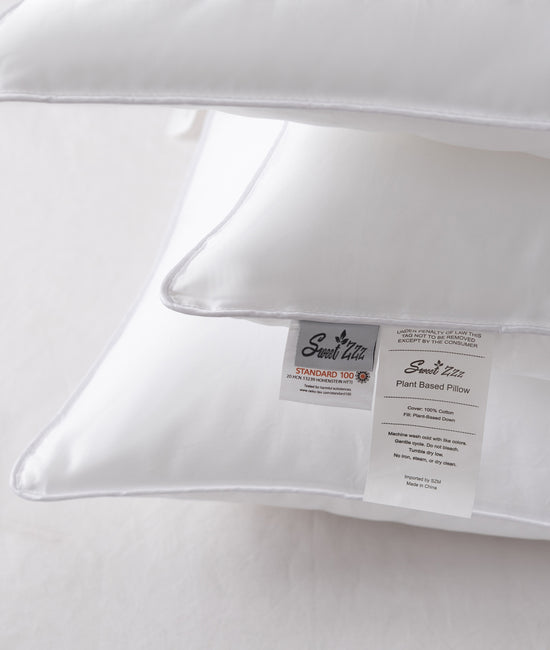
🌿 Plant-Based Pillow
Supports the head and neck so your upper spine can stay better aligned.
A better pillow can reduce tension and help the whole bed feel more comfortable.
🌿 Cooling Tencel Mattress Protector
Helps protect the mattress from moisture, spills, and everyday buildup while keeping the sleep surface breathable and easier to maintain.
🌿 Adjustable Base
Helps you read, relax, elevate your head or legs, reduce pressure, and use massage before sleep.
For many people, better positioning makes the bedroom feel more comfortable and more useful.
🌿 White Noise Machine
Helpful for light sleepers, parents, apartment living, street noise, or anyone who wakes easily from sudden sounds.
It creates a steadier sound environment so the room feels more predictable.
A sleep-friendly bedroom does not need every product.
It needs the right pieces solving the right problems.
Final Thoughts
A bedroom that helps you sleep is not about luxury for the sake of luxury.
It is about support.
Support for your body.
Support for your breathing.
Support for your temperature.
Support for your routine.
Support for your mind.
The room should help the day end.
That means cool air.
Soft darkness.
Less noise.
Cleaner bedding.
Better support.
A phone that is not pulling you back into the world.
A bed that lets your body fully settle.
You do not need a perfect bedroom.
You need a bedroom that stops working against you.
Because better sleep often starts before you close your eyes.
It starts the moment you walk into a room that finally feels like rest.