 800-811-7514
How to Create the Ideal Sleep Environment at Home


You can have the perfect schedule.
The best intentions.
The right habits.
But if your environment is off…
your sleep will be too.
Because sleep isn’t just internal, it’s heavily influenced by what’s around you.
The right environment doesn’t force sleep.
It allows it.
Why Your Environment Matters So Much
Your brain is always scanning for signals.
At night, it’s asking:
-
Is this safe?
-
Is this calm?
-
Is this the right time to rest?
If the answer isn’t clear, your body stays slightly alert.
Even if you don’t realize it.
1. Keep the Room Cool

Temperature is one of the biggest factors in sleep quality.
Your body needs to cool down to fall and stay asleep.
If your room is too warm:
-
Sleep becomes lighter
-
You wake up more often
-
Deep sleep decreases
👉 Ideal range: around 65°F (18°C)
2. Make the Room Dark (But Not Stressfully Perfect)

Light tells your brain to stay awake.
Even small light sources can:
-
Reduce melatonin
-
Interrupt sleep cycles
Focus on:
-
Blocking direct light
-
Reducing bright sources
-
Creating a calm, dim space
3. Reduce Noise (Or Control It)

Unexpected noise keeps your brain alert.
Even if it doesn’t fully wake you, it can:
-
Lighten your sleep
-
Reduce recovery
Options:
-
Keep the room quiet
-
Use consistent background noise if needed
Consistency matters more than silence.
4. Make Your Bed Actually Comfortable

This is where most people underestimate the impact.
If your bed causes:
-
Pressure
-
Heat buildup
-
Poor alignment
your body keeps adjusting all night.
Comfort isn’t a luxury—it’s a requirement for deep sleep.
5. Keep the Space Calm and Simple

Your brain associates environments with behavior.
If your bedroom feels:
-
Busy
-
Cluttered
-
Stimulating
it becomes harder to fully relax.
A calmer space = a calmer mind.
6. Use Your Bed Only for Sleep (When Possible)

The more your bed is associated with:
-
Work
-
Phones
-
Stress
the harder it is to switch into sleep mode.
Train your brain:
👉 Bed = rest
7. Create a Predictable Feel

Your environment should feel consistent every night.
That includes:
-
Temperature
-
Lighting
-
Comfort
-
Routine
Predictability builds trust with your body.

Why Your Bed Setup Is the Foundation
Everything else supports sleep.
Your bed determines it.
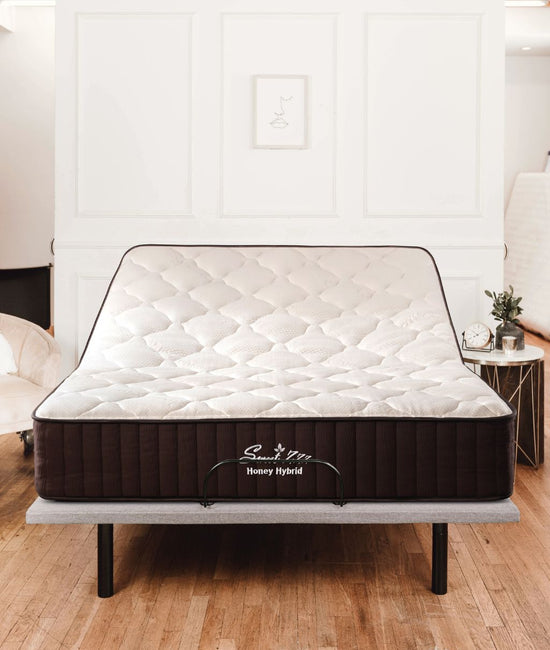
Honey Mattress
Provides balanced support and airflow—reducing pressure and helping your body stay relaxed.
Bamboo Sheets
Regulate temperature and moisture, keeping your sleep environment stable.
Adjustable Base
Allows you to find the most comfortable position for your body—helping you settle faster.
When your bed works with your body, everything else becomes easier.
Final Thoughts
Better sleep doesn’t come from one big change.
It comes from creating the right conditions.
Cool.
Dark.
Quiet.
Comfortable.
Consistent.
When your environment supports sleep, your body naturally follows.