 800-811-7514
The Mattress Mistake That Can Make Back Pain Worse

Back pain makes people desperate for answers.
You wake up stiff.
You stretch before your feet hit the floor.
You walk around the room hoping your body loosens up.
You tell yourself it is age, stress, work, or yesterday’s workout.
Then someone says the line almost everyone has heard:
You need a firmer mattress.
So you buy one.
Harder.
Stiffer.
Less cushioning.
More “supportive.”
And at first, it feels like you made the responsible choice.
But then the mornings do not get better.
Your shoulders feel sore.
Your hips feel pressured.
Your lower back still feels tight.
You toss and turn more than before.
That is the mistake.
Not buying a firm mattress.
The mistake is assuming back pain always needs the firmest mattress possible.
Back pain usually needs something more specific:
the right balance of support and pressure relief.
Why “Firm” Sounds Like the Right Answer

It makes sense.
If your back hurts, you think your body needs more support.
And in many cases, it does.
A mattress that is too soft can let your hips sink too deeply.
A sagging mattress can pull your spine out of alignment.
A weak mattress can make your muscles work all night.
So “go firmer” sounds logical.
But firm and supportive are not the same thing.
A firm mattress is about feel.
Support is about how well the mattress keeps your body aligned.
A mattress can feel hard and still fail to support your body correctly.
It can also feel softer on top while still providing strong support underneath.
That is why choosing only based on firmness can backfire.
The Real Goal Is Alignment

Your spine does not need to be forced flat.
It needs to be supported in a healthy, comfortable position.
When you lie down, your mattress should help your body stay balanced.
Your hips should not sink too far.
Your shoulders should not be jammed upward.
Your lower back should not feel unsupported.
Your body should not feel twisted, arched, or collapsed.
Sleep Foundation explains that comfort, pressure relief, and spinal alignment all matter when choosing a mattress, and that a pressure-relieving mattress that supports alignment may reduce the risk of sleep-related pain.
That is the key.
Back pain is not solved by hardness alone.
It is helped by alignment.
What Happens When a Mattress Is Too Firm?

A mattress that is too firm can create pressure instead of relief.
This is especially true for side sleepers.
When you sleep on your side, more weight concentrates around the shoulders and hips.
If the mattress does not allow those areas to settle, pressure builds.
That pressure can lead to:
-
Shoulder soreness
-
Hip pain
-
Arm numbness
-
More tossing and turning
-
Lower back tension
-
Restless sleep
Your body keeps moving because it is trying to escape pressure.
You may not wake up fully each time.
But your sleep becomes lighter.
By morning, you feel like your body never truly relaxed.
A very firm mattress may feel “supportive” in theory.
But if it prevents pressure relief, it can make sleep more uncomfortable.
Very Hard Is Not Always Better for Back Pain

The old advice was simple:
Back pain means hard mattress.
But research has not supported that as a universal rule.
Harvard Health discussed evidence showing that people with low back pain who slept on very hard mattresses reported the poorest sleep quality compared with those using medium-firm or firm mattresses.
A randomized trial published in The Lancet found that people with chronic nonspecific low back pain using medium-firm mattresses had better outcomes for pain in bed, pain on rising, and disability than those using firm mattresses.
That does not mean every person with back pain needs the same mattress.
But it does show why “the harder, the better” is too simple.
Back pain needs support.
But it also needs comfort.
What Happens When a Mattress Is Too Soft?

Of course, the opposite mistake can also happen.
A mattress that is too soft may feel cozy when you first lie down, but it can cause problems by morning.
If your hips sink too deeply, your lower back may arch or collapse out of alignment.
If your midsection drops lower than the rest of your body, your muscles may stay active all night trying to hold you in a better position.
That can lead to:
-
Lower back pain
-
Hip discomfort
-
Morning stiffness
-
Feeling stuck in the mattress
-
Difficulty changing positions
-
Restless sleep
Sleep Foundation notes that inadequate support can allow the midsection to sag, creating an unnatural arch in the lower back that may contribute to pain.
So the answer is not “soft.”
And it is not “hard.”
The answer is balanced.
The Mistake Is Choosing an Extreme

Many people with back pain panic and choose an extreme.
If their mattress felt too soft, they go very firm.
If their mattress felt too hard, they go very plush.
But back pain usually does not improve with extremes.
A too-soft mattress can let your body sink.
A too-firm mattress can create pressure.
Both can make the body tense.
Both can make sleep restless.
Both can leave you waking up sore.
The best mattress for back comfort usually sits between those extremes.
Supportive enough to hold the body.
Comfortable enough to relieve pressure.
Responsive enough to let you move.
Breathable enough to prevent heat from making you restless.
That is what the body actually needs.
Medium-Firm Often Works Because It Balances Both Needs

Many sleepers with back pain do well on a medium-firm mattress because it offers both comfort and support.
It is not too soft.
It is not overly hard.
It gives the body a stable surface while still allowing enough contouring to reduce pressure.
A systematic review found that medium-firm mattresses can help promote sleep comfort, sleep quality, and spinal alignment.
Another recent review of orthopedic literature found the evidence most consistently favored medium-firm mattresses over very firm or very soft surfaces for pressure distribution, sleep quality, morning stiffness, and low back pain intensity.
That is why medium-firm is often a smart starting point.
Not because it is perfect for everyone.
Because it avoids the two common mistakes:
too much sinking and too much pressure.
But Your Sleep Position Still Matters

Medium-firm may work well for many people.
But your sleep position changes what your body needs.
A side sleeper with back pain may need more pressure relief than a back sleeper.
A stomach sleeper may need stronger support than a side sleeper.
A combination sleeper may need responsiveness because they change positions through the night.
This is where many people make another mistake:
They choose firmness based on the back pain, but not based on how they actually sleep.
Your mattress needs to support your body in your real sleeping position.
Not the position you think sounds healthiest.
Side Sleepers Need Pressure Relief

Side sleepers usually need more cushioning at the shoulders and hips.
If the mattress is too firm, those areas take too much pressure.
That pressure can cause the body to twist or shift all night.
Then the lower back may feel tight in the morning, even though the problem started at the hips or shoulders.
For side sleepers, the goal is not a super soft mattress.
It is pressure relief with enough support underneath.
For Sweet Zzz, Medium-Soft is usually the best choice for side sleepers who need more pressure relief.
Back Sleepers Need Balanced Support

Back sleepers usually need the mattress to support the natural curve of the lower back.
If the mattress is too soft, the hips may sink.
If it is too firm, the lower back may feel tense or unsupported.
This is why medium-firm often works well for back sleepers.
It offers a stable, balanced feel that supports the body without feeling overly hard.
For Sweet Zzz, Medium-Firm is usually the best choice for back sleepers, couples, and combination sleepers.
It is also the most popular firmness.
Stomach Sleepers Usually Need Firmer Support

Stomach sleeping can be hard on the lower back.
If the mattress is too soft, the hips may sink downward and strain the spine.
That is why stomach sleepers usually need stronger support than side sleepers.
For Sweet Zzz, Firm is often the better choice for stomach sleepers.
For those who want the strongest support possible, the Honey Hybrid Plus offers an extra firm feel around 9 out of 10.
The key is keeping the hips from dropping too far.
Combination Sleepers Need Responsiveness

Combination sleepers move.
They switch from side to back.
Back to side.
Maybe stomach for a while.
Then back again.
If a mattress makes movement difficult, sleep can become restless.
This can happen when a mattress is too soft, too slow-moving, or makes the body feel stuck.
A responsive mattress helps the body move more easily.
That matters for back pain because the body may need to shift positions naturally through the night.
Movement should not feel like a workout.
Another Mistake: Replacing Support With Cushioning

Some people wake up with pain and immediately buy a plush topper.
Sometimes that helps.
If the mattress is too firm but still supportive, a topper can add pressure relief.
But if the mattress is sagging, too soft, or unsupportive, adding more cushioning may make the problem worse.
The topper follows the dip.
The hips sink deeper.
The lower back gets less support.
The surface may feel softer, but the support problem remains.
A topper can improve comfort.
It cannot rebuild a mattress that has lost structure.
That distinction matters.
Another Mistake: Ignoring Sagging

A sagging mattress is one of the clearest signs your bed may be contributing to back pain.
Take the sheets off and look carefully.
Do you see a dip where you sleep?
Does the middle pull you inward?
Do your hips sink into one area?
Do you roll toward the same spot every night?
Does one side feel weaker than the other?
If the mattress is no longer level and supportive, your body may be sleeping in a curved position every night.
That can make the lower back feel worse in the morning.
No pillow trick can fully fix a mattress that has lost its foundation.
Another Mistake: Blaming the Mattress Without Checking the Pillow

The mattress matters.
But the pillow matters too.
Your pillow supports the head and neck.
If your pillow is too high, your neck bends upward.
If it is too low, your head drops.
If it is flat or lumpy, your shoulders and upper back may stay tense.
That tension can affect the whole spine.
A better mattress may not feel right if the pillow is still throwing your body out of alignment.
Before deciding your mattress is wrong, check whether your pillow supports your actual sleep position.
Side sleepers usually need more height.
Back sleepers usually need moderate support.
Stomach sleepers usually need a thinner pillow, although stomach sleeping itself can strain the neck and lower back.
Another Mistake: Choosing Based on the First 30 Seconds

A mattress can feel great for the first 30 seconds and still be wrong for your back.
Soft surfaces can feel inviting at first.
Very firm surfaces can feel reassuring at first.
But back comfort is not decided instantly.
It is decided over hours.
Does your lower back stay supported?
Do your hips sink too much?
Do your shoulders feel pressure?
Can you move easily?
Do you wake up better or worse?
Does the mattress keep feeling comfortable at 3 a.m.?
The real test is not the showroom moment.
The real test is the morning.
Another Mistake: Replacing an Old Foam Mattress With Another Similar Foam Mattress

If your old mattress is causing a dipping, stuck, or overheated feeling, replacing it with another mattress that has the same issues may not solve the problem.
Some foam mattresses can feel comfortable at first, but if they allow the body to sink too deeply or make movement harder, back pain may continue.
This is why construction matters.
A better mattress for back comfort should offer:
-
Stable support
-
Pressure relief
-
Easy movement
-
Breathability
-
Durability
-
The right firmness for your sleep position
It is not only about buying something new.
It is about buying something different enough to solve the actual problem.
Why Latex Hybrid Construction Can Help

A latex hybrid mattress can be helpful for many sleepers with back discomfort because it combines two important qualities.
Latex offers responsive comfort.
It cushions pressure without making the body feel trapped.
Pocketed coils provide deeper support underneath.
They help the mattress hold the body more evenly and respond to movement.
That combination can help reduce two common back-pain mattress problems:
too much pressure and too much sinking.
It gives the body a more balanced sleep surface.
Not hard for the sake of being hard.
Not soft for the sake of being soft.
Supportive comfort.
How to Know If Your Mattress Choice Is Making Back Pain Worse

Your mattress may be the wrong fit if:
-
Your back hurts most when you wake up
-
Pain improves after moving around
-
You feel pressure in your hips or shoulders
-
Your lower back feels unsupported
-
Your hips sink too deeply
-
You toss and turn all night
-
You feel stuck when changing positions
-
Your mattress has visible dips
-
You sleep better in hotels or guest beds
-
You bought a very firm mattress and now feel more pressure
-
You added a soft topper and now sink even more
The pattern matters.
If the same pain shows up every morning, your sleep surface deserves a closer look.
What To Do Instead

Do not ask only:
Is this mattress firm enough?
Ask better questions:
Does it support my spine?
Does it relieve pressure?
Does it match my sleep position?
Does it let me move easily?
Does it keep me cool enough?
Does it still feel good in the morning?
Is the support underneath strong enough?
Is the comfort layer soft enough where I need relief?
These questions lead to a better mattress decision.
Because back comfort is not one feature.
It is the relationship between your body and the whole sleep surface.
When Back Pain Needs Medical Attention

A better mattress can support comfort, but it cannot diagnose or treat serious back problems.
Back pain can come from muscle strain, arthritis, disc issues, nerve irritation, injury, inflammation, and other medical causes. Mayo Clinic notes that back pain is one of the most common reasons people seek medical help or miss work, and that most back pain improves with time and self-care.
Talk to a healthcare professional if back pain is severe, persistent, worsening, spreads down the leg, causes numbness, weakness, or tingling, follows an injury, or affects bladder or bowel control.
Mayo Clinic also recommends seeking medical care sooner when back pain comes with warning signs such as unexplained weight loss, a history of cancer, recent urinary infection, or sudden bladder changes.
Your mattress may be part of the picture.
But ongoing or serious pain deserves proper care.
The Sweet Zzz Setup for Back Comfort
If the mistake is choosing only based on firmness, the solution is choosing based on your body.
The Sweet Zzz Honey Hybrid Mattress is designed to balance pressure relief, spinal support, breathability, and responsiveness.
🌿 Honey Hybrid Mattress
Made with GOLS organic latex and individually pocketed coils, the Honey Hybrid is designed to relieve pressure while supporting alignment.
It is responsive, so you can move naturally.
It is breathable, so heat does not become another reason to toss and turn.
And it is made without polyurethane foams, fiberglass, chemical flame retardants, glues, formaldehyde, or heavy metals.
Choose the Right Firmness

Medium-Soft
Best for side sleepers and those who need more pressure relief at the shoulders and hips.
Medium-Firm
Best for back sleepers, couples, and combination sleepers who want balanced comfort and support. This is the most popular option.
Firm
Best for stomach sleepers and those who need stronger support.
Honey Hybrid Plus
Best for sleepers who want an extra firm feel around 9 out of 10.
The right firmness is not about choosing the hardest option.
It is about choosing the option that fits your sleep position and body.
Other Sweet Zzz Products That Can Help Complete the Setup
🌿 Plant-Based Pillow
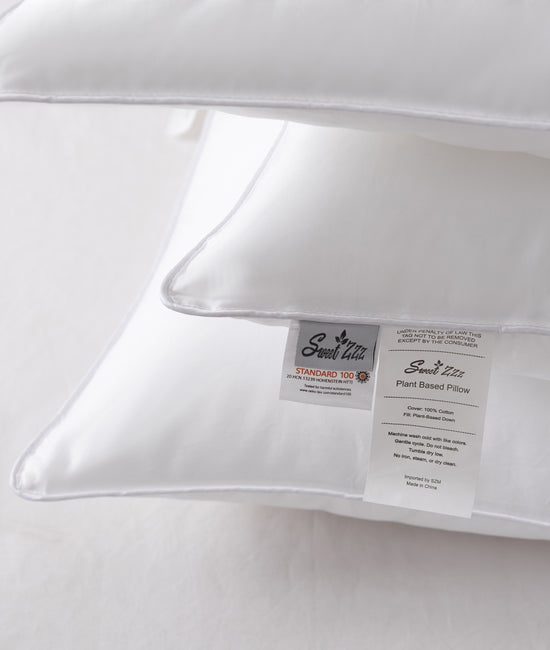
Supports the head and neck so the upper spine can stay better aligned. This matters because a poor pillow can make the whole sleep setup feel wrong.
🌿 Organic Latex Topper
Helpful if your mattress is still supportive but feels too firm. It adds pressure relief without replacing the entire bed.
🌿 Bamboo Sheets
Soft, breathable, and moisture-wicking, Bamboo Sheets help reduce overheating, which can lead to more tossing and turning.
🌿 Adjustable Base
Helps you elevate your upper body or legs, reduce pressure, read comfortably, and relax before sleep with massage.
A better setup should help your body feel supported from head to toe.
Final Thoughts
The biggest mattress mistake for back pain is not choosing firm.
It is assuming firm always means better.
A mattress that is too soft can let your back sag.
A mattress that is too firm can create pressure and tension.
An old mattress can lose support.
A wrong pillow can throw off alignment.
A topper can help pressure, but it cannot fix a failing mattress.
Back pain usually needs balance.
Support under the body.
Pressure relief where the body needs softness.
Breathability through the night.
Responsiveness when you move.
The right firmness for your sleep position.
Your bed should not force your body into a shape.
It should help your body rest in one.
Because the right mattress is not the firmest mattress.
It is the one that lets your back finally stop fighting the night.