 800-811-7514
How to Sleep Better When You’re Traveling for the Holidays
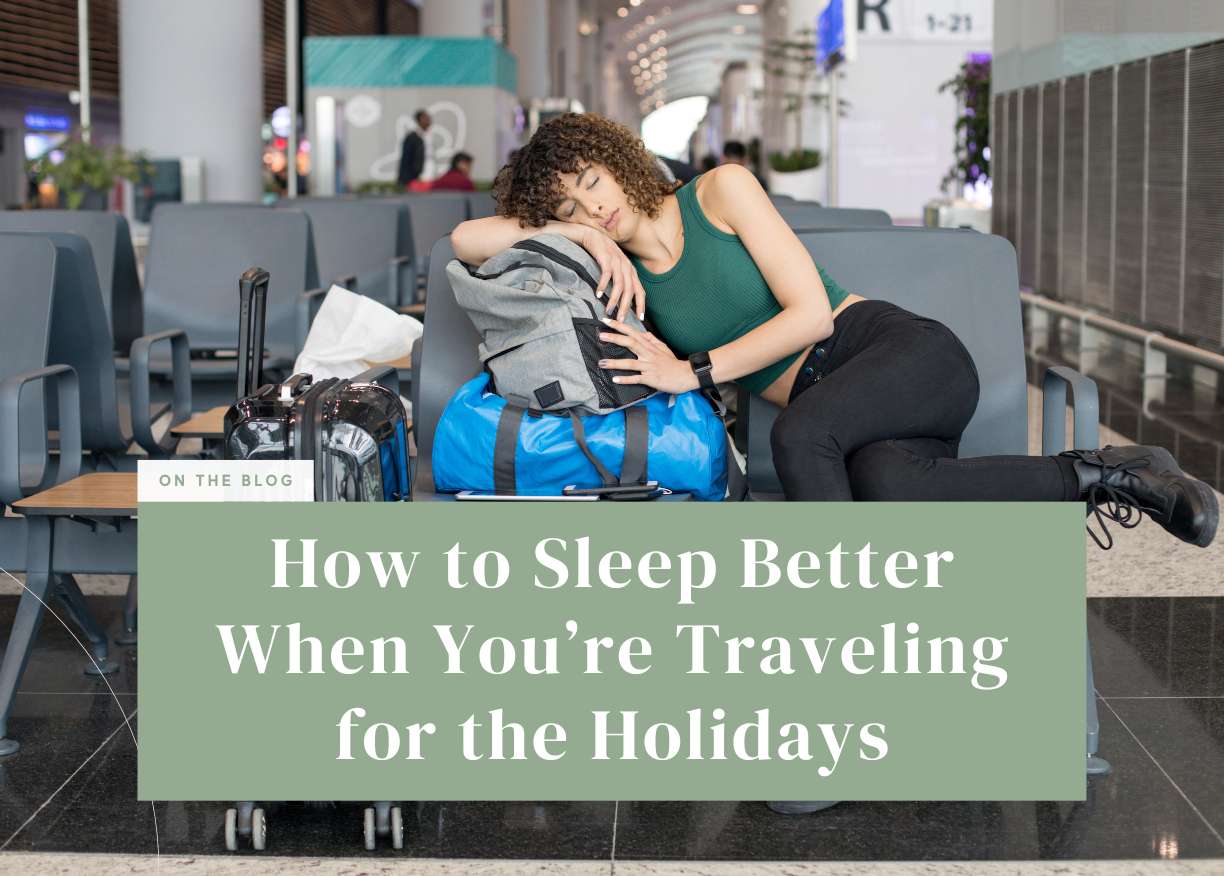

Holiday travel looks cozy in movies—snowy airports, hugs at the door, warm family gatherings.
In reality? It usually means disrupted routines, unfamiliar beds, dry airplane air, late nights, and sleep that feels anything but restful.

If you’ve ever returned from a holiday trip more tired than when you left, it’s not just you.
Travel—even short distances—throws your sleep rhythm off balance.
But you can keep your nights steady with a few strategic tweaks.
Why Travel Messes Up Your Sleep
Sleep depends on rhythm and predictability—two things travel immediately destroys.
Here’s what usually happens:
-
New environment → your brain becomes alert, not relaxed
-
Different pillows or mattresses → your alignment shifts
-
Irregular schedules → melatonin timing gets confused
-
Extra socializing → overstimulated mind
-
Late meals & more sugar → disrupted digestion at night
-
Dry or warm guest rooms → temperature imbalance

Travel is fun, but it’s chaos for your circadian system.
Travel Sleep Tips That Actually Work
1. Stick to your bedtime window (as much as possible).
It doesn’t have to be perfect—just aim for a 45–60 minute range.
Your body depends on timing more than you realize.
2. Bring your sleep “anchors.”
Anchors are small, familiar items that signal “sleep mode” to your brain.
Examples:
-
Your own pillow
-
A favorite shirt or blanket
-
A calming scent
-
A specific nighttime playlist
These tricks work especially well in guest rooms or hotels.

3. Control the temperature if you can.
Guest rooms are notorious for being too warm.
Crack a window, use fewer blankets, or run a small fan if available.
A cooler room (around 65°F / 18°C) helps you fall asleep and stay asleep.
4. Be mindful with evening food and drinks.
Holiday meals tend to be heavier and later.
Give yourself 2–3 hours between eating and bedtime to avoid reflux and restlessness.
5. Dim the lights 60 minutes before sleep.
Your body relies on darkness to signal melatonin release.
Soft lighting—even on the road—helps your brain shift into night mode.
When You Can’t Control the Bed… Control What You Can
Travel often means sleeping on mattresses that are too soft, too firm, too old, or too bouncy.
You can’t change the bed—but you can support your body.

Bring your pillow if possible.
It stabilizes your neck and helps avoid next-day stiffness.
If you run hot, bring breathable sleepwear.
Temperature is half the battle when you're away from home.
If noise is an issue, use soft earplugs or gentle white noise.
Your brain is more alert in new places; consistent sound helps override that.
Your At-Home Setup Matters Too
A strong sleep routine begins at home—so even if travel disrupts your nights, your body will return to balance faster if your home setup supports deep rest.

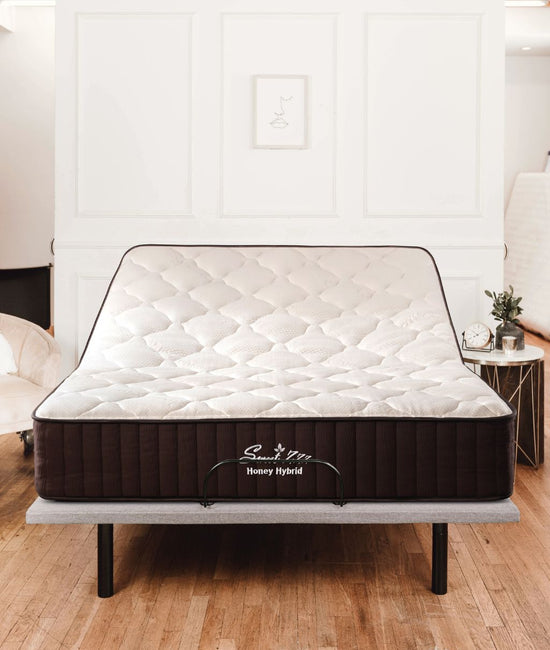
🌿 Honey Hybrid Organic Mattress
Keeps your spine aligned through natural latex and supportive coils.
The more consistent your body is at home, the less thrown off it feels on guest beds.
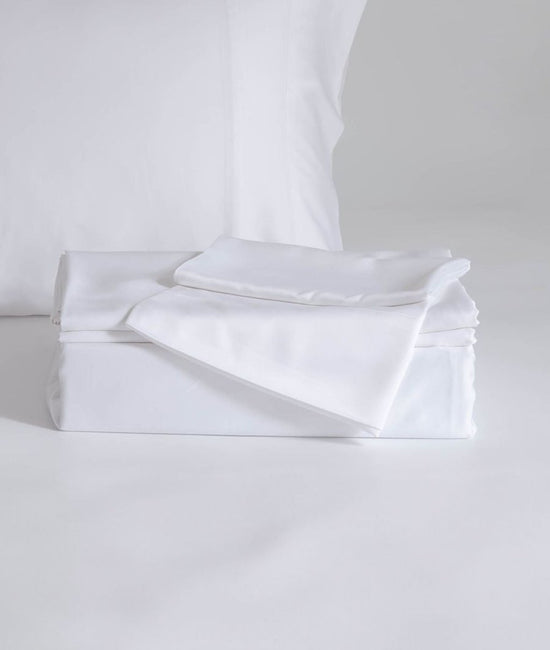
🌿 Bamboo Sheets
Light, breathable, and moisture-regulating—perfect for unpredictable hotel or guest-room temperatures.
🌿 Adjustable Base
Whether you raise your head to ease snoring or use gentle massage before sleep, it creates a nightly ritual your body recognizes—even after chaotic travel.
These products help your body reset faster after holidays, so you don’t bring travel fatigue back into your daily life.
Final Thoughts
Holiday trips bring joy—but also unpredictable nights.
With a few small habits (and a comfortable sleep foundation at home), you can travel without sacrificing the rest your body needs.
Sleep shouldn’t be the cost of making holiday memories.