 800-811-7514
Are You Waking Up Too Early? Here’s What Can Help
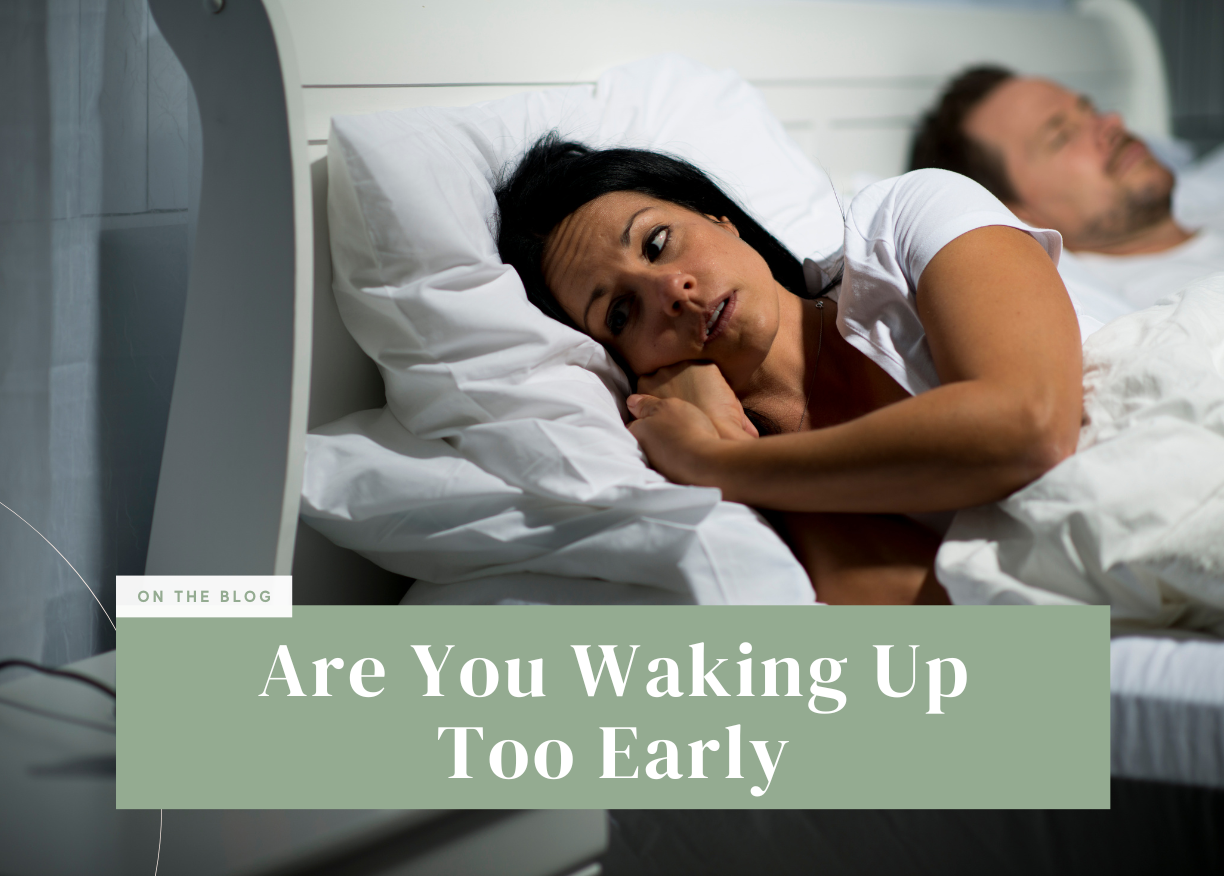

You wake up.
The room is still dark.
The house is quiet.
The day has not started yet.
You check the time.
4:42 a.m.
Too early to get up.
Too late to feel like you can start over.
So you close your eyes and try to fall back asleep.
But now your mind is awake.
You think about the day.
You calculate how much sleep you lost.
You start getting frustrated.
And just like that, the morning has already begun.
Waking up too early can be one of the most frustrating sleep problems because it feels like your body quit before the night was finished.
So why does it happen?
And what can you do about it?
First: Waking Up Briefly Is Normal

Not every early wake-up is a problem.
Most people wake briefly during the night or early morning.
Sometimes you roll over and fall back asleep without remembering it.
The problem is when you wake too early and cannot return to sleep.
The NHLBI lists waking up too early in the morning and not being able to get back to sleep as a common insomnia symptom.
So if this happens often, it is not just “bad luck.”
It may be a pattern worth understanding.
Why Early Morning Wake-Ups Feel So Final

Waking at 2 a.m. feels annoying.
But waking at 5 a.m. feels different.
Your body may already be closer to morning alertness.
Your sleep pressure may be lower.
Your brain may start preparing for the day.
That makes it harder to fall back asleep than it was earlier in the night.
The closer you are to your normal wake time, the easier it is for your brain to say:
We’re awake now.
Even if you still needed another hour or two.
1. Your Sleep Schedule May Be Too Early or Too Irregular

Your body likes rhythm.
If your bedtime and wake time change often, your internal clock may become inconsistent.
One night you sleep early.
The next night you stay up late.
On weekends you sleep in.
Then Monday comes and everything shifts again.
That kind of inconsistency can make your body wake at strange times.
Cleveland Clinic recommends going to bed and waking up around the same time to support better sleep quality.
Consistency does not need to be perfect.
But if your body never knows what time sleep is supposed to end, early waking becomes more likely.
2. Morning Light May Be Waking You Too Soon

Light is one of the strongest signals for your body clock.
Even small amounts of early morning light can tell your brain:
The day is starting.
This can be especially noticeable in summer when the sun rises earlier.
If light enters your room at 5 or 6 a.m., your brain may start reducing sleepiness before you are ready.
Blackout curtains, an eye mask, or reducing light leaks around windows can help.
The goal is simple:
Keep the bedroom dark until you actually want the day to begin.
3. Stress Can Wake the Brain Before the Body Is Ready

Sometimes early waking is not about light or noise.
It is about stress.
You wake up and immediately think:
What do I need to do today?
What did I forget?
What if something goes wrong?
Stress and anxiety can make early morning wake-ups more likely because the brain becomes alert too quickly. Sleep Foundation notes that anxiety, depression, stress, circadian rhythm, and environmental disruptions can all contribute to waking during the night or at the same time.
This is why early waking often happens during busy or emotionally heavy seasons.
Your body may still be tired.
But your mind has already started working.
4. Clock Watching Makes It Worse

The clock seems helpful.
But in the middle of the night or early morning, it often becomes a stress trigger.
You look at the time and start doing math:
If I fall asleep now, I can still get one more hour.
If I don’t sleep soon, I’ll be exhausted.
Why does this keep happening?
That pressure makes your body more alert.
Mayo Clinic notes that clock-watching can cause stress and make it harder to go back to sleep when you wake during the night.
So if checking the time makes you anxious, turn the clock away.
You do not need more sleep math.
You need less pressure.
5. Your Bedroom May Be Disturbing You

Early morning sleep is often lighter than sleep earlier in the night.
That means smaller things can wake you more easily.
Things like:
-
Light through the window
-
A warmer room
-
Birds or traffic
-
A partner moving
-
Shoulder or back pressure
-
A pillow that feels wrong
-
A mattress that traps heat
-
Needing the bathroom
You may not notice these things at midnight.
But at 5 a.m., they may be enough to pull you awake.
A bedroom that supports sleep should stay dark, cool, quiet, and comfortable until your actual wake time.
6. Alcohol or Late Meals Can Fragment Sleep

Some people fall asleep quickly after alcohol or a heavy late meal, but then wake too early.
That is because falling asleep is not the same as sleeping well.
Alcohol can make sleep more fragmented later in the night.
Late meals can contribute to reflux, digestion discomfort, or temperature changes.
If you often wake too early, look at the evening.
Not just the morning.
Ask:
-
Did I eat too late?
-
Did I drink alcohol?
-
Did I have caffeine later than usual?
-
Did I go to bed stressed?
-
Was the room too warm?
The early wake-up may have started hours before it happened.
7. You May Be Spending Too Much Time in Bed

This sounds strange, but it happens.
If you spend much more time in bed than your body actually sleeps, your sleep can become lighter and more broken.
For example, if your body usually sleeps 7 hours but you spend 9 or 10 hours in bed trying to “catch up,” you may start waking too early and lying awake.
Sleep needs enough time.
But too much time in bed can sometimes weaken the connection between bed and sleep.
The goal is not to sleep less.
The goal is to make time in bed match real sleep more closely.
8. It Could Be Connected to Insomnia or Another Health Issue

If waking too early happens often, it can be part of insomnia.
It can also be connected to stress, anxiety, depression, pain, sleep apnea, restless legs, medication effects, hormone changes, or other health conditions.
Mayo Clinic notes that insomnia can sometimes be caused by medical conditions such as sleep apnea, restless legs syndrome, or long-term pain, and that a sleep specialist may be needed to find the cause and best treatment.
That does not mean you should panic.
But if early waking is persistent, worsening, or affecting your daily life, it is worth talking to a healthcare professional.
What to Do When You Wake Too Early

1. Don’t Panic
This is the first step.
The more upset you become, the more awake your body feels.
Instead of thinking:
I have to sleep now.
Try:
I’m resting. My body knows what to do.
That shift reduces pressure.
And pressure is the enemy of falling back asleep.
2. Stop Checking the Time
Turn the clock away.
Put your phone out of reach.
If you wake up, avoid confirming the exact time unless you truly need to get up.
The less your brain knows, the less it can calculate.
3. Keep the Room Dark
Do not turn on bright lights.
Do not check messages.
Do not scroll.
Light tells your brain morning has started.
If you need to get up briefly, keep lighting low and warm.
4. Use a Calm Mental Anchor
Give your mind something simple and boring to rest on.
Try:
-
Slow breathing
-
Counting exhales
-
Relaxing each body part
-
Repeating a calming phrase
-
Imagining a quiet familiar place
The point is not to entertain the mind.
The point is to stop it from grabbing the day too early.
5. Get Up Briefly If You’re Fully Awake
If you are wide awake and getting frustrated, staying in bed can make stress worse.
Mayo Clinic suggests that if you cannot fall back asleep within about 20 minutes, you can get out of bed, do something relaxing, and return when sleepy.
Keep it boring.
Dim light.
No phone.
No work.
No problem solving.
You are not starting the day.
You are resetting.
How to Prevent Early Wake-Ups

1. Keep a Consistent Wake Time
Even if you had a bad night, try not to shift your wake time dramatically.
A consistent wake time helps anchor your body clock.
2. Get Morning Light After You’re Up
Morning light is helpful when it happens at the right time.
Once you are actually awake for the day, open the curtains or step outside.
This helps reinforce your rhythm.
3. Block Early Morning Light Before Wake Time
Morning light is useful after wake-up.
But too much light before your desired wake time can be a problem.
Blackout curtains or an eye mask may help, especially during summer.
4. Move Stress Earlier in the Evening
If your brain wakes up thinking about tasks, give it a place to put them before bed.
Write down:
-
What is on your mind
-
What can wait
-
What you will handle tomorrow
This helps your brain stop using 5 a.m. as planning time.
5. Make the Room Cooler
Temperature changes can wake you early.
Keep the bedroom cool and breathable so your body does not overheat toward morning.
6. Watch Caffeine and Alcohol
Caffeine too late can make sleep lighter.
Alcohol can fragment sleep later in the night.
If early waking keeps happening, test your timing.
Why Your Sleep Setup Matters
Early morning sleep is delicate.
If your body feels heat, pressure, pain, or poor alignment, it may wake sooner than you want.
Your sleep environment should give your body fewer reasons to leave sleep early.
Designed to support spinal alignment and relieve pressure, helping reduce the discomfort that can pull you awake in the early morning hours. Its breathable organic materials also help prevent overheating.
Soft, breathable, and moisture-wicking, they help keep your sleep surface cooler and more comfortable through the night.
Supports the head and neck so your body can stay relaxed and aligned instead of waking from tension.
Helps you find a comfortable position, elevate your head or legs, reduce pressure, and relax before bed with massage.
A better sleep setup cannot solve every cause of early waking.
But it can remove many of the physical disruptions that make it harder to stay asleep.
Final Thoughts
Waking up too early can make the whole day feel stolen before it even begins.
But it is not always random.
Sometimes it is light.
Sometimes it is stress.
Sometimes it is schedule.
Sometimes it is discomfort.
Sometimes it is a deeper sleep issue.
The goal is not to force your body back to sleep.
The goal is to make sleep feel safe, steady, dark, cool, and comfortable enough to continue.
And if early waking keeps happening or starts affecting your life, talk to a healthcare professional.
Because healthy sleep is not just about falling asleep at night.
It is about staying asleep long enough for the night to do its job.